Listen up. If you think a pouch is just a sack to hold your ammo, you’ve never had to reach for a fresh mag while your heart was hammering against your ribs like a trapped bird. In the heat of the moment, fine motor skills go out the window. Your hands turn into blocks of wood. I’ve seen guys fumbling with Velcro flaps while they were pinned down. I’ve seen mags fall out of loose shingles during a sprint across a hot zone. Today, we are talking about MOLLE magazine pouches. These are the literal links between you and your ability to stay in the fight. If your retention is too tight, you’re slow. If it’s too loose, you’re empty.
Selecting the Right MOLLE Magazine Pouches
The Reload That Felt Like an Hour
I remember a dynamic drill under low-light conditions. We were running a new setup with bungee-retention pouches we hadn’t broken in yet. I went for a speed reload, and that bungee snagged on the baseplate of my mag. I spent three seconds—which felt like three hours—fighting my own gear while my “adversary” had a clear line of sight.
That was the last time I went into a mission without vetting my carriage system. At Hash Tactical, we don’t just “make” gear; we engineer access. We know that your reload time is a life-saving metric. We build our gear so that the only thing you have to focus on is the threat in front of you.
What is MOLLE, Anyway?
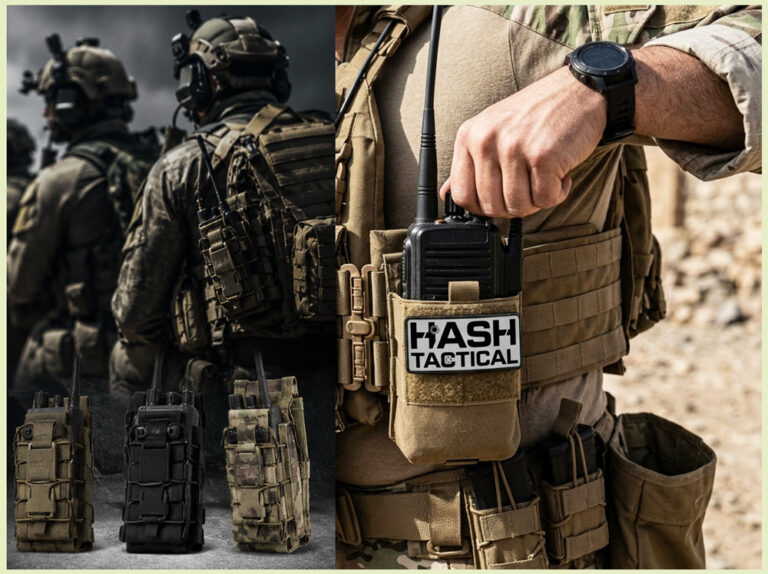
MOLLE stands for Modular Lightweight Load-carrying Equipment. It’s the grid of webbing that allows you to customize your kit. But the grid is only as good as the pouch you attach to it. A high-quality molle magazine pouch needs to be an extension of your vest or belt.
It shouldn’t bounce and sway. It should be “locked in.” Whether we are using traditional “Cut & Sew” nylon or modern laser-cut laminates, our manufacturing process ensures that the spacing is exact. If the webbing is off by even a fraction of an inch, your pouch will wobble, and that wobble will slow you down.
The Three Pillars of Pouch Selection
1. Retention: The Grip of the Fight
Retention is how the pouch holds the magazine. You have three main styles:
- Flap Pouches: Great for protecting mags from mud and debris, but slower to open.
- Bungee Tabs: Faster than flaps, providing a secure “jump-rated” hold.
- Friction/Kydex Inserts: The fastest option, using “passive” tension to hold the mag in place.
2. Accessibility: Seconds Equal Survival
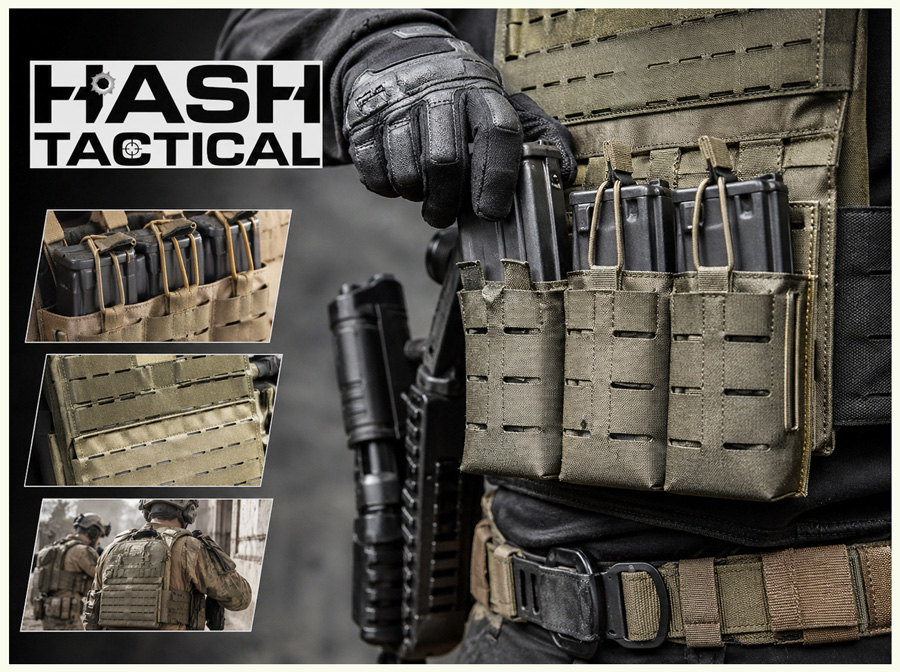
Where you place your molle magazine pouches matters as much as the pouch itself. Most operators run a “shingle” on their chest for primary mags and a “speed pouch” on their belt for the fastest possible reload.
3. Durability: The 500D vs. 1000D Debate
We use 500D Cordura for most of our pouches because it’s the best balance of weight and strength. For the high-abrasion areas on the bottom of the pouch, we often reinforce with 1000D Nylon. You want a pouch that can be dragged through a concrete window frame without unraveling.
MOLLE Pouch Comparison Table
| Pouch Style | Speed | Protection | Best Environment |
| Open-Top Shingle | High | Low | Urban / Range / CQB |
| Closed-Flap | Low | High | Jungle / Trench / Mud |
| Hybrid (Bungee) | Medium | Medium | General Purpose / Airborne |
| Stacker Pouch | Moderate | Moderate | High-Intensity / Large Loadout |
Single, Double, or Stacker: Mapping Your Loadout
The “Slick” Operator (Single Pouches)
If you are doing vehicle work or CQB, you want a low profile. Single molle magazine pouches keep you thin. They allow you to get closer to the ground in a prone position and prevent you from getting hung up on door frames.
The “Heavy” Loadout (Stacker Pouches)
If you are heading into a sustained engagement, you need volume. Stacker pouches allow you to carry two mags in the space of one. They sit further off your chest, which can make prone shooting difficult, but they give you the “gas” you need for a long fight.
The “Hash” Manufacturing Edge
As a tactical gear manufacturer with over 18 years of expertise, we understand the stresses placed on gear. We don’t just use any thread; we use high-tensile, bonded nylon that won’t rot or snap under UV exposure.
Our sublimation process allows us to match your pouches perfectly to your TJ-607 or TJ-612 jackets. We ensure that your camouflage remains consistent across your entire kit. This prevents “optical hot spots” that can give away your position to a trained eye.
The Science of the “Draw”
Passive vs. Active Retention
Passive retention (friction) is always “on.” You just pull. Active retention (flaps or bungees) requires you to move something before the mag comes out. For your “emergency” mag—the one you reach for when you’re dry—passive is usually the professional choice.
Indexing Your Magazines
When you put your mags in your molle magazine pouches, they should all face the same way. Most pros “index” their mags with the bullets facing toward their centerline. This way, when you grab the mag, your index finger naturally sits on the front, leading it straight into the mag well.
Maintenance: Keeping Your Retention Sharp
- Clear the Grit: Dirt inside a pouch acts like sandpaper on your magazines. Flip them over and bang them out after every field op.
- Check the Bungees: Elastic wears out. If your bungee feels “mushy,” replace it. A snapped bungee in the field is a mag lost in the dirt.
- Inspect the MOLLE Straps: Check for “fuzzing” on the attachment straps. If they get too soft, the pouch will start to sway.
- Hand Wash Only: Just like our tactical jackets, never put your pouches in a dryer. High heat can ruin the specialized coatings on the nylon.
Frequently Asked Questions (FAQ)
A: Usually, no. .308 mags (7.62) are much thicker. You’ll stretch the fabric and ruin the retention. Always buy pouches sized for your specific platform.
A: It’s a pouch designed to hold two magazines one behind the other. It saves space on your vest but adds “depth” to your profile.
A: If done by a professional tactical gear manufacturer using high-quality laminates, yes. They are actually often stronger because there are fewer “stitch points” that can fail.
Mission Complete. Your gear is a tool, not a fashion accessory. Choose the pouches that make you faster, keep them clean, and train until your reloads are automatic.
👉 For more information before purchasing your desired tactical gear, feel free to contact our support team for guidance!