If you are moving through wet, windy, or high-abrasion environments where you need a single layer to act as a shield, choose a tactical softshell jacket. It blocks wind and sheds light rain while resisting tears from gear and brush. If you are operating in static, bone-chilly dry cold or need a mid-layer to wear under a heavy parka, go with fleece. The softshell is your “armor” layer; the fleece is your “insulation” layer.
Tactical Softshell Jacket vs. Fleece: Which to Choose?
The Night I Froze in the Valley
I remember a reconnaissance mission in the high desert. The sun went down, and the temperature dropped forty degrees in an hour. I was young. I had a heavy fleece on. The wind started howling through the canyons like a freight train. That fleece felt like I was wearing a screen door. The wind cut right through the fibers and stripped the heat off my body.
I spent the next six hours shivering uncontrollably. That night taught me a lesson I’ll never forget: Gear is a system. If you pick the wrong tool for the environment, you aren’t just uncomfortable—you’re ineffective. At Hash Tactical, we don’t just “cut and sew” jackets for looks. We build them for that moment in the valley when the wind tries to break you.
The Modern Operator’s Dilemma
Choosing between a tactical softshell jacket and a fleece isn’t about which one is “better.” It’s about which one fits the mission profile. You have to look at the “Metabolic Rate” of your work. Are you sprinting or sitting in a hide-site? Are you humping a 70-pound ruck?
A softshell is engineered for high-output movement in unpredictable weather. A fleece is the king of heat retention when the air is still. Both have a place in your locker. But on the morning of the mission, you only get to pick one to be your primary. Let’s break down the guts of both.
The Tactical Softshell Jacket: The All-Rounder
Construction: The Triple Threat
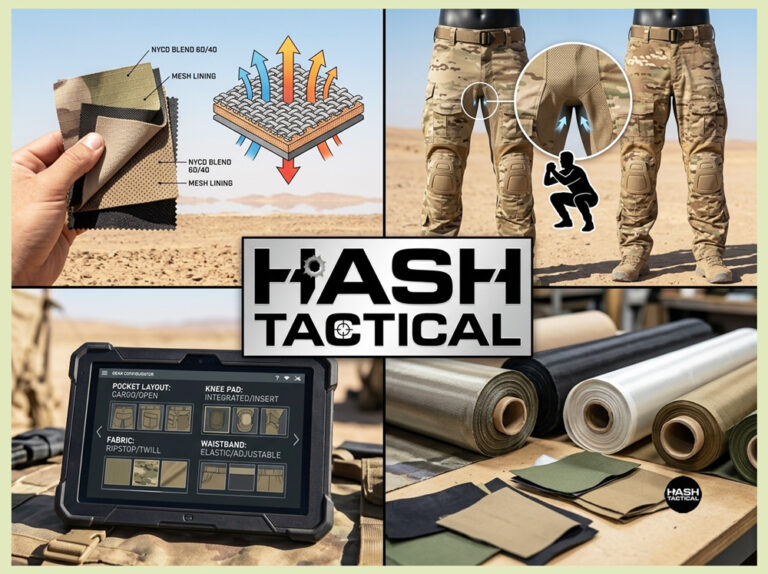
A true tactical softshell jacket is usually a sandwich of three layers. You have a durable, stretch-woven outer face. You have a weather-resistant membrane in the middle. Finally, you have a thin micro-fleece or mesh liner against your skin.
This construction is designed to be “windproof.” In the tactical world, wind is the enemy. It carries away the warm air your body works so hard to produce. The softshell stops that heat loss cold. It’s the shield that stands between you and the elements.
Abrasion Resistance and Gear Integration
Fleece is soft and quiet, but it’s fragile. If you rub fleece against a concrete wall or catch it on a thorn, it’s done. A softshell is built from high-denier synthetics. It’s meant to be worn under a plate carrier or rucksack without pilling or shredding.
At Hash Tactical, we reinforce the high-wear areas—the elbows and shoulders—with extra “Cut & Sew” panels. This ensures that when you’re dragging a teammate or low-crawling through gravel, your jacket stays in one piece.
The Tactical Fleece: The Heat Trap
How It Works: Loft and Air
Fleece works by trapping air. The “fuzzy” fibers create thousands of tiny pockets that hold on to your body heat. It is incredibly efficient. Pound for pound, a high-quality fleece provides more “static” warmth than almost any other synthetic material.
However, fleece has zero structural integrity against the wind. It’s also a sponge. If it gets wet, it gets heavy. While modern synthetics dry fast, a soaked fleece in a windstorm is a recipe for hypothermia.
The Mid-Layer King
Where the fleece shines is as a mid-layer. If you wear a fleece under a tactical softshell jacket, you have created the ultimate weather-beating combo. The softshell stops the wind and rain; the fleece holds the heat. This is the “Layering Principle” that every veteran lives by.
Head-to-Head Comparison
| Feature | Tactical Softshell Jacket | Tactical Fleece |
| Wind Resistance | Excellent (Shielding) | Poor (Permeable) |
| Water Resistance | DWR Coated (Sheds Rain) | Low (Absorbs Water) |
| Durability | High (Gear Rated) | Moderate (Pills over time) |
| Breathability | Moderate (Active Vents) | High (Vents Naturally) |
| Best Use Case | Moving, Climbing, Light Rain | Static Guard, Sleep System, Mid-Layer |
Anatomy of a Professional Softshell
The Tactical Cut
We don’t design these for the suburbs. Our “Cut & Sew” team focuses on the “High-Reach” area. When you reach for your primary weapon or climb a ladder, the hem of the jacket shouldn’t ride up past your belt. We use a “Drop-Tail” design to keep your lower back covered and protected.
Pocket Configuration: The “Kit” Interface
A tactical softshell jacket must work with your vest. We place the chest pockets high so you can reach them while wearing a plate carrier. We also integrate bicep pockets for comms and small gear. This isn’t for style; it’s for access when your chest is covered in magazines and armor.
The Manufacturing Edge at Hash Tactical
We are a dedicated tactical gear manufacturer that understands the life of the fabric. Our sublimation process allows us to create deep-dye camouflage patterns that won’t fade under UV light or heavy rain. Whether it’s Multi-Cam or Urban Gray, the pattern is part of the fiber.
We utilize heavy-duty, self-repairing zippers and reinforced bar-tacks at every stress point. When you buy from a direct manufacturer, you are getting gear that hasn’t been “watered down” for a retail shelf. It’s built for the guy who has to live in it for 72 hours straight.

Environmental Selection Guide
Scenario A: High-Altitude Movement
You are hiking a mountain trail with a heavy load. You are sweating, but the air is cold and the wind is biting.
- Choose: The Softshell. You need the wind protection, and the breathable membrane will let your sweat escape so you don’t “wet out” from the inside.
Scenario B: Night-Watch in the Desert
You are sitting still in an observation post. The air is dead-still but 20 degrees Fahrenheit.
- Choose: The Fleece. You aren’t moving, so you aren’t sweating. You need maximum loft to trap every bit of body heat you’ve got left.
Maintenance: Keeping the Shield Strong
- DWR Care: Your softshell is coated with a Durable Water Repellent. Over time, dirt and oils break this down. Wash it with specialized technical soap to “revive” the coating.
- No Fabric Softener: Never use softener on tactical gear. It coats the fibers in a wax that kills breathability and makes your fleece lose its loft.
- Zipper Lube: Use a little bit of paraffin wax on your main zippers. In sandy environments, this prevents the “crunch” that leads to a broken teeth.
- Air Dry: High heat in a dryer can delaminate the membranes in a tactical softshell jacket. Hang it up and let it dry naturally.
Frequently Asked Questions (FAQ)
A: Only if you are moving. If you are active, a softshell is enough down to freezing. If you are standing still, you’ll need a fleece or a “puffy” jacket underneath it.
A: No. A softshell sheds rain for a while, but eventually, it will soak through in a downpour. For total waterproof protection, you need a “Hard-Shell” with taped seams.
A: Those are “Pit Zips.” When you start to overheat, you unzip them to dump heat fast without taking the whole jacket off and losing your protection.
Mission Complete. Evaluate your AO, check the weather, and pick the layer that keeps your head in the game. Whether it’s a precision softshell or a heavy-duty fleece, make sure it’s built to survive.