The Ultimate Guide to Custom Tactical Jerseys: Durability, Tech Fabrics, and Performance on Long Training Days
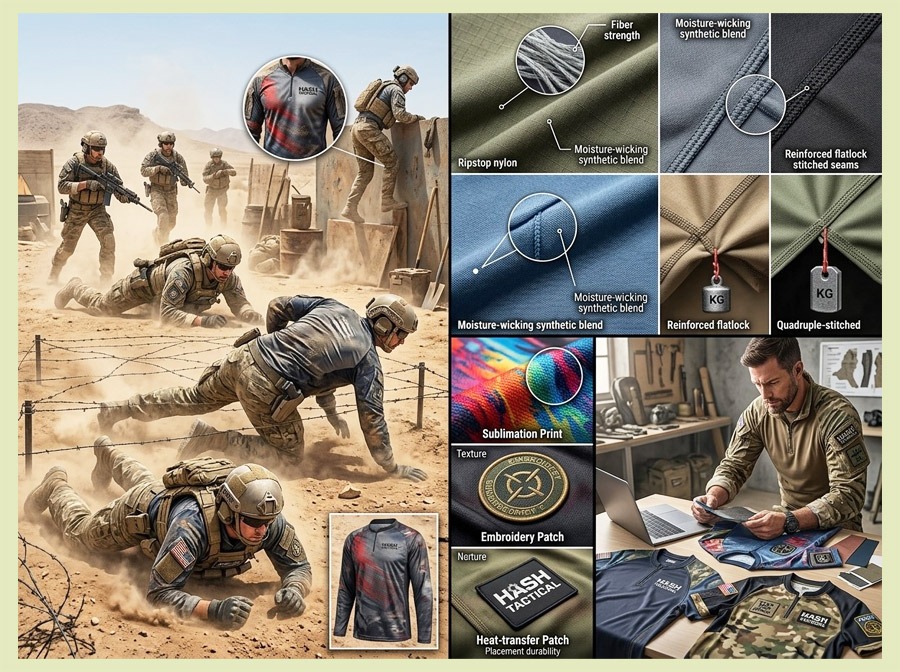
Yes, custom tactical jerseys can handle long, rough training days. But only if they are built right. Look for four things: a tough polyester or nylon blend fabrics, flatlock seams, four-way stretch, and dye-sublimated graphics. Skip any of these and the jersey will rip, chafe, or hold heat.
This guide shows you what to check before you order. It compares fabrics, seams, and printing methods so your team gets gear that lasts.
What Is a Custom Tactical Jersey?
A custom tactical jersey is a training top made for hard use. It carries your team name, colors, numbers, or logo. It looks like a sports jersey but is built more like field gear.
People wear them for:
- Military and law enforcement drills
- Airsoft and paintball matches
- Cross-training and obstacle course racing
- Gym boot camps
- Outdoor tactical classes
A normal team shirt is made for a short game. A tactical jersey is made for eight hours of crawling, running, and gear wearing.
Why Regular Jerseys Fail in Tactical Use
A basic jersey has three weak spots.
1. Weak seams. Standard stitching leaves raised ridges. These rub the skin. After a few hours under a vest, they cause sore spots.
2. Thin fabrics. Light knit fabrics snag on brushes, barriers, and Velcro. One snag can turn into a long tear.
3. Poor airflow. Cotton and cheap polyester soak up sweat. The shirt gets heavy, cold, and sticky.
Tactical jerseys fix each of these on purpose.
Fabric Tech: What Your Jersey Is Made Of
Fabrics decide how long the jersey lasts and how it feels at hour six. Here are the main choices.
Polyester
Polyester is the most common choice for custom jerseys. It dries fast, resists stretching out, and holds dye well. That last point matters for sublimation printing.
Nylon
Nylon is stronger against rubbing than polyester. It costs more. It is a smart pick for high-wear zones like shoulders and forearms.
Polyester-Spandex Blends
Adding spandex gives stretch. This helps when you climb, drag, or swing your arms under load.
Ripstop
Ripstop fabrics have thicker threads woven in a grid pattern. If it gets a small tear, the grid stops it from spreading. That is why it is used in tents and parachutes.
Four-Way Stretch Fabrics
Four-way stretch fabric moves side to side and up and down. Two-way stretch only moves in one direction. Four-way is better for tactical work because your body twists in every direction.
Fabric Comparison Table
| Fabric | Durability | Stretch | Sweat Control | Best For |
|---|---|---|---|---|
| Cotton | Low | Low | Poor | Casual wear only |
| Standard polyester | Medium | Low | Good | Short games |
| Polyester-spandex | Medium | High | Good | Cross-training |
| Nylon blend | High | Medium | Good | Rough terrain |
| 4-way stretch ripstop | Very high | High | Very good | All-day tactical use |
Quick takeaway: For long days, choose a four-way stretch ripstop or a strong poly-nylon blend. Avoid cotton.
Moisture-Wicking: Staying Dry Under Load
Sweat is the real enemy on long training days. Wet fabric traps heat and rubs the skin.
Moisture-wicking combat tops pull sweat from your skin to the outer surface of the fabric. There, the sweat spreads out and dries quickly.
Look for these features:
- Mesh panels under the arms and along the sides
- Vented backs for airflow under a pack or vest
- Lightweight knit in low-wear zones
- Quick-dry finish that keeps the fabric from feeling heavy
Example
Picture a paintball team playing a two-day tournament in July. Players in cotton tees are soaked by noon. Players in wicking jerseys are damp but comfortable. The difference shows up in focus and energy by the afternoon.
Seam Construction: The Hidden Key to Comfort
Most buyers never look at seams. They should.
Flatlock Seams
Flatlock seams lay flat against the skin. The fabric edges are stitched side by side instead of overlapped. This removes the bulky ridge you feel in regular seams.
Why it matters:
- Less chafing under straps and vests
- Stronger joints that resist popping
- Smoother fit under body armor or a pack
Where Seams Should Sit
Good makers move seams away from friction zones. Shoulder seams shift toward the back. Side seams stay off the ribcage where a vest rubs.
Reinforced Stress Points
Look for extra stitching at:
- Underarms
- Shoulder joints
- Collar edge
- Hem
If a seller can’t tell you what stitching they use, treat that as a warning sign.
Abrasion Resistance: Handling Rough Contact
Abrasion-resistant training wear takes a beating from dirt, bark, concrete, gear straps, and Velcro. Here is how makers add toughness.
Denser knit. A tighter weave has fewer gaps for snags.
Reinforced patches. Extra fabric on elbows and shoulders takes the most wear.
Ripstop grids. These stop small damage from growing.
Smooth surface finish. Less fuzz means less grabbing from hook-and-loop fasteners.
Real-World Test
Try this quick check when you get a sample. Rub the fabric with your thumbnail. Pull on the seam. Stretch it hard and let go. Good fabric bounces back. Weak fabric stays baggy or shows thin spots.
Plate Carrier Base Layer Performance
Many tactical athletes wear vests or plate carriers over their jerseys. This adds heat, pressure, and friction. A jersey worn as a plate carrier base layer needs extra care.
Check for:
- Smooth shoulders with no thick seams under the straps
- Snug but flexible fit so the top doesn’t ride up
- Breathable back panel to fight heat buildup
- Long enough hem so it stays tucked under the vest
- Low-profile graphics that won’t rub or peel
Fit matters here. A loose jersey bunches up under a vest and rubs skin raw. A tight jersey without stretch limits movement. Aim for close but flexible.
Dye-Sublimation: The Best Way to Print Custom Designs
How you print your design affects both looks and durability.
What Is Dye-Sublimation?
Dye-sublimation uses heat to turn ink into a gas. The gas bonds inside polyester fibers. The color becomes part of the fabric instead of sitting on top.
Why It Wins for Tactical Use
- No cracking or peeling. The ink is inside the fiber.
- No added weight. You can’t feel the print.
- Full-color designs. Camo, gradients, and team art all work.
- Stays breathable. Nothing blocks the fabric pores.
- Fade resistant. Colors stay sharp after many washes.
Printing Method Comparison
| Method | Feel | Lasts | Breathability | Full-Color Designs |
|---|---|---|---|---|
| Screen print | Slightly thick | Good | Reduced | Limited |
| Heat transfer vinyl | Stiff | Fair | Poor | Limited |
| Embroidery | Bumpy | Very good | Fair | Limited |
| Dye-sublimation | Same as fabric | Excellent | Full | Yes |
Note: Sublimation works best on polyester and light colors. Very dark fabric bases can limit results, so ask your maker about color options.
Custom Teamwear Durability: What to Ask Before You Order
Custom teamwear durability depends on the maker as much as the material. Ask these questions.
- What fabric weight (GSM) do you use?
- Are the seams flatlock or overlock?
- Is the fabric ripstop or a standard knit?
- Is the design sublimated or applied on top?
- Can I get a sample before a bulk order?
- What is the wash care advice?
- How do you handle sizing for different body types?
A good supplier answers these clearly and fast.
Red Flags
- No fabric details on the product page
- No sample option
- Vague claims like “premium quality” with no specs
- No size chart
- Very low prices on bulk orders
How to Care for Your Jerseys
Good care adds months to a jersey’s life.
- Wash in cold or cool water
- Turn jerseys inside out
- Skip fabric softener, which clogs wicking fibers
- Close Velcro before washing
- Hang dry when possible
- Avoid high heat in the dryer
Sweat left in fabric can hold odor. Rinse or wash soon after heavy sessions.
Choosing the Right Jersey by Activity
| Activity | Key Features to Prioritize |
|---|---|
| Airsoft | Ripstop, elbow reinforcement, camo sublimation |
| Paintball | Vented panels, loose sleeves, bright team colors |
| Law enforcement drills | Smooth shoulders, wicking, plate carrier fit |
| Cross-training | 4-way stretch, flatlock seams, light weight |
| Outdoor instruction | Sun protection, quick-dry, durable knit |
Custom Tactical Jerseys Built for Long Training Days
4 must-haves before you order
The 4 Must-Haves
Tough Fabric
Poly-nylon blend with 4-way stretch ripstop.
Flatlock Seams
Flat stitching. No chafing under a vest.
Sweat Control
Moisture-wicking finish and mesh panels.
Dye-Sublimation
Ink sits inside the fiber. No peel. No crack.
Fabric Durability Check
Best Features by Activity
Ask Before You Buy
Look For
- Fabric specs listed
- Sample option
- Size chart
Walk Away If
- Only says “premium quality”
- No seam details
- Price is far too low
Care Tips
Ready to equip your team with gear built for extreme endurance?
Design Your Custom Jerseys at Hash TacticalWhere to Get Reliable Custom Gear
Buyers often want a single source that handles design, fabric, and bulk orders. Hash Tactical offers custom tactical jerseys built with performance fabrics for demanding use. Teams can choose colors, add logos, and match designs across the whole roster. Wherever you order, apply the checklist above to any supplier, including Hash Tactical.
Frequently Asked Questions
Yes, if you train often. A well-built jersey lasts longer than cheap tops. You replace fewer shirts over time.
Rarely. The ink lives inside the fibers, so it doesn’t peel. Follow care instructions to keep colors bright.
Yes. Choose flatlock seams and smooth shoulders. Pick a fit that is snug but stretchy.
Lightweight polyester with mesh panels works well. Moisture-wicking finishes help even more.
Order one per player, plus a few spares. Extras cover new members and replacements.
Not always. Light ripstop with vent panels breathes well. Heavy ripstop is warmer, so match it to your climate.
With good care, quality jerseys last several seasons of regular use. Rough use and hot dryers shorten that.
Many suppliers offer samples. Always ask before placing a large order.
Final Checklist
Before you order, confirm your jersey has:
- Polyester or nylon blend fabric
- Four-way stretch
- Flatlock seams
- Moisture-wicking finish
- Ripstop or reinforced zones
- Dye-sublimated graphics
- A fit that works under your gear
Ready to Order?
Ready to equip your team with custom tactical jerseys built for extreme endurance? Explore our high-performance custom tactical apparel collection and design your gear today.
👉 For any questions before ordering, feel free to contact our expert team today!