Tactical Jerseys: A Pro’s Guide to Combat Shirts
This is a deep-dive mission briefing. We’re going over the wire to talk about what separates a “shirt” from a piece of life-saving equipment. Grab a coffee, stay frosty, and let’s get into the guts of tactical jerseys.
The Cloth on Your Back: More Than Just Fabric
I’ve seen gear fail in places you wouldn’t believe. I’ve seen seams pop during a high-speed crawl and sleeves melt under heat because someone wanted to save five bucks on a “tactical” shirt. In the field, your clothing is your first layer of defense. It’s the interface between your skin and your plate carrier.
A real tactical jersey isn’t about looking cool for a social media post. It’s about thermal regulation, friction management, and survival. Whether you are breaching a door or holding a perimeter for ten hours, your gear has to work as hard as you do.
The Anatomy of a Modern Combat Shirt
A standard t-shirt is built for a barbecue. A tactical jersey is built for a gunfight. We use a hybrid design. The torso is usually a lightweight, moisture-wicking knit. Why? Because you’re wearing a 20-pound vest. If that torso is heavy canvas, you’ll overheat in minutes.
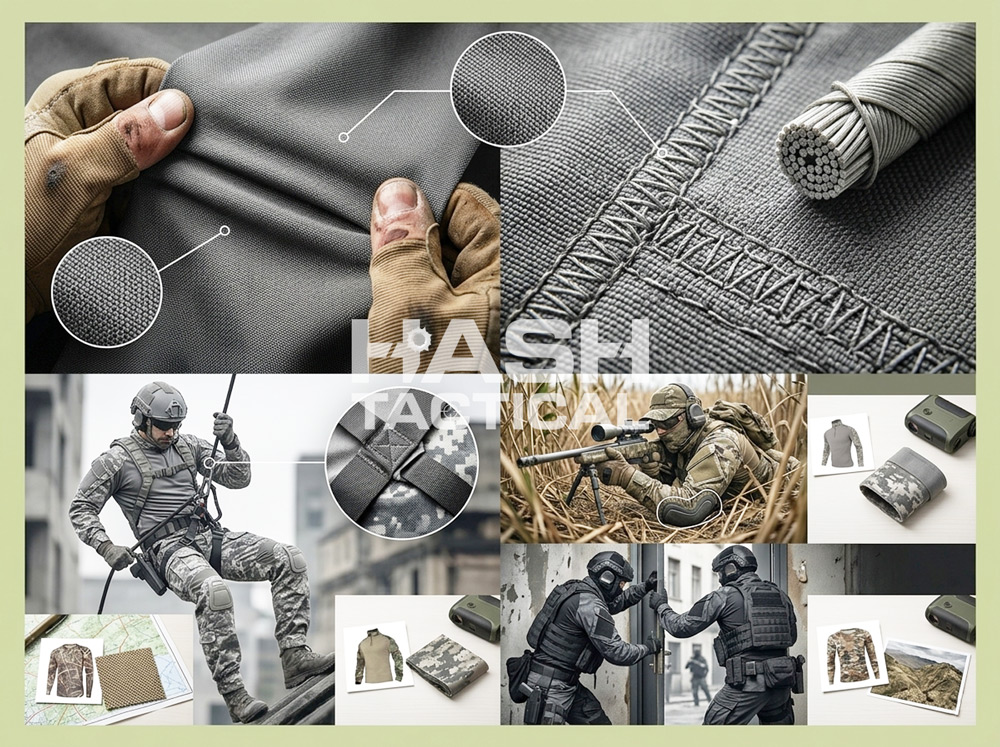
The sleeves, however, are the “armor.” They take the abuse from gravel, thorns, and hot brass. This is where the heavy lifting happens. At hashtactical.com, we focus on that balance: breathability where you sweat, and iron-clad durability where you hit the dirt.
Why 1000D Nylon and Reinforced Stitching Matter
The 1000D Nylon Standard: The Tank of Fabrics
You’ll hear “Denier” thrown around a lot. Think of it as the weight of the fight. 1000D Nylon is the gold standard for high-abrasion zones. It’s thick and rugged. It’s what we use on elbow reinforcements and shoulder caps.
When you’re dragging a teammate or crawling through jagged debris, 1000D doesn’t just “hold up”—it refuses to quit. It’s the difference between a minor scrape and a trip to the medic. For elite units, anything less is a liability.
The Hidden Hero: Reinforced Stitching
The strongest fabric in the world is useless if the thread snaps. We use “Stress-Point Bar-Tacking.” If you look at the armpits or the pocket flaps of our gear, you’ll see extra-dense stitching.
Most civilian clothes use a single-needle stitch. We use triple-needle felled seams. This ensures that even if one thread is cut by a knife or a sharp rock, the entire garment doesn’t unravel. It’s about redundancy. In the sandbox, redundancy equals life.
Sublimation vs. Cut & Sew: The Professional’s Choice
| Feature | Sublimated Tactical Jerseys | Cut & Sew Tactical Jerseys |
| Durability | High (Ink is inside the fiber) | Extreme (Heavyweight fabrics) |
| Breathability | Excellent | Good (Depends on inserts) |
| Camouflage | Sharp, permanent patterns | Traditional fabric layering |
| Best Use | High-activity, hot climates | Rugged, cold, or abrasive terrain |
The Art of Sublimation
Sublimation isn’t just “printing.” We heat the ink until it becomes a gas and bonds with the molecules of the fabric. This means your Multicam or Digital Camo won’t peel, crack, or fade, even after a hundred wash cycles in a bucket. It keeps the fabric pores open, so you don’t feel like you’re wearing a plastic bag.
The Grit of Cut & Sew
For the sleeves and collars, we go old school. Cut & sew allows us to mix materials. We can put a soft, antimicrobial knit in the pits and that 1000D Nylon on the forearms. This “Frankenstein” approach creates a garment that moves with the human body, not against it.
Field Performance: Living in Your Gear
Moisture Management: Staying Dry to Stay Lethal
Sweat is the enemy. In the heat, it leads to chafing. In the cold, it leads to hypothermia. A professional tactical jersey pulls moisture away from the skin and pushes it to the surface where it can evaporate.
The Friction Factor
If you’ve ever worn a cheap shirt under a plate carrier, you know about “vest bite.” The constant rubbing of nylon straps against a poorly designed seam can raw-hide your skin in an hour. We offset our shoulder seams so they never sit directly under your carrier straps. It’s a small detail that saves you a lot of pain on a three-day op.
The Elite Unit Requirements
Silent Movement
Real operators don’t want to sound like a bag of potato chips when they move. High-quality tactical jerseys are designed to be “quiet.” We choose fabrics that don’t swish or crinkle. Stealth starts with your clothing.
Integrated Padding
Modern tactical jerseys often feature pockets for removable elbow pads. When you’re dropping into a prone position on concrete, you’ll be glad you have that extra layer of foam between your bone and the ground.
- Integrated Pockets: For maps, pens, or small kits.
- Velcro Panels: For IFF (Identification Friend or Foe) patches.
- Adjustable Cuffs: To keep out debris and insects.
The Manufacturing Difference at Hashtactical.com
We don’t just “make” clothes; we engineer solutions. Because we are a direct manufacturer, we control every needle-drop. We know exactly where that 1000D Nylon came from and how many stitches per inch are in that sleeve.
When an elite unit requests a specific pocket angle or a reinforced collar for communications wires, we don’t send it to a middleman. We go to the cutting table. That’s the advantage of working with a dedicated tactical gear manufacturer. We build it so you can trust it.
Tactical Jersey Maintenance: Care for the Gear that Cares for You
- Flip it Inside Out: Protect that 1000D Nylon and the Velcro panels from the agitator.
- Cold Water Only: High heat can kill the moisture-wicking properties of synthetic fibers.
- No Softeners: Fabric softeners clog the pores of the fabric, killing breathability.
- Air Dry: If you can, hang it up. The sun is a natural disinfectant, but don’t leave it out so long that UV damages the fibers.
Frequently Asked Questions (FAQ)
A: Absolutely. They are comfortable and durable. But be warned: once you get used to the utility pockets and the durability, a normal shirt will feel like tissue paper.
A: We only use it in high-impact zones. The rest of the jersey is built for airflow. It’s the perfect compromise between protection and temperature control.
A: Screen printing sits on top of the fabric and blocks airflow. Sublimation becomes part of the fabric. For a tactical jersey, breathability is non-negotiable.