Optimizing Custom Combat Shirts for Armor Carrier Comfort
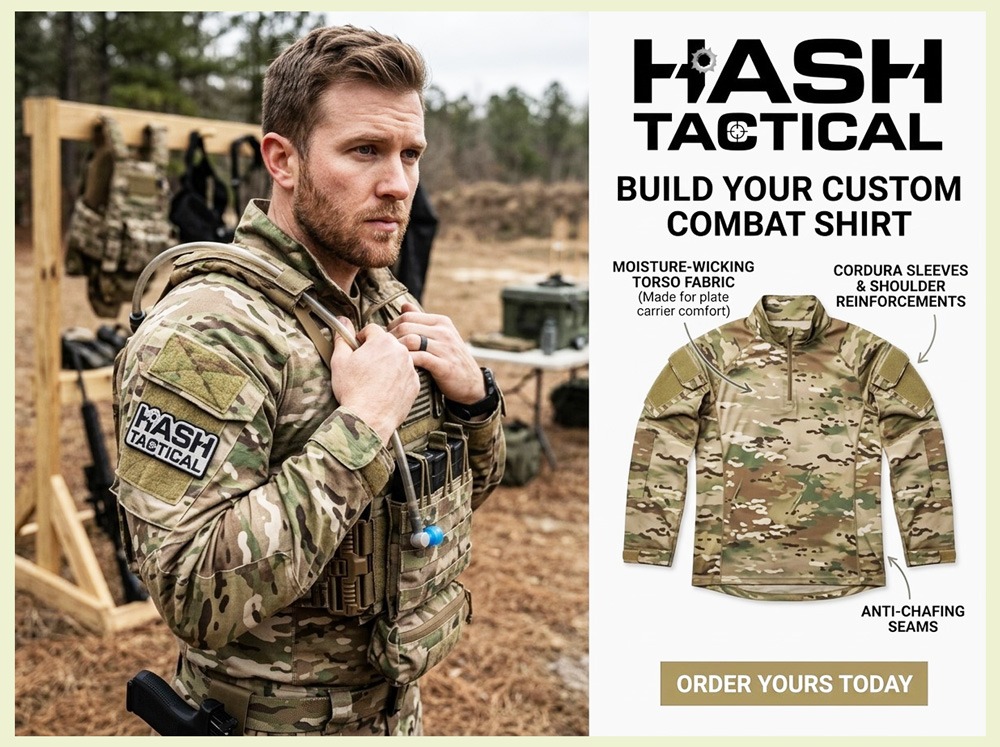
A custom combat shirt is the fastest way to fix plate carrier discomfort. The right base layer stops chafing, cuts down on sweat buildup, and keeps you cool under load. Look for moisture-wicking torso fabric, Cordura sleeves, and anti-chafing flatlock seams. Skip cotton. Skip loose sleeves that bunch under your carrier. If you want gear built around your body and your mission, a tactical UBACS custom build beats an off-the-shelf shirt every time. Hash Tactical builds these shirts to spec, so you get comfort where you need it and durability where you need it most.
Why Your Base Layer Matters More Than You Think
Most operators focus on the plate carrier. Few focus on what’s under it. That’s a mistake.
Your base layer touches your skin for hours. It absorbs sweat, and it rubs against straps. It traps heat or lets it escape. A bad base layer can turn a normal patrol into a miserable one. A good one disappears, and you forget it’s there.
This is why the custom combat shirt exists. It’s not a fashion choice. It’s a comfort and performance tool built for one job: working under a plate carrier without fighting you.
The Core Problem With Standard Shirts
Regular t-shirts and even most tactical shirts weren’t built for armor. Here’s what goes wrong:
- Cotton soaks up sweat and stays wet
- Full sleeves bunch up under carrier straps
- Seams sit right where straps rub
- Fabric overheats fast in the torso
- Sleeves wear out fast from gear contact
A tactical UBACS custom shirt solves each of these problems by design, not by accident.
What Makes a Combat Shirt “Combat Ready”
A true combat shirt has two zones. Each zone does a different job.
Zone 1: The Torso
The torso sits under your armor. It needs to breathe. It needs to move sweat away from your skin fast. This is where moisture-wicking torso fabric earns its keep.
Good torso fabric:
- Pulls sweat away from skin
- Dries fast between patrols
- Stretches with your movement
- Stays light even when soaked
Zone 2: The Sleeves
Sleeves take the abuse. They rub against gear, brush against walls, and catch on branches. This is where Cordura sleeves come in.
Cordura is a tough, abrasion-resistant fabric. It’s built to survive years of hard use. Pairing a soft, breathable torso with tough Cordura sleeves gives you the best of both: comfort where you need it, armor where you need it.
Custom Combat Shirt vs. Standard Combat Shirt
Here’s a side-by-side look at what changes when you go custom.
| Feature | Standard Combat Shirt | Custom Combat Shirt (Hash Tactical) |
|---|---|---|
| Torso Fabric | Generic poly blend | Moisture-wicking torso fabric matched to climate |
| Sleeve Material | Thin poly or cotton blend | Cordura sleeves rated for abrasion resistance |
| Seams | Standard stitched seams | Anti-chafing flatlock seams |
| Fit | One-size-fits-most | Built to your measurements |
| Color/Pattern | Limited stock options | Full custom color and pattern options |
| Sleeve Length | Fixed | Adjustable to your preference |
| Panel Placement | Fixed design | Placed to avoid carrier strap contact |
The biggest difference isn’t the fabric alone. It’s the fit. A shirt built for your body sits right the first time. No break-in period. No guessing.
Anti-Chafing Flatlock Seams: The Small Detail That Changes Everything
Seams seem small. They aren’t.
A regular seam has raised edges. Under a plate carrier, those edges rub against your skin for hours. After a long shift, that rubbing turns into raw skin, blisters, or sores.
Anti-chafing flatlock seams lie flat against the body. There’s no raised edge to dig in. This one change can turn a shirt you dread wearing into one you forget about.
Where Flatlock Seams Matter Most
- Shoulder seams, under carrier straps
- Underarm seams, where movement is constant
- Side seams, where plates press in
- Collar seams, under chin straps or communication gear
If a shirt skips flatlock seams in these spots, skip the shirt.
Moisture-Wicking Torso Fabric: What to Look For
Not all “moisture-wicking” fabric performs the same. Some brands slap the label on thin, low-quality poly and call it a day.
Real moisture-wicking torso fabric should:
- Move sweat to the outer layer fast
- Dry within 20-30 minutes off-body
- Resist odor buildup over multi-day wear
- Stay stretchy after repeated washing
- Stay light even at higher weights
Quick Fabric Comparison
| Fabric Type | Sweat Handling | Durability | Best Use |
|---|---|---|---|
| Cotton | Poor, stays wet | Low | Not recommended under armor |
| Basic Polyester | Fair | Medium | Budget training use |
| Performance Poly Blend | Excellent | High | Daily patrol, long shifts |
| Poly-Spandex Blend | Excellent | High | High-movement roles |
For most military operators and PMCs, a performance poly blend or poly-spandex blend is the smart pick.
Cordura Sleeves: Built for Contact
Your sleeves take more physical contact than any other part of the shirt. Ladders, walls, gear bags, weapon slings, they all make contact with your arms.
Cordura sleeves handle this without tearing. Cordura fabric is known in the tactical gear world for high abrasion resistance and long service life.
Benefits of Cordura Sleeves
- Resist tears from rough surfaces
- Hold up to repeated gear contact
- Keep their shape after heavy use
- Add minor cut resistance
- Extend the life of the whole shirt
A shirt with weak sleeves fails first. That’s usually where damage starts. Cordura sleeves push that failure point way out.
How a Custom Fit Solves Plate Carrier Comfort Issues
Off-the-shelf shirts are built for an average body. Most people aren’t average. That mismatch is where plate carrier discomfort starts.
Common Fit Problems With Stock Shirts
- Torso too long, bunches under the belt
- Torso too short, exposes skin under armor
- Sleeves too tight, restrict arm movement
- Sleeves too loose, snag on gear
- Collar too high, rubs under chin straps
A custom build fixes all five. You give your measurements. The shirt is cut to match. No compromise, no “close enough.”
What You Can Customize
With a tactical UBACS custom order, you typically choose:
- Torso length
- Sleeve length
- Fabric weight (lightweight vs. mid-weight)
- Color and camo pattern
- Panel placement
- Collar height
This level of control is why more operators and contractors are moving away from stock gear.
Plate Carrier Base Layer: Matching Shirt to Carrier Type
Not every plate carrier fits the same way. Your base layer should match your carrier setup.
Low-Profile Carriers
Low-profile carriers sit close to the body. Pick a thinner moisture-wicking torso fabric here. Bulk under a low-profile carrier causes pressure points fast.
Heavy Load-Bearing Carriers
Heavy carriers with lots of pouches need a shirt that resists compression wear. A mid-weight fabric with reinforced shoulder seams works better here.
Hot Climate Operations
In hot climates, breathability wins over everything else. Go with the lightest moisture-wicking torso fabric available, paired with shorter or vented sleeves.
Cold Climate Operations
In cold climates, a slightly heavier base layer helps retain warmth. Pair it with a mid-layer, and keep the same anti-chafing flatlock seams for comfort under multiple layers.
Step-by-Step: How to Choose Your Custom Combat Shirt
- Measure your torso and arm length. Accurate numbers matter more than guessing your normal size.
- Pick your climate profile. Hot, cold, or mixed conditions change fabric choice.
- Choose torso fabric weight. Lightweight for heat, mid-weight for durability.
- Select Cordura sleeve thickness. Standard for general use, reinforced for high-contact roles.
- Confirm seam placement. Make sure flatlock seams sit away from strap contact zones.
- Pick your color or pattern. Match your unit, agency, or personal preference.
- Review before ordering. Double check measurements before submitting your build.
Real-World Example: Long Patrol Comfort Test
Picture two operators on the same 10-hour patrol in hot weather.
Operator A wears a stock cotton-blend combat shirt. By hour four, sweat has soaked through. By hour six, the seams under his shoulder straps start rubbing raw, and by hour eight, he’s adjusting his carrier every ten minutes just to find relief.
Operator B wears a custom combat shirt with moisture-wicking torso fabric, Cordura sleeves, and anti-chafing flatlock seams. His shirt dries between short breaks. His seams stay smooth under the straps. He finishes the patrol without touching his carrier once for comfort reasons.
Same mission. Same weather. Different base layer. Different outcome.
Care Tips to Extend the Life of Your Combat Shirt
A custom shirt is an investment. Take care of it.
- Wash in cold water to protect fabric fibers
- Skip fabric softener, it clogs moisture-wicking fibers
- Air dry when possible
- Avoid high heat drying, it can weaken Cordura sleeves
- Inspect seams monthly for early wear signs
Good care can double the working life of your shirt.
Why Operators Choose Hash Tactical
Hash Tactical builds combat shirts around the operator, not the other way around. Every custom combat shirt starts with real measurements, real climate needs, and real mission requirements.
The team at Hash Tactical uses moisture-wicking torso fabric that actually performs, not just fabric with a wicking label slapped on it. Cordura sleeves are standard on every build, not an upgrade you have to pay extra for. And every seam is placed with anti-chafing flatlock construction, right where plate carrier straps sit.
For military operators and PMCs who spend long hours under armor, that attention to detail adds up fast.
Custom Combat Shirts for Armor Carrier Comfort
The Two-Zone Build
Zone 1 · Torso
Moisture-wicking torso fabric. Breathes fast, dries fast.
Zone 2 · Sleeves
Cordura sleeves. Built to survive gear contact and rough surfaces.
Seam Line
Anti-chafing flatlock seams sit flat under carrier straps.
Why It Works
Sweat Control
Moisture-wicking fabric pulls sweat off skin fast.
Sleeve Toughness
Cordura resists tears, cuts, and daily wear.
No Chafing
Flatlock seams lie flat under carrier straps.
Stock vs. Custom
| Feature | Standard Shirt | Custom Shirt |
|---|---|---|
| Torso Fabric | Generic poly blend | Moisture-wicking, climate-matched |
| Sleeves | Thin poly or cotton | Cordura, abrasion-rated |
| Seams | Standard, raised edges | Anti-chafing flatlock |
| Fit | One-size-fits-most | Built to your measurements |
Build a combat shirt made for your body, your climate, and your mission.
Customize Your Combat ShirtFAQ
UBACS stands for Under Body Armor Combat Shirt. It’s a shirt built with a breathable torso and tougher sleeves, designed to be worn directly under a plate carrier. A custom version is built to your measurements and mission needs instead of a standard size.
The torso needs to breathe and manage sweat. The sleeves need to survive contact with gear, walls, and rough surfaces. One fabric can’t do both jobs well, so combat shirts use two different materials.
For anyone wearing a plate carrier for long shifts, yes. A better fit and better fabric cut down on chafing, overheating, and shirt replacement costs over time.
With normal use and proper care, Cordura sleeves can outlast standard fabric sleeves by a wide margin. Exact lifespan depends on how rough the operating environment is.
Yes. Fabric weight and sleeve design can be adjusted for cold climate operations while keeping the same anti-chafing seam construction.
Yes. A shirt that’s too long, too short, or too tight creates pressure points and bunching under armor. A custom fit removes those problems from the start.
Ready to Build Your Own?
Stop fighting your base layer. Get a shirt built for your body, your climate, and your mission.
👉 For more information, contact our expert team.