What Should Custom Tactical Apparel Include? (Essential Features, Smart Tech & Modern Trends)
Good custom tactical apparel needs five things, tough fabric, MOLLE-ready design, IR/NIR compliance, a comfortable fit for long shifts, and room for your agency’s patches and colors. Skip any one of these, and your team pays for it in the field. This guide breaks down each requirement so you can order gear that actually works, not just gear that looks good in a catalog.
Why Tactical Uniform Requirements Matter More Than Ever
Officers and security teams wear their gear for 10-12 hour shifts. Bad stitching, stiff fabric, or gear that traps heat isn’t just annoying, it slows people down when seconds count.
Procurement officers face a tough job. You need gear that meets department standards, fits a budget, and holds up to daily abuse. That means knowing what “custom” should really include before you sign a purchase order.
This article covers the must-have features, the newer smart-tech options, and how to compare vendors so you don’t overpay for the wrong thing.
Core Fabric Requirements: What Your Uniform Is Actually Made Of
Moisture-Wicking Ripstop Fabric
Ripstop fabric has a grid weave that stops small tears from spreading into big rips. This matters when gear brushes against fences, vehicles, or rough terrain.
Moisture-wicking treatment pulls sweat away from the skin. This keeps officers cooler in summer and prevents chafing during long patrols. Look for a poly-cotton or nylon-cotton ripstop blend, pure cotton soaks up sweat instead of moving it away.
Weight and Durability
Most professional tactical fabric falls between 6 and 8 oz per square yard. Lighter fabric (under 6 oz) tears easier. Heavier fabric (over 8 oz) can feel stiff and hot.
A good rule of thumb:
| Fabric Weight | Best Use Case | Trade-Off |
|---|---|---|
| 5-6 oz | Hot climate patrol | Less durable |
| 6.5-7.5 oz | General duty, all-season | Balanced |
| 8+ oz | Cold weather, heavy-duty tasks | Heavier, less breathable |
Stretch Panels
Gusseted crotch panels and stretch fabric at the shoulders and knees let officers move without ripping seams. This is especially important for tactical pants, since kneeling, climbing, and running are part of the job.
Modular MOLLE Attachment: The Backbone of Load-Bearing Gear
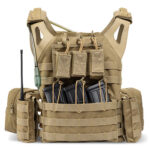
MOLLE (Modular Lightweight Load-carrying Equipment) is a system of webbing straps sewn onto vests, belts, and packs. It lets users attach pouches, holsters, and medical kits wherever they need them.
Why MOLLE compliance matters:
- It lets teams standardize gear across different vendors.
- Officers can move pouches based on their specific role (patrol vs. SWAT vs. K9).
- It saves money, agencies don’t need to replace the whole vest to add new gear.
When ordering custom apparel, confirm the webbing follows PALS (Pouch Attachment Ladder System) spacing, rows spaced 1 inch apart, with bar-tacks every 1.5 inches. Off-spec webbing won’t accept standard pouches, which defeats the purpose of “modular” gear.
Placement Checklist for MOLLE Panels
- Front chest panel for radio or magazine pouches
- Side panels for medical kits or cuffs
- Lower back panel for hydration packs
- Belt-level webbing for duty gear
NIR Compliance: A Feature Many Buyers Overlook
NIR stands for Near-Infrared compliance. Night vision devices and IR illuminators pick up light in the near-infrared spectrum. Regular dyes can “glow” under night vision, which gives away an officer’s position in low light.
NIR-compliant fabric uses special dyes that stay dark under infrared light, matching how natural materials (like dirt or foliage) appear on night vision equipment.
Who needs NIR compliance?
- SWAT and tactical response teams
- Military units and contractors
- Any unit that operates during nighttime raids or surveillance
If your team never operates in low-light tactical situations, NIR compliance may not be worth the added cost. But for units running night operations, it’s a safety requirement, not a nice-to-have.
Low-Profile Tactical Wear: Blending In When Needed
Not every job calls for a uniform that screams “tactical.” Plainclothes security, executive protection, and some detective units need gear that looks casual but performs like duty wear.
Low-profile tactical wear includes:
- Soft-shell jackets with hidden MOLLE loops
- Cargo pants without visible tactical stitching
- Polos with stretch panels and concealed pen pockets
- Belts rated for concealed carry without a “tactical” look
This trend has grown fast among private security directors who want their teams to look professional at corporate sites while still carrying full gear underneath.
Smart Tactical Textiles: The New Frontier
Smart textiles are changing what “custom” means. These aren’t science fiction, they’re already available for procurement teams willing to invest.
Current Smart Tactical Features
- Temperature-regulating fibers that adjust based on body heat
- Antimicrobial treatments that reduce odor on multi-day deployments
- RFID-blocking pocket linings to protect ID badges and access cards
- Reflective or photoluminescent trim that’s invisible in daylight but visible under UV or flashlight for officer identification
Should You Invest in Smart Textiles?
Smart textiles cost more upfront, usually 15-30% more than standard tactical apparel. For high-turnover patrol units, the extra cost may not pay off. For specialized teams (K9, SWAT, long-duration deployments), the comfort and performance gains often justify the price.
Ergonomic Load-Bearing Apparel: Comfort Isn’t Optional
Ergonomic design isn’t about looking good. It’s about reducing injury and fatigue over a career, not just a shift.
Key ergonomic features to require:
- Padded shoulder straps on vests and packs to spread weight evenly
- Articulated knees and elbows that bend with the body instead of against it
- Adjustable waist bands that shift load from shoulders to hips
- Ventilated mesh backing behind heavy panels to reduce heat buildup
A poorly designed load-bearing vest can cause long-term back and shoulder problems. Departments that skip ergonomic testing often see higher workers’ comp claims tied to repetitive strain.
Customization Options: Branding, Fit, and Rank Identification
Custom tactical apparel should also reflect your agency or company identity. This includes:
- Embroidered or heat-pressed department patches
- Rank insignia placement (chest, shoulder, or collar)
- Agency-specific color schemes (navy, OD green, black, coyote tan)
- Name tapes with hook-and-loop backing for quick swaps
- Sizing options that fit a real range of body types, not just standard S-M-L-XL
Buyers should ask vendors directly: can sizing be adjusted per individual, or only per standard size chart? This affects comfort and morale more than people expect.
Comparing Vendors: What to Ask Before You Order
Before signing a contract, procurement officers should confirm these points with any tactical apparel vendor, including Hash Tactical:
- What fabric weight and blend do you use by default?
- Is MOLLE webbing PALS-compliant?
- Do you offer NIR-compliant dye options?
- What’s your minimum order quantity for custom branding?
- What’s the turnaround time for bulk orders?
- Do you offer sample units before full production?
A reliable vendor should answer all six without hesitation. If a vendor can’t confirm PALS spacing or NIR options, that’s a red flag for tactical-grade orders.
Custom Tactical Apparel
The 5 features every duty uniform order must includeCore Requirements
Fabric Weight Guide
MOLLE Panel Placement
NIR Compliance: Who Actually Needs It
Regular dyes glow under night vision. NIR dye stays dark, so gear doesn’t give away a position in low light.
Smart Tactical Textiles
Standard vs. Custom Apparel
Quick Comparison: Standard vs. Custom Tactical Apparel
| Feature | Standard Off-the-Shelf | Custom Tactical Apparel |
|---|---|---|
| Fabric choice | Fixed | Selectable weight/blend |
| MOLLE compliance | Sometimes | Guaranteed if specified |
| NIR dye options | Rarely | Available on request |
| Branding | Limited or none | Full logo/patch integration |
| Sizing | Standard chart | Adjustable per unit |
| Cost | Lower upfront | Higher upfront, lower long-term waste |
FAQ: Custom Tactical Apparel Questions
This varies by vendor. Most custom apparel makers, including Hash Tactical, set minimums based on fabric cut efficiency, usually starting around 20-50 units per style.
No federal law requires NIR compliance for all tactical apparel. However, many tactical response teams and military contracts require it as a specification.
Standard turnaround runs 4-8 weeks depending on fabric availability, embroidery complexity, and order size. Rush orders are sometimes available for an added fee.
Most smart textile features, like antimicrobial treatment or temperature regulation, need to be built into the fabric during manufacturing. They generally can’t be retrofitted onto existing uniforms.
Tactical wear is built for visible duty use, cargo pockets, MOLLE panels, reinforced stitching. Low-profile wear hides these features under a civilian look while keeping the same performance underneath.
Final Word: Build a Spec Sheet Before You Buy
Don’t order tactical apparel based on a catalog photo. Build a spec sheet first: fabric weight, MOLLE compliance, NIR needs, sizing range, and branding requirements. Bring that sheet to every vendor you compare.
Teams that skip this step often end up reordering gear within a year because it didn’t hold up or didn’t fit the mission. A little planning upfront saves budget and headaches down the road.
👉 Design and customize your high-performance tactical uniforms with our expert team, request a custom quote today!