Get a Better Fit with Made-to-Measure Tactical Pants: The Ultimate Guide to Custom Performance, Comfort, and Gear Integration
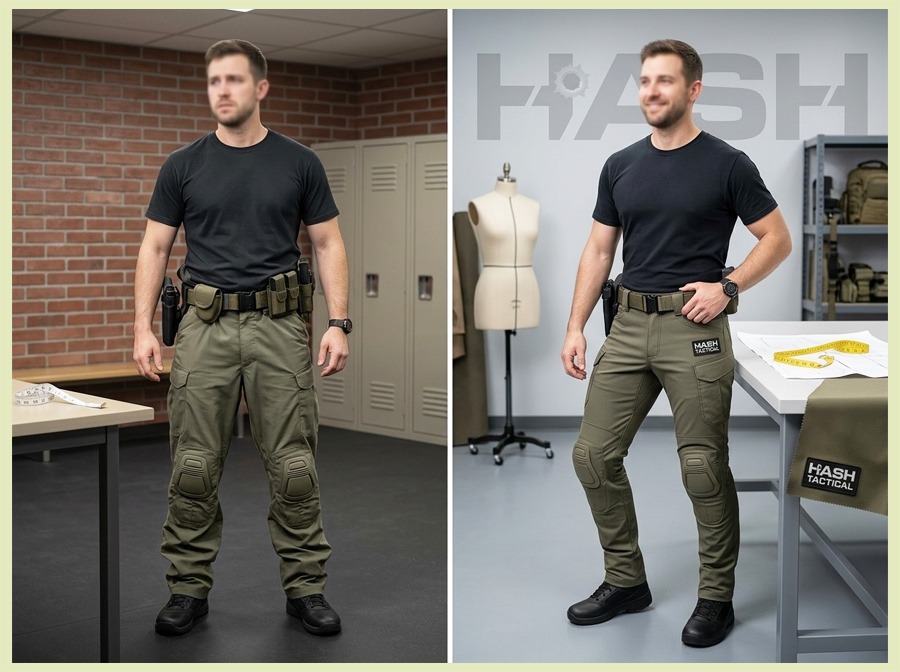
Made-to-measure tactical pants fit your body, not an average body. Off-the-rack pants guess your size. Custom pants use your real numbers. The result is better movement, a steadier duty belt, and knee pads that stay where they belong.
If you are an officer, soldier, first responder, or range shooter, a bad fit costs you comfort and speed. Custom pants fix that. They cost more up front, but they often last longer and work better on the job.
This guide explains how custom pants differ from store-bought pants, which features matter most, and how to measure yourself.
What “Made-to-Measure” Really Means
Made-to-measure means a maker builds the pants from your body measurements. You give numbers for waist, hips, thigh, rise, inseam, and more. The maker adjusts a base pattern to match.
Don’t confuse this with other terms:
- Off-the-rack: Fixed sizes like 34×32. Made for an average shape.
- Altered: Store-bought pants that a tailor changes. You are limited by the original cut.
- Made-to-measure: A base pattern adjusted to your numbers.
- Bespoke: A pattern drawn from scratch. It costs the most and takes the longest.
Most custom tactical pants fall in the made-to-measure group. It is the best mix of price, speed, and fit.
Why Off-the-Rack Tactical Pants Often Fail
Standard sizes use two numbers: waist and inseam. Your body has many more. Two people can both wear a 34×32 and still have very different thighs, hips, and seat sizes.
Common problems
- Tight thighs. Athletic builds often feel squeezed when squatting or climbing.
- Loose waist. Pants fit the legs but sag at the waist, so the belt pulls them down.
- Wrong rise. A short rise digs in when you sit in a patrol car. A long rise bunches up.
- Bad hems. Legs that are too long drag over boots. Legs that are too short ride up when you kneel.
- Misplaced knee pockets. Pads sit too high or too low, so they miss the knee.
Bigger and smaller builds face the same issue. Sizes are built around a mid-range body, and everyone else compromises.
Off-the-Rack vs. Made-to-Measure: Side-by-Side
| Feature | Off-the-Rack | Made-to-Measure |
|---|---|---|
| Sizing method | 2 numbers (waist, inseam) | 8 or more body measurements |
| Fit for athletic builds | Often tight in thighs and seat | Cut to match your thighs and seat |
| Knee pad alignment | Fixed position | Can match your knee height |
| Duty belt comfort | Depends on luck | Waist and rise can be matched |
| Price | Lower | Higher |
| Wait time | Immediate | Days to weeks |
| Returns | Easy | Often limited |
| Best for | Budget buyers, standard builds | Daily wearers, non-standard builds |
Takeaway: Off-the-rack wins on price and speed. Made-to-measure wins on fit and long-term value.
Features That Make Tactical Pants Work
A good fit is only part of it. The design matters too. Here are the features to look for.
Articulated knees
Articulated knees have extra seams and a curved shape. The fabric bends with your leg instead of fighting it. This helps when you kneel, climb stairs, or move through a crouch.
Gusseted crotch
A gusset is a diamond-shaped panel sewn into the crotch. It removes the stress point where four seams meet. You get a wider range of motion, and the seams last longer. High kicks, lunges, and climbing all feel easier.
Stretch ripstop fabric
Ripstop uses a grid of thicker threads that stops small tears from spreading. Blends with a little spandex or elastane add stretch. Look for:
- Cotton/polyester ripstop with 2–4% stretch
- Nylon blends for lighter weight and faster drying
- Reinforced seat and knees for wear points
Tailored cargo pockets
Cargo pockets are handy, but bulky ones swing and snag. Tailored cargo pants place pockets closer to the leg. Items stay put, and the profile stays slim.
Waistband features
A good waistband sits flat under a belt. Look for:
- Belt loops wide enough for a 1.75-inch duty belt
- A flat, smooth inner band so the belt doesn’t rub
- Gripper strips that hold a tucked shirt in place
How Custom Fit Improves Duty Belt Clearance
A duty belt carries a lot of weight. A holster, magazines, a radio, cuffs, and more can add up to many pounds. If your pants fit poorly, that load shifts and pulls.
What a custom fit can fix
- Waist match. The belt rests on a waistband that fits, so it doesn’t slide.
- Rise match. The pants sit where your belt sits. No pinching when you sit.
- Pocket placement. Side pockets can clear the holster and mag pouches.
- Belt loop spacing. Loops line up with your gear layout.
Example
Picture an officer with a 34-inch waist and 26-inch thighs. Off-the-rack 34s feel snug in the legs. He buys a 36 for room. Now the waist is loose, and the duty belt drags the pants down all shift. A made-to-measure pair gives him a 34 waist and roomy thighs. The belt stays level, and he stops adjusting all day.
Tactical Knee Pad Alignment
Knee pads only work if they sit on your knees. Many people find pads slide down or sit off-center. This causes sore spots and weak protection.
Why alignment fails
- Knee height varies from person to person.
- Standard pockets are built at one height.
- Loose legs let pads shift when you move.
How custom pants help
Custom pants let the maker set the pad pocket at your knee height. Measure from the floor to the middle of your kneecap. Give that number, and the pocket lines up with it.
Check these points:
- Pad center sits on the middle of the kneecap.
- Pad stays put when you squat.
- Pocket opening is easy to reach.
- Fabric does not bunch behind the knee.
Range of Motion: A Quick Test
Try this test in any pair of pants. It shows fit problems fast.
- Deep squat. Do you feel pulling at the seat or thighs?
- High step. Lift your knee to hip height. Does the fabric resist?
- Kneel on one knee. Does the pad stay on your knee?
- Sit for five minutes with a belt on. Does the waistband dig in?
- Twist at the waist. Does the belt shift?
If you fail two or more, the pants don’t fit your body. That is when custom makes sense.
Who Benefits Most From Custom Tactical Pants
- Law enforcement officers who wear pants 10+ hours a day with a loaded belt.
- Military personnel who need gear to work with armor, pads, and packs.
- First responders such as EMTs and firefighters who bend, lift, and crawl.
- Range shooters and trainers who move between kneeling, prone, and standing.
- Athletic builds with big thighs, glutes, or a small waist.
- Taller, shorter, or broader people outside standard size charts.
How to Measure Yourself for Custom Pants
Good numbers are the base of a good fit. Use a soft tape measure. Wear thin clothing. Ask a friend to help.
| Measurement | How to Take It |
|---|---|
| Waist | Around the spot where your belt sits. Keep the tape level. |
| Hips/seat | Around the widest part of your hips. |
| Thigh | Around the fullest part of the upper thigh. |
| Rise | Crotch seam to the top of the waistband, seated or standing as instructed. |
| Inseam | Crotch to the ankle bone, or where you want the hem. |
| Knee height | Floor to the middle of the kneecap. |
| Knee width | Around the knee, slightly bent. |
| Leg opening | Width at the hem, based on how you wear your boots. |
Tips for better results
- Measure twice. Small errors add up.
- Wear your duty belt for the waist measure if you wear pants over it.
- Write numbers down right away.
- Compare with a pair that fits you well.
- Keep the tape snug, not tight.
Is Custom Worth the Price?
Custom pants cost more than most store pairs. But think about cost per wear.
- A well-fitting pair puts less stress on seams.
- You may replace pants less often.
- You avoid buying extra pairs that “almost” fit.
- You spend less on alterations.
If you wear pants five days a week, the extra cost can pay off in comfort alone.
When off-the-rack is fine: you have a standard build, wear pants occasionally, or need pants today.
How to Order Custom Tactical Pants Without Mistakes
- Take your measurements. Use the chart above.
- Decide your use. Duty, range, field, or mixed.
- Pick the fabric. Stretch ripstop suits most users.
- Choose features. Knee pad pockets, gusset, pocket layout.
- Check the return policy. Custom orders may not be returnable.
- Confirm your details. Review before you submit.
Hash Tactical offers customized tactical pants built around your own profile. You enter your numbers, pick your options, and get a pair made for your build.
Made-to-Measure Tactical Pants
Fit your real body. Not an average one.
Off-the-Rack vs. Made-to-Measure
Off-the-rack
Waist and inseam only. Built for an average shape.
Made-to-measure
Cut from your own measurements. Built for you.
4 Features That Matter
Articulated knees
Fabric bends with your leg.
Gusseted crotch
More reach. Longer-lasting seams.
Stretch ripstop
Tough, tear-resistant, flexible.
Tailored cargo pockets
Close to the leg. No swinging.
What a Custom Fit Fixes
Duty belt
Waist and rise match. The belt stays level.
Knee pads
Pocket sits at your knee height.
Movement
No pulling when you squat or climb.
8 Measurements to Take
5-Move Fit Test
- Deep squat
- High step
- Kneel on one knee
- Sit 5 minutes with a belt
- Twist at the waist
Stop settling for off-the-rack compromises.
Enter your measurements and get custom-tailored tactical pants from Hash Tactical.
Build your custom profileCare Tips to Make Custom Pants Last
- Wash in cool or warm water.
- Skip fabric softener. It can weaken stretch fibers.
- Hang dry when you can.
- Fix loose threads early.
- Clean knee pad pockets of dirt and grit.
Frequently Asked Questions
They are pants built from your body measurements. A maker adjusts a base pattern to fit you. This differs from standard sizes like 32×30.
For fit, yes. They match your thighs, waist, rise, and knee height. Off-the-rack pants cost less and ship faster, so they suit casual or standard-build buyers.
It varies by maker. Expect longer than a store pair, often days to a few weeks. Check the listed production time before you buy.
Yes. You can match the waist, rise, and belt loop layout to your gear. That keeps the belt stable and cuts rubbing.
Yes. Pocket height can be set to your knee. That keeps the pad centered when you kneel or move.
It is a diamond-shaped fabric panel in the crotch. It spreads stress and gives more freedom for lunging, climbing, and squatting.
Stretch ripstop is a top pick. It resists tears, moves with you, and handles hard use.
Weight or muscle changes can shift your fit. Re-measure before each new order, and keep your last numbers for comparison.
Final Word
Fit changes how pants feel and how they work. Off-the-rack pants are fine for many people. But if your body doesn’t match standard sizes, you pay for it in comfort and movement.
Made-to-measure tactical pants fix the problem at the source. They match your thighs, waist, rise, and knee height. Your belt stays steady. Your pads stay aligned. You move freely.
Stop settling for off-the-rack compromises. Build your custom profile today, enter your measurements, and experience maximum mobility with custom-tailored tactical pants from Hash Tactical.
👉 If you want more information about custom tactical apparel before buying decision, contact our expert design team today!