The Ultimate Guide to Duty-Grade Headwear: How to Choose a Tactical Cap That Holds Up on Duty
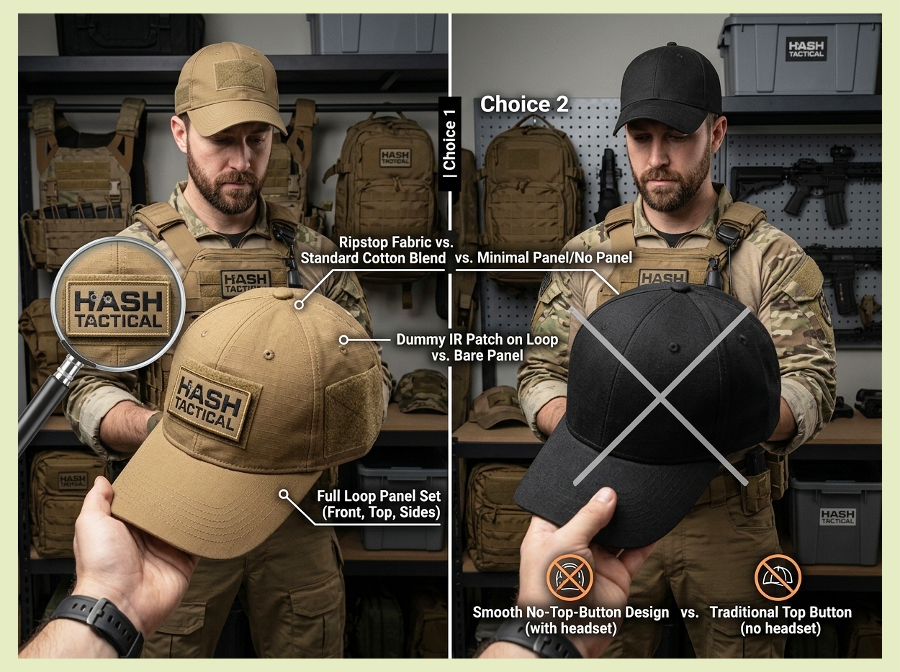
A good duty tactical cap has five things: tough ripstop fabric, a moisture-wicking sweatband, a loop patch panel, a low-profile crown, and a fit that stays put. If you wear a helmet, headset, or night vision, pick a no-top-button design. If your unit uses IR patches, make sure the cap’s loop panel is big enough and the fabric does not reflect IR light on its own.
Check your department’s uniform policy first. Then use the checklist below to compare caps.
Quick Buyer’s Checklist
| Feature | What to Look For | Why It Matters |
|---|---|---|
| Fabric | Ripstop nylon or nylon-cotton blend | Resists tears and snags |
| Sweatband | Moisture-wicking polyester or similar | Keeps sweat off your face and eyes |
| Patch panel | Large loop (hook-and-loop) front and side | Holds name, flag, and IR patches |
| Crown | Structured, low-profile | Fits under gear and keeps its shape |
| Top button | None, or a flat stitched one | No pressure point under a helmet |
| Closure | Adjustable strap or fitted | Stays on in wind and motion |
| Color | Black, navy, OD green, coyote, multicam, etc. | Must match your uniform rules |
What Is a Duty Tactical Cap?
A duty tactical cap is a hat built for work, not for fashion. It looks like a simple ball cap. But it is made to take daily abuse.
Officers, soldiers, security teams, and first responders wear it for long shifts. It sits in the sun, rain, dust, and sweat. It gets stuffed in a bag, clipped to a vest, or tossed on a truck seat.
A regular store cap often fails fast. The brim bends. The stitching frays. The fabric soaks up sweat and stays wet. A duty cap fixes those problems.
Who Needs One
- Patrol officers and deputies
- Military and reserve personnel
- Tactical security operators
- Firefighters, EMTs, and search teams
- Range instructors and serious shooters
- Outdoor workers who need a tough hat
Fabric: The Foundation of a Tough Cap
Fabric decides how long your cap lasts. It also decides how it feels on a hot day.
Ripstop
Ripstop is a woven fabric with extra-strong threads sewn in a grid pattern. If the fabric gets a small tear, the grid helps stop it from spreading. That is where the name comes from.
Ripstop is common in nylon and in nylon-cotton blends. It is light and dries fast. It is a smart pick for a ripstop tactical operator cap.
Nylon-Cotton Blend (NyCo)
NyCo mixes nylon’s strength with cotton’s softer feel. Many military uniforms use blends like this. It breathes well and handles wear. It may hold a bit more sweat than pure nylon.
Cotton Twill
Cotton twill feels classic and comfortable. But it soaks up sweat and takes a long time to dry. It can fade and lose shape with heavy use. It works for casual wear and is a weaker choice for hard duty.
Polyester and Performance Blends
Polyester dries fast and holds color well. Many moisture-wicking caps use it. It resists shrinking. Some versions feel slick, so check the texture.
Fabric Comparison
| Fabric | Strength | Dry Time | Comfort | Best For |
|---|---|---|---|---|
| Ripstop nylon | High | Fast | Medium | Hard daily duty, wet weather |
| NyCo blend | High | Medium | Good | Long shifts, uniform matching |
| Cotton twill | Medium | Slow | Very good | Light duty, off-duty wear |
| Polyester blend | Medium–High | Fast | Good | Hot climates, range days |
Tip: Look at the stitching too. Tight, even stitches with reinforced stress points last longer than loose ones.
Moisture Control: The Sweatband Test
A wet band is more than annoying. Sweat in your eyes hurts your focus. That is a real problem when you need to watch a scene or aim.
A moisture-wicking duty hat pulls sweat away from your skin. The sweat spreads out in the fabric and dries faster. Your forehead stays drier.
What to Check
- The inner band. It should feel smooth, not scratchy.
- The fabric type. Polyester or similar synthetic fibers wick best.
- Vent holes or mesh. Small side vents let heat out.
- Seams. Flat seams stop rubbing and red marks.
A Quick Home Test
Wear the cap for 20 minutes of brisk walking or yard work. Check for:
- Hot spots on your forehead
- A soggy band
- Slipping when you sweat
If it fails the test at home, it will fail on shift.
Patch Panels: Loop Patch Tactical Cap Basics
A loop patch tactical cap has a fuzzy panel of loop fabric. Patches with hook backing stick to it. This lets you swap items fast.
Why Officers and Operators Like Loop Panels
- Fast changes. Swap a name tape, flag, or unit patch in seconds.
- Mission flexibility. Use one patch for the day and another at night.
- No permanent sewing. The cap stays clean when you remove patches.
Where Panels Go
| Location | Common Use |
|---|---|
| Front | Unit, agency, or role patch |
| Back | Name tape, blood type, or ID patch |
| Sides | Flags or small identifiers |
What a Good Panel Looks Like
- Big enough for a standard patch (many are around 2 × 3 inches on the front)
- Stitched firmly around the edges
- Loop fabric that is dense, not thin or patchy
Cheap loop fabric wears out. Patches then start to peel. Press a patch on and tug it. If it slides off easily, skip that cap.
IR Patch Friendly Tactical Cap: What It Means
IR (infrared) patches reflect infrared light. People using night vision devices can see them. Teams use them for identification at night, so friendly forces can tell each other apart.
An IR patch friendly tactical cap is built so those patches can be attached and used well. Here is what to check:
- A loop panel in the right spot. The patch must sit where it can be seen from the front or back.
- A matte, low-reflect fabric. Some fabrics can shine under IR light. That can mark you by accident or wash out your patch.
- Strong hook-and-loop grip. A patch that flaps in the wind is a problem.
Important Note
Not every agency or unit allows IR patches. Rules vary. Ask your supervisor or read your uniform policy before you buy. Many caps list patch-panel details but do not test every fabric under night vision. If IR matters to your work, ask the seller for details, and test the cap yourself in the field.
No-Top-Button Tactical Cap: Why It Matters
Most baseball caps have a small button on top of the crown. It looks fine. But it can cause trouble on duty.
Problems With a Top Button
- Pressure. Under a helmet, the button can press into your head.
- Snagging. It can catch on straps, cords, or gear.
- Bulk. It adds a tiny bump that adds up over a long shift.
A no-top-button tactical cap has a smooth top. Some use a flat stitched dot. Others have a clean, seamless crown.
Who Benefits Most
- People who wear a helmet or headset often
- Operators using night vision mounts
- Anyone who wears a cap for 10+ hour shifts
- Anyone who sleeps with a cap on in the field (yes, it happens)
Quick tip: If you wear over-ear protection, a smooth crown and a low profile also help the headset sit better.
Crown, Brim, and Fit
A cap can have great fabric and still fail if the fit is wrong.
Crown Style
| Style | Feel | Best For |
|---|---|---|
| Structured | Holds its shape | Uniform look, patch display |
| Unstructured | Soft, relaxed | Casual use, comfort-first |
| Low-profile | Sits close to head | Under gear, tight spaces |
For duty, structured and low-profile is the usual winner. A stiff front panel also gives patches a flat spot to stick.
Brim
- Pre-curved brim: shades your eyes well and keeps its shape.
- Flat brim: looks different, but it blocks less sun in many cases.
- Stiff brim: holds up in wind and rain. It should not fold in your bag.
Closure
- Adjustable strap (hook-and-loop or buckle): fits many head sizes. Good for sharing caps or swapping layers.
- Fitted: very secure but only fits one size.
- Flex-fit: stretchy and snug, but may lose stretch over time.
How to Check Fit
- Put the cap on level, not tilted.
- The brim should sit about one to two finger widths above your eyebrows.
- Shake your head. The cap should stay.
- Wear it with your usual gear on, such as glasses or earpro.
Uniform Compliance: Do Not Skip This Step
A great cap is useless if your department bans it. Rules differ by agency, branch, and unit. Many have color, logo, and patch limits.
Ask Before You Buy
- Is a ball cap-style hat allowed on duty?
- What colors are approved?
- Are loop panels or patches allowed?
- Are IR patches allowed?
- Must the cap have a specific logo or badge?
Write down the answers. Then match them against the cap’s details. When in doubt, ask your supervisor or quartermaster.
Field Test Requirements: How to Prove a Cap Is Ready
Do not trust a product page alone. Test the cap yourself. Here is a simple plan.
The Five-Step Field Test
- Wear test. Wear the cap for a full shift or a full day outdoors.
- Sweat test. Work out or walk fast in warm weather. Check band comfort.
- Rain test. Spray the cap or walk in light rain. See how fast it dries.
- Gear test. Wear it with your helmet, headset, glasses, or radio.
- Patch test. Add and remove patches ten times. Tug them. Walk fast in wind.
Pass or Fail Table
| Test | Pass | Fail |
|---|---|---|
| Wear test | No pain, no slipping | Hot spots, loose fit |
| Sweat test | Band feels damp but not soaked | Band is soggy or itchy |
| Rain test | Dries within a few hours | Stays wet for a long time |
| Gear test | No pressure points | Button digs in, headset tilts |
| Patch test | Patches stay put | Patches peel or slide |
If a cap fails two or more tests, send it back.
Care Tips to Make a Cap Last
Even a tough cap needs basic care.
- Wash by hand in cool water with mild soap.
- Air dry away from direct heat.
- Do not machine dry. Heat can warp brims and damage loop panels.
- Brush the loop panel with a stiff brush to lift lint and keep the grip.
- Store flat or on a hook, not crushed under gear.
Common Mistakes to Avoid
- Buying by looks alone. A cool design does not make a durable cap.
- Ignoring fit. A cap that slips will annoy you all day.
- Skipping policy checks. You may have to buy twice.
- Choosing cotton for hot, wet work. It stays damp and feels heavy.
- Forgetting the top button. It matters more than you think under a helmet.
- Using thin loop fabric. Patches will fall off.
Duty Tactical Cap Checklist
Pick it. Test it. Trust it.
Bottom Line: 5 Must-Haves
6 Features to Check
Fabric
Ripstop nylon or NyCo blend
Sweatband
Smooth, moisture-wicking
Patch Panel
Big, dense loop fabric
Crown
Structured and low-profile
Top Button
None, or a flat stitched dot
Closure
Adjustable strap that holds
Fabric Face-Off
Ripstop Nylon
NyCo Blend
Cotton Twill
Polyester Blend
Pick by Job
Patrol
Wicking band and side vents
Helmet or Headset
No top button, low profile
Night Ops
Big loop panel, matte fabric
Wet and Windy
Ripstop and a firm strap
5-Step Field Test
Fail 2 or more tests? Send it back.
Check Your Uniform Policy First
Colors. Patches. IR rules.
Headwear built for extreme conditions
Explore Hash Tactical CapsHow to Choose: Quick Scenarios
| Your Situation | Best Cap Features |
|---|---|
| Patrol officer, long hot shifts | Moisture-wicking band, vents, structured crown |
| Operator with helmet or headset | No top button, low profile |
| Night-ops team using IR ID | Large loop panel, matte fabric, strong grip |
| Range instructor | Pre-curved brim, quick-dry fabric, sun shade |
| Wet or windy climate | Ripstop nylon, adjustable closure, stiff brim |
| Tight uniform rules | Approved color, minimal branding, removable patches |
Where to Find Field-Ready Options
When you compare brands, look for clear details. A good seller lists fabric type, panel size, closure style, and color options. Hash Tactical is one source worth checking if you want caps made for duty use, with patch-ready designs and options for customization. Use the checklist in this guide to compare every cap you consider, whether it comes from Hash Tactical or anyone else.
Upgrade your duty setup with headwear built for extreme conditions. Explore our field-tested collection of tactical operator caps today.
Frequently Asked Questions
The best pick depends on your agency’s rules and your gear. For most officers, a structured, low-profile cap with ripstop or NyCo fabric, a moisture-wicking band, and a loop panel works well. Check your policy for color and patch limits first.
For hard use, usually yes. Ripstop resists tears and dries faster. Cotton feels softer but holds sweat and dries slowly. Many people choose a blend for a good balance.
Not always. But it is handy if you change patches often, such as name tapes, flags, or unit tags. It saves sewing time and keeps the cap flexible.
It means the cap has a loop panel that can hold IR patches and a fabric that does not interfere with them. Always confirm that your unit allows IR patches.
A smooth top avoids pressure under a helmet or headset. It also avoids snags on straps and gear. It is a small detail that adds comfort on long shifts.
The cap should sit level, stay put when you shake your head, and not squeeze your temples. The brim should clear your eyebrows. Try it on with your normal gear.
No. Most are not. If your job needs flame-resistant headwear, look for gear clearly made and rated for that purpose. Do not assume a regular cap will protect you.
Final Takeaway
Pick fabric that fights wear and a band that handles sweat. Pick a loop panel that grips and a smooth crown if you wear helmets or headsets. Check your policy, test the cap in the field, and only keep the ones that pass.
👉 For more information before buying your desired tactical gear, contact our expert team today!