The Ultimate 2026 Tactical Jacket Buyer’s Guide: 7 Essential Features to Check Before You Buy
Buying the tactical jackets is not like buying a regular coat. A bad choice can mean a torn sleeve during a critical task, a zipper that jams in the cold, or a jacket that won’t fit over your plate carrier.
Before you order, check these 7 things: fabric type, CCW compatibility, fit over gear, zipper quality, weather protection, storage layout, and warranty. Get these right, and your jacket will work as hard as you do. This guide breaks down each feature so you can order with confidence.
Why Tactical Jacket Features Matter More Than Looks
A tactical jacket is a tool, not a fashion item. Officers, soldiers, and outdoorsmen depend on their gear to work under pressure. A jacket that looks tough but fails in the field puts you at risk.
This guide covers the 7 features to check before ordering tactical jackets. It’s built for law enforcement, military personnel, security professionals, and outdoor enthusiasts who need real performance, not marketing hype.
1. Fabric Type: Ripstop, Softshell, or Hardshell?
The fabric decides how your jacket handles abuse. Here’s the breakdown.
Ripstop Fabric
Ripstop fabric uses a special weave with reinforced threads running in a grid pattern. If it tears, the tear stops at the next reinforced thread instead of spreading. This is why most duty jackets use ripstop nylon or ripstop cotton blends.
Best for: Rough terrain, close-quarters work, brush, and gear that gets dragged or scraped.
Softshell vs. Hardshell Tactical Outerwear
| Feature | Softshell | Hardshell |
|---|---|---|
| Flexibility | High, stretches with movement | Low, stiffer material |
| Weather resistance | Water-resistant, breathable | Fully waterproof, less breathable |
| Noise level | Quiet | Can be noisy (fabric rustle) |
| Best use | Active duty, patrol, hiking | Heavy rain, storms, static posts |
Softshell jackets move with your body. That matters if you’re climbing, crawling, or running. Hardshell jackets seal out rain and wind better, but they’re stiffer and louder.
Quick tip: If you work mostly outdoors in wet climates, go hardshell. If you need mobility for tactical movement, go softshell.
2. CCW Concealed Carry Jacket Compatibility
If you carry a concealed weapon, your jacket needs to support it. Not all jackets do.
Check for these things before you buy:
- Interior holster loops or pockets built into the lining
- Quick-access zippers on the draw side that don’t snag
- Non-printing fabric that doesn’t outline the weapon shape
- Ambidextrous options if you’re left-handed
A true CCW concealed carry jacket lets you draw your weapon in under 2 seconds without fighting your own clothing. Test this at home before you rely on it in the field.
3. Fit Over a Plate Carrier and Duty Belt
This is the feature most buyers get wrong. A jacket that fits great without gear can be useless once you strap on a plate carrier or duty belt.
What to Check
- Chest room: Add 2–4 inches of extra space to fit body armor underneath.
- Sleeve mobility: Raglan or articulated sleeves let you raise your arms without the jacket riding up.
- Waist length: The jacket should sit below your duty belt, not bunch up around it.
- Underarm gussets: These small fabric panels give extra stretch when you reach or aim.
Real-World Example
An officer wearing a size Large jacket without gear may need a Large-Tall or XL when worn over a Level IIIA plate carrier. Always try the jacket on with your full loadout, or check the brand’s sizing chart for “worn over armor” measurements.
4. Zipper and Hardware Quality
Zippers fail more often than fabric does. Cheap zippers freeze, jam, or snap off in cold weather or after heavy use.
YKK Zippers and Thermoregulation Pit Zips
YKK is the industry standard for tactical gear. These zippers are built to survive mud, sand, ice, and thousands of open-close cycles without breaking.
Look for:
- YKK or equivalent military-grade zippers on main closures
- Pit zips under the arms for airflow during high-output activity
- Storm flaps that cover the zipper to block wind and rain
- Reinforced zipper pulls you can grab with gloves on
Pit zips solve a real problem: overheating. When you’re moving fast in a jacket built for cold weather, you sweat. Pit zips let hot air escape without taking the jacket off.
5. Weather Protection and Temperature Range
Your jacket should match the climate you actually work in, not just look rugged.
Key Weather Features
- Waterproof rating: Measured in millimeters (mm). 10,000mm or higher handles heavy rain.
- Windproof lining: Blocks wind chill, especially important in open terrain.
- Insulation type: Synthetic insulation stays warm even when wet. Down insulation is warmer but fails in rain unless treated.
- Layering room: The jacket should fit over a base layer and mid-layer without feeling tight.
A jacket rated for 3-season use won’t cut it for winter patrol in freezing regions. Match the jacket to your worst-case weather, not your average day.
6. Storage Layout and Pocket Design
Pocket placement affects how fast you can access tools under stress.
Smart Pocket Features to Look For
- MOLLE webbing for attaching pouches, radios, or medical kits
- Chest pockets for items you need fast, like a radio or notepad
- Interior zip pockets for a phone, ID, or spare magazine
- Sleeve pockets for a pen, knife, or tourniquet
- Hand-warmer pockets that double as storage
Avoid jackets with pockets that are only for looks. Every pocket should have a purpose. Test zipper pulls and Velcro closures with gloves on, since cold hands lose fine motor control fast.
7. Durability, Stitching, and Warranty
Even the best fabric fails if the stitching is weak. Check these details before you order.
- Bartack stitching at stress points (pockets, cuffs, shoulder seams)
- Double or triple stitching on main seams
- Reinforced elbows and shoulders for crawling or carrying gear
- Warranty length a company that stands behind its stitching usually offers at least a 1-year warranty
A jacket with a strong warranty tells you the maker trusts their own product. Hash Tactical, for example, builds jackets with reinforced stitching and backs them with a solid warranty, which matters when your gear takes daily abuse.
Quick Comparison: 7 Features Checklist
| # | Feature | Why It Matters |
|---|---|---|
| 1 | Fabric type (ripstop/softshell/hardshell) | Determines toughness and mobility |
| 2 | CCW compatibility | Enables fast, safe concealed carry |
| 3 | Fit over plate carrier/duty belt | Prevents restricted movement |
| 4 | YKK zippers and pit zips | Prevents failure, controls heat |
| 5 | Weather protection rating | Matches jacket to real conditions |
| 6 | Storage and pocket layout | Fast access to tools under stress |
| 7 | Stitching and warranty | Long-term durability and trust |
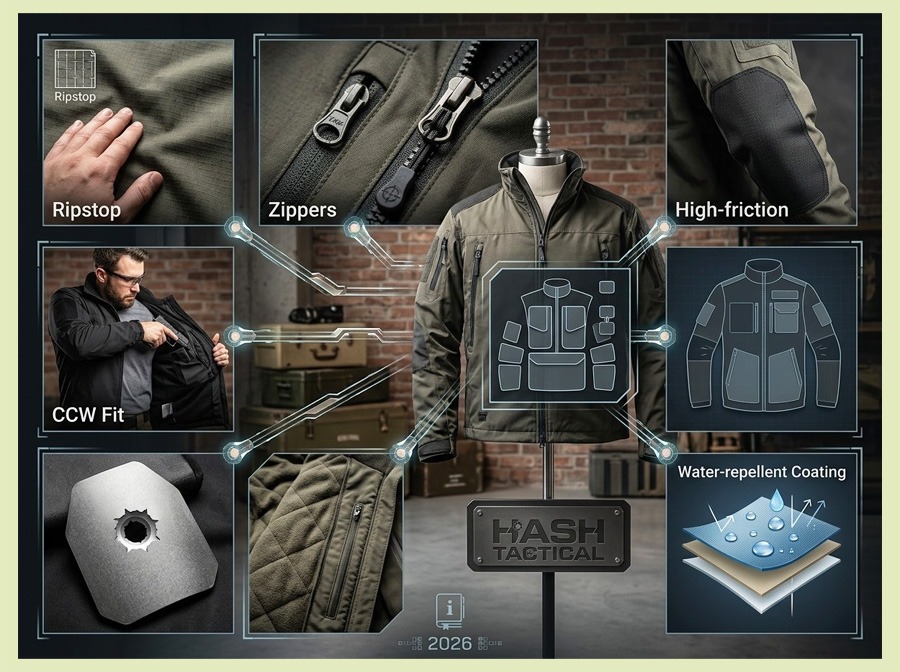
7 Features To Check Before You Buy A Tactical Jacket
A fast, visual checklist for duty, patrol, and field-ready outerwear.
Check fabric, CCW fit, gear compatibility, zippers, weather rating, storage, and warranty — before you order, not after.
The 7-Point Checklist
Fabric Type
Ripstop, softshell, or hardshell — matched to your terrain.
CCW Ready
Holster loops, quick-draw zips, non-printing fabric.
Fit Over Gear
Room for a plate carrier and duty belt without binding.
YKK Zippers
Durable main zips plus pit zips for airflow control.
Weather Rating
Waterproof mm rating matched to your climate.
Smart Storage
MOLLE, chest, sleeve, and interior pockets that work.
Stitching & Warranty
Bartack seams and a warranty the maker stands behind.
Softshell vs. Hardshell — Quick Compare
| Trait | Softshell | Hardshell |
|---|---|---|
| Flexibility | High — moves with you | Low — stiffer build |
| Weatherproofing | Water-resistant, breathable | Fully waterproof |
| Noise | Quiet | Can rustle |
| Best Use | Patrol, hiking, active work | Heavy rain, static posts |
Before You Click Order
- Tried the jacket on over your full loadout
- Tested zippers and pockets with gloves on
- Matched the waterproof rating to your climate
- Confirmed the warranty terms in writing
Ready to upgrade your loadout?
Explore the 2026 Collection of High-Performance Tactical Jackets from Hash Tactical and gear up for your next mission.
Shop Hash Tactical JacketsCommon Mistakes Buyers Make
- Buying based on looks alone. A jacket that looks tactical isn’t always built tactical.
- Skipping the “worn over gear” fit test. Always check sizing with your plate carrier and belt.
- Ignoring zipper quality. A jammed zipper in the field is a real problem, not a small annoyance.
- Choosing hardshell for high-mobility work. Stiff fabric can slow you down when you need to move fast.
- Forgetting the warranty. No warranty usually means the maker doesn’t trust their own stitching.
Hash Tactical designs its jackets around these exact pain points, focusing on real-world fit, durable stitching, and CCW-ready storage.
Frequently Asked Questions
A: Softshell jackets are flexible and quiet, good for active movement. Hardshell jackets are stiffer but fully waterproof, better for heavy rain and static posts.
A: Add 2–4 inches of chest room to your normal size, and always try the jacket on with your full loadout before buying.
A: Yes. YKK zippers are built for heavy daily use and extreme weather, and they rarely jam or break compared to off-brand zippers.
A: Look for at least 10,000mm for heavy rain protection. Lower ratings work fine for light drizzle only.
A: No. You need a jacket built with CCW features like interior holster loops, quick-access zippers, and non-printing fabric.
Final Thoughts
A tactical jacket is an investment in your safety and performance. Don’t rush the decision. Check the fabric, test the fit over your gear, inspect the zippers, and confirm the warranty before you order.
Ready to upgrade your loadout? Explore our 2026 Collection of High-Performance Tactical Jackets and gear up for your next mission: Hash Tactical’s Customized Tactical Jackets
👉 For more information about tactical jackets before you decide the buying, contact our expert team today!