Custom Lightweight Combat Pants for Hot Weather and Desert Warfare
Hot weather and desert combat pants need to do three things well: breathe, dry fast, and survive rough terrain. Standard-issue trousers often fail at all three. They trap heat, hold sweat, and wear out fast in sand and grit.
Custom hot weather tactical pants fix this by using lighter fabric blends, added ventilation, and cuts built for movement in extreme heat. This guide compares the top fabric types, features, and designs so you can pick the right setup, whether you’re a contractor working in the Gulf or an airsoft player grinding through a summer op.
Hash Tactical builds custom desert combat trousers made for exactly these conditions. We’ll show you what separates a good pair from a pair that leaves you soaked, chafed, and slow by noon.
Why Standard Combat Pants Fail in Desert Heat
Most factory-made tactical pants are built as a compromise. They try to work in cold, wet, and hot climates all at once. That means thicker fabric, less airflow, and extra layers you don’t need in the desert.
In temperatures above 100°F (38°C), that compromise becomes a problem. Sweat has nowhere to go. Fabric rubs raw skin. Heavy cotton-poly blends soak up moisture and stay wet for hours.
Common failure points in standard pants:
- No mesh paneling in high-heat zones (crotch, back of knee, waistband)
- Heavy ripstop cotton that holds sweat
- Tight ankle cuffs that trap heat
- Extra padding meant for cold-weather kneepads
- Dark colors that absorb more heat
A contractor working 12-hour shifts in Iraq or Kuwait doesn’t need cold-weather padding. An airsoft player running drills in July doesn’t need a four-season fabric blend. Both need gear built for one job: staying cool and mobile in the heat.
What Makes a Pair of Pants “Hot Weather Ready”
Breathable Fabric Blends
The fabric is the single biggest factor in how a pair of pants performs in heat. Not all “tactical” fabric is built the same.
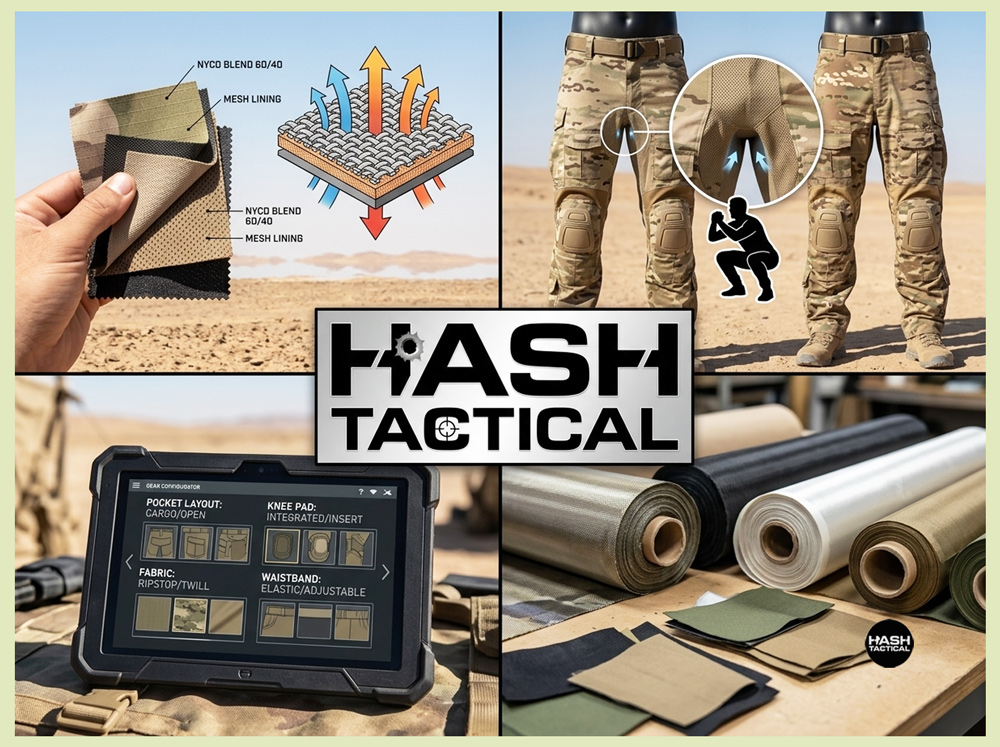
Moisture-wicking synthetic blends, usually a mix of nylon and polyester, pull sweat away from the skin and push it to the fabric surface, where it evaporates fast. This keeps your skin dryer and your body temperature lower.
Cotton, by contrast, absorbs sweat and holds onto it. Wet cotton against skin causes chafing and can even lead to heat rash on long deployments or matches.
| Fabric Type | Breathability | Dry Time | Durability | Best For |
|---|---|---|---|---|
| 100% Cotton Ripstop | Low | Slow | Medium | Cooler climates |
| Cotton-Poly Blend | Medium | Medium | High | General use |
| Nylon-Poly Synthetic Blend | High | Fast | High | Desert, hot weather |
| Ripstop Nylon (lightweight) | High | Fast | Medium | Airsoft, summer training |
Ventilated Crotch Gusset
A ventilated crotch gusset is a diamond-shaped fabric panel, often mesh, sewn into the crotch area. It does two things: it lets you move freely without the fabric binding, and it adds airflow to one of the hottest, sweatiest parts of your body.
This small design choice makes a big difference over a long shift or match. Less friction means fewer blisters and less chafing. More airflow means your core temperature stays lower.
Weight and Cut
Lightweight tactical pants typically weigh 30-40% less than standard-issue trousers. Less fabric means less heat trapped against the body.
A slimmer, athletic cut also helps. Baggy pants trap hot air inside the fabric. A tailored fit lets air move through and out.
Contractor Needs vs. Airsoft Player Needs
Both groups need hot weather performance, but their priorities aren’t identical. Understanding the difference helps when configuring a custom build.
Contractors in Hot Arid Zones
Contractors working in places like Iraq, Afghanistan, or the Gulf states usually deal with:
- Long shifts (10-14 hours) in direct sun
- Body armor and load-bearing gear worn over pants
- Sand and dust that wears down seams and zippers
- A need for pockets that work with tactical vests and belts
- Durability requirements: pants need to survive months, not one weekend
For contractors, desert combat trousers need reinforced knees and seat areas, even in a lightweight build. Rip-resistant fabric near common wear points (knees, inner thigh, cargo pocket seams) matters more here than for casual users.
Airsoft Players in Summer Matches
Airsoft players face different stress points:
- Shorter, high-intensity movement bursts (running, diving, crawling)
- Less need for heavy-duty durability over months
- More interest in mobility and a “tactical look”
- Budget matters more, since gear gets replaced more often
- Knee pad compatibility for CQB-style matches
For airsoft, a lighter, more flexible fabric blend often wins over maximum durability. Airsoft players can prioritize breathability and mobility since their gear doesn’t face the same daily grind as a contractor’s.
Comparing Fabric Blends: A Closer Look
Nylon-Poly Synthetic Blends
This is the go-to choice for most breathable tactical gear built for heat. A typical blend runs 50-65% nylon and 35-50% polyester.
Pros:
- Dries in under an hour in direct sun
- Resists sand and dust buildup
- Holds shape after repeated washing
- Lighter than cotton-based fabric
Cons:
- Slightly less rugged than heavy cotton ripstop for extreme abrasion
- Can feel warmer than mesh in still air (no breeze)
Lightweight Ripstop Nylon
Popular in airsoft and light-duty tactical gear. Ripstop weave prevents small tears from spreading into big rips.
Pros:
- Very light, good for high-mobility use
- Fast drying
- Affordable
Cons:
- Less abrasion resistance over long-term daily wear
- Not ideal for months of continuous field use
Cotton-Poly Blends (NYCO)
A middle-ground option. Common in military-grade uniforms because it balances durability and comfort.
Pros:
- Tough and long-lasting
- Comfortable against skin
- Fire-resistant versions available
Cons:
- Heavier than pure synthetic blends
- Slower to dry
- Retains more heat
Key Features to Look For When Configuring Custom Pants
1. Mesh-Lined Ventilation Zones
Look for mesh panels at the lower back, inner thigh, and knee pit, not just the crotch gusset. More airflow zones mean better heat regulation across the whole leg.
2. Articulated Knees
Pre-curved knee construction reduces fabric bunching when you crouch or kneel. Less bunching means less trapped heat and less wear on the fabric.
3. Reinforced Seat and Knee Panels
Even lightweight pants need reinforcement where you sit, kneel, and crawl. Look for double-stitched or bonded reinforcement panels that don’t add much extra weight.
4. Light Colors and UV-Reflective Dyes
Lighter colors like tan, coyote, and khaki reflect more sunlight than dark colors like black or ranger green. This can lower surface fabric temperature by several degrees in direct sun.
5. Elastic Waistband with Belt Loops
A hybrid waistband, part elastic, part structured, gives you comfort during long wear without losing the ability to run a rigger’s belt for gear support.
6. Ankle Cuffs with Adjustable Openings
Wide, adjustable ankle cuffs let more air circulate down at boot level, where heat and moisture build up fast during long movement.
Sample Feature Comparison: Budget vs. Custom Configured Pants
| Feature | Standard Off-the-Shelf Pants | Custom Hot Weather Pants (Hash Tactical) |
|---|---|---|
| Fabric | Cotton-poly, one-size-fits-all | Nylon-poly synthetic, selectable blend |
| Ventilation | None or minimal | Ventilated crotch gusset + mesh zones |
| Fit | Standard sizing only | Tailored to body measurements |
| Color Options | Limited (2-3 colors) | Full range including UV-reflective tones |
| Reinforcement | Fixed, non-adjustable | Configurable knee and seat panels |
| Weight | Standard weight | 30-40% lighter fabric options |
How Custom Configuration Changes the Equation
Off-the-shelf pants are built for the average user in average conditions. Custom-configured pants let you match the gear to your actual job and climate.
With a custom build, you can choose:
- Fabric weight and blend ratio
- Placement and size of ventilation panels
- Pocket layout for radios, mags, or med kits
- Reinforcement level based on how hard you use your gear
- Color based on your operating environment or team loadout
This matters most for contractors who spend months in one climate zone, and for airsoft teams that want a matched, functional loadout for summer matches.
Hash Tactical lets you build pants around your actual conditions instead of settling for a generic desert cut that half-fits your needs.
Custom Lightweight Combat Pants
for Desert Heat
Breathable fabric. Vented crotch gusset. Built for 100°F+ field conditions and summer airsoft matches.
Why Standard Pants Fail In Heat
No mesh zones. Sweat has nowhere to go.
Heavy blends stay wet and cause chafing.
Sand and grit break down weak seams quick.
Fabric Blend Comparison
Contractor vs. Airsoft Priorities
Hot Zone Contractor
- Long-shift durability
- Reinforced knees & seat
- Ventilated crotch gusset
- Tan or coyote color
Summer Airsoft Player
- Lightweight ripstop nylon
- Max mobility & mesh
- Knee pad compatibility
- Budget-friendly build
Key Features To Configure
5 Care Tips That Add Fabric Life
Rinse sand out first
Air dry, skip high heat
Skip fabric softener
Reseal seams as needed
Rotate two pairs
Build Your Own Hot Weather Loadout
Configured for your climate, job, and fit — by Hash Tactical.
Source: Hash Tactical field guide, “Custom Lightweight Combat Pants for Hot Weather and Desert Warfare.”
Care Tips to Extend the Life of Hot Weather Pants
Even the best fabric wears out faster with the wrong care routine. A few simple habits go a long way:
- Rinse sand and grit out before washing. Sand trapped in fabric fibers acts like sandpaper during wash cycles.
- Air dry when possible. High heat from dryers can break down synthetic fibers faster.
- Avoid fabric softener. It can clog the moisture-wicking properties of synthetic blends.
- Re-seal seams if working in extreme sand or wind conditions. This helps prevent fine particles from working into stitching.
- Rotate between two pairs during long deployments. This gives fabric time to fully dry and recover between wears.
Frequently Asked Questions
It’s a mesh or vented panel sewn into the crotch area for airflow and freedom of movement. In hot climates, it reduces chafing and helps regulate body temperature. For anyone working or playing in temperatures above 85°F (29°C), it’s worth having.
Yes. Modern nylon-poly blends used in tactical gear are built to handle daily abrasion, sand exposure, and repeated washing. They’re often more durable than cotton over long-term use because they resist mildew and hold their shape better.
The core fabric and ventilation needs overlap. The difference is usually in reinforcement level and price point. Airsoft players can often use a lighter-duty version of the same design contractors use, since match conditions don’t put the same daily wear on gear.
Tan, coyote brown, and khaki tones perform best. They reflect more heat than darker colors and blend well with sand and rock terrain.
Most hot weather builds cut fabric weight by 30-40% compared to standard four-season tactical pants, mainly through lighter weave fabric and reduced padding.
Custom configuration usually costs a bit more upfront, but the gains in fit, durability, and comfort often mean fewer replacements over time, which can even out the cost for daily users like contractors.
Final Verdict: Which Setup Should You Choose?
If you’re a contractor working long shifts in hot arid zones, prioritize:
- Nylon-poly synthetic blend
- Reinforced knees and seat
- Ventilated crotch gusset
- Tan or coyote color
If you’re an airsoft player in summer matches, prioritize:
- Lightweight ripstop nylon
- Maximum mobility and mesh ventilation
- Knee pad compatibility
- Budget-conscious configuration
Either way, the fabric and ventilation choices you make now affect how you perform in the heat later. Standard pants weren’t built for extreme conditions. Custom-built pants are.
Hash Tactical designs every pair around real-world heat performance, not just a catalog listing. Whether you’re gearing up for a deployment or a weekend match, the right configuration makes the difference between fighting the heat and working through it.
👉 For more information before purchasing your desired custom tactical gear, feel free to contact our support team for guidance!