Custom Tactical Vest Mistakes: What to Avoid When Designing Your Gear
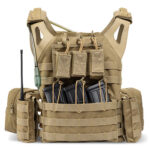
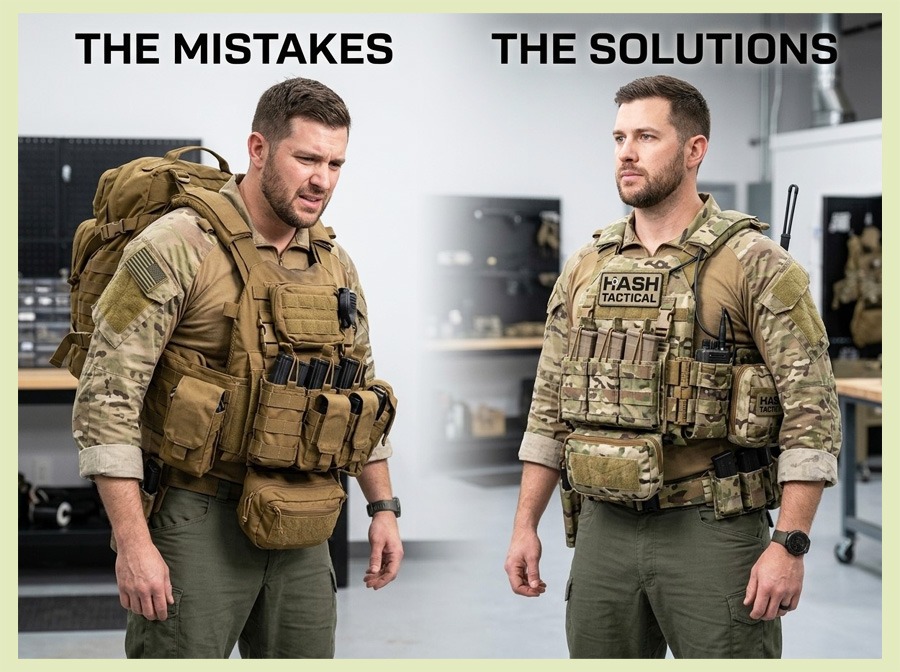
Most custom tactical vest problems come from three things: wrong sizing, bad pouch placement, and poor weight distribution. Fix those three, and your gear will feel like part of your body instead of a burden on your back. This guide breaks down the most common mistakes people make when building or buying a custom plate carrier, and how to avoid them. If you’re designing or procuring custom gear for your team, Hash Tactical builds vests that solve these problems from the start.
Why Custom Tactical Vest Design Matters
A vest is not just a place to hang gear. It is a tool you wear for hours at a time, often while running, climbing, or crawling. A bad setup slows you down. A good one disappears on your body, so you can focus on the job instead of the gear.
Custom tactical vests let you match the setup to your body, your mission, and your load. But “custom” does not automatically mean “better.” A poorly customized vest can be worse than a stock one. This is where most buyers go wrong.
Below, we cover the biggest mistakes in tactical vest setup, sizing, pouch placement, and weight distribution, with practical fixes for each.
Mistake 1: Getting the Size Wrong
Plate carrier sizing issues are the number one complaint among first-time buyers. A vest that’s too big shifts around when you move. A vest that’s too small pinches your shoulders and restricts your arm movement.
Common sizing errors:
- Buying based on shirt size instead of torso measurements
- Ignoring plate size when choosing carrier size
- Not accounting for layers worn underneath (base layer, cold-weather gear)
- Skipping a test-fit with full loadout
How to fix it:
- Measure your torso length, not your chest size.
- Match the carrier to your plate size (Small, Medium, Large, or cut-specific like SAPI or Shooter’s Cut).
- Try the vest on with the layers you’ll actually wear underneath.
- Test range of motion: raise your arms, crouch, and turn your torso before you commit.
A good rule of thumb: your vest should sit high enough that the bottom plate doesn’t dig into your hips when you sit down, but low enough to cover your vital organs.
Mistake 2: Poor MOLLE Pouch Placement
MOLLE pouch placement mistakes cause more wasted motion than people realize. If your mag pouch is in the wrong spot, you lose half a second every reload. Multiply that by a stressful situation, and it matters.
Where people go wrong:
- Placing mag pouches too far to the side, forcing an awkward reach
- Stacking too many pouches on the front, blocking a clean prone position
- Mixing dominant-hand and support-hand gear without a plan
- Overloading one side, causing the vest to twist during movement
A simple placement guide:
| Gear Type | Recommended Zone | Why |
|---|---|---|
| Rifle mags | Front, centerline or strong-side | Fast access, natural reload motion |
| Medical kit | Non-dominant side or back | Reachable by either hand in an emergency |
| Radio | Shoulder or upper chest | Easy to hear and adjust |
| Utility pouches | Sides or lower front | Keeps centerline clear for prone shooting |
| Admin pouch | Upper chest, small profile | Quick access without bulk |
Keep your centerline as clear as possible. This is the area you need most when going prone or moving through tight spaces.
Mistake 3: Ignoring Weight Distribution
Heavy tactical gear weight distribution is where most long-term injuries start. A vest that dumps all its weight on your shoulders will wear you down fast, even if the total weight seems manageable at first.
Warning signs of bad weight distribution:
- Shoulder pain after short wear times
- Lower back strain during movement
- Vest riding up or shifting during activity
- Numbness in arms from strap pressure
Fixes that actually work:
- Use a vest with a proper load-bearing belt to shift weight to your hips
- Balance front and back pouch weight instead of loading only the front
- Choose cummerbund systems that wrap weight around your core, not just your chest
- Avoid double-stacking heavy pouches on one side
Your hips and core can carry weight far longer than your shoulders. A well-designed carrier routes weight downward, not just forward.
Mistake 4: Skipping Ergonomics for Looks
Custom body armor ergonomics often get sacrificed for a “cool” look. Buyers pack their vest with every pouch available, then wonder why it feels like a backpack full of bricks.
Ergonomic mistakes to avoid:
- Adding pouches you don’t actually need for the mission
- Choosing rigid pouches over low-profile ones for close-quarters work
- Ignoring cable routing and snag points
- Forgetting to test the vest in real movement, not just standing still
A better approach:
Ask yourself three questions before adding any pouch:
- Will I need this in the first 30 seconds of an emergency?
- Does this block my centerline or reload path?
- Can I remove this without losing mission capability?
If the answer to all three leans toward “no,” leave it off.
Mistake 5: Not Planning for Layering and Climate
Many buyers design their vest for one season and one outfit. Then winter comes, and the vest doesn’t fit over a jacket. Or summer comes, and the vest traps heat against the body.
Fixes:
- Choose adjustable cummerbunds with enough range for seasonal layers
- Look for mesh backing or ventilation channels for hot climates
- Test the vest with your coldest-weather layer before final sizing
Setup Error Checklist
Use this quick checklist before you finalize any custom tactical vest setup errors review:
- Torso measured, not guessed
- Plate size matched to carrier
- Full range-of-motion test completed
- Centerline kept clear for prone position
- Weight balanced front-to-back and side-to-side
- Load-bearing belt used for heavy loads
- Only mission-essential pouches added
- Layering and climate accounted for
Custom Tactical Vest Mistakes to Avoid
Fix sizing, pouch placement, and weight distribution before you build your loadout.
Wrong Sizing
- Measure torso, not shirt size
- Match carrier to plate size
- Test-fit with real layers on
Bad Pouch Placement
- Keep centerline clear
- Mag pouch on strong side
- Medical kit reachable by both hands
Poor Weight Distribution
- Use a hip belt for heavy loads
- Balance front and back weight
- Avoid stacking one side heavy
Quick Setup Checklist
Mistake vs. Fix
| Mistake | Fix |
|---|---|
| Wrong size | Measure torso, test with plates |
| Pouches block centerline | Keep front clear for prone position |
| All weight on shoulders | Add hip belt, balance load |
| Too many extra pouches | Keep only mission-essential gear |
Comparative Snapshot: Common Mistakes vs. Fixes
| Mistake | Result | Fix |
|---|---|---|
| Wrong sizing | Restricted movement, poor plate coverage | Measure torso, test-fit with layers |
| Bad pouch placement | Slow reloads, blocked prone position | Keep centerline clear, map gear by hand use |
| Poor weight distribution | Shoulder and back pain | Use hip belt, balance load |
| Over-accessorizing | Extra weight, snag points | Only add mission-essential gear |
| Ignoring climate | Overheating or poor fit in cold gear | Test with seasonal layers before buying |
FAQ: Custom Tactical Vest Questions
A: Wrong sizing. Most fit problems trace back to buying a carrier that doesn’t match torso length or plate size.
A: It depends on mission and plate type, but most operators aim to keep total loadout weight manageable enough for sustained movement, not just standing still. Heavier loads always need better weight distribution, not just a bigger vest.
A: If you have specific mission needs, body type challenges, or team-wide standardization goals, a custom build usually solves more problems than an off-the-shelf option.
A: Yes. Reaching across your body or around bulky pouches adds real time, especially under stress when fine motor skills drop.
A: Check fit whenever your body composition changes, when you add or remove major layers, or once a year as a general habit.
Final Word
Custom gear only works when it’s built around how you actually move, not just how it looks on a shelf. Fix your sizing first, then your pouch layout, then your weight distribution. Skip the ergonomics-for-looks trap, and plan for the seasons you’ll actually wear it in.
Designing or procuring custom gear for your team? Hash Tactical builds custom tactical vests around real operational needs, not guesswork. Browse the full lineup of custom tactical vests from Hash Tactical and get a setup built for how you actually work.
🦺 If you have any question about our products, contact our support team now!