The Ultimate Guide to Custom Tactical Backpacks: Designing for Rapid Gear Access and Modular Performance
A good tactical backpack is not just a bag. It’s a system. If you can’t reach your gear in three seconds or less, your backpack is working against you, not for you. Custom tactical backpacks solve this problem. They let you place every pouch, panel, and pocket exactly where your hand expects it to be. That means faster access to first aid kits, optics, tools, or a concealed firearm when it matters most.
This guide breaks down what makes a rapid-access tactical pack actually work, how modular systems compare to off-the-shelf bags, and what to look for when building your own setup.
Why Off-the-Shelf Backpacks Fall Short
Most stock tactical backpacks are built for the “average” user. The problem is, no one is actually average.
A paramedic needs different gear placement than a hiker. A concealed carry holder needs different access than a photographer carrying camera gear. Stock bags force everyone into the same layout, no matter the job.
Common issues with off-the-shelf tactical bags include:
- Pouches placed for looks, not function
- No option to move or remove MOLLE panels
- Single-opening designs that bury small items at the bottom
- Shoulder straps that don’t match your body type or load
- No dedicated space for quick-draw items like a CCW firearm or trauma kit
Custom modular tactical bags fix this by putting the user in charge of the design, not the manufacturer.
What Makes a Backpack “Rapid Access”?
A rapid access tactical pack is built around one idea: your most important gear should never be buried.
This usually comes down to three design choices.
1. Smart Panel Placement
Quick-reach items live on the outside or in top-level compartments. Slower-need items, like extra layers or food, go deeper inside.
2. Clamshell Opening Backpack Design
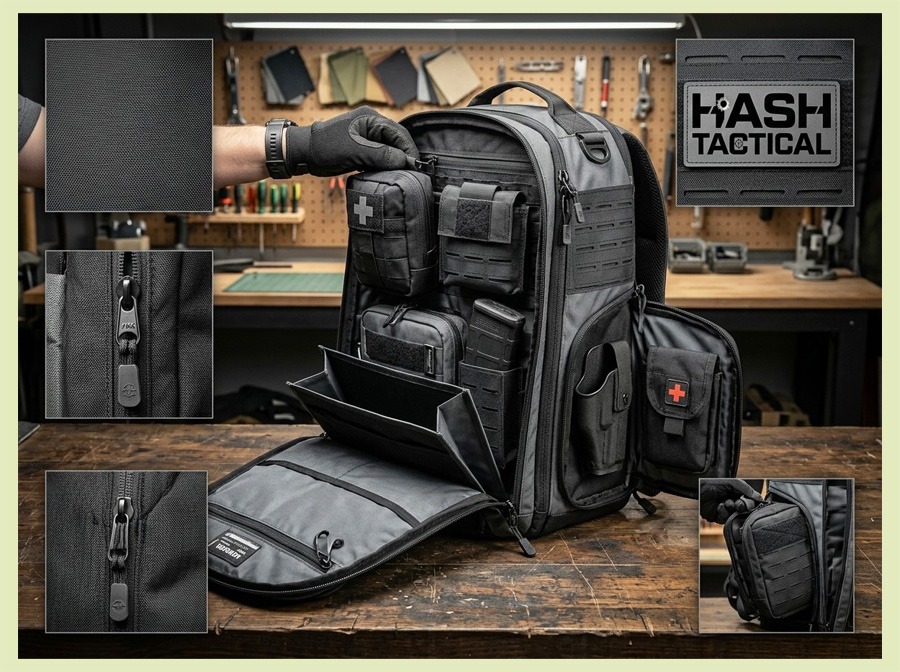
A clamshell opening backpack unzips flat, like a suitcase. This gives you a full view of every pocket at once. No digging. No dumping the whole bag out to find one item.
3. Laser-Cut MOLLE Layout
A laser-cut MOLLE layout replaces old-style webbing with slotted, welded attachment points. It’s lighter, quieter, and lets you customize pouch placement without extra bulk or loose straps flapping around.
Custom Modular Tactical Bags vs. Standard Tactical Backpacks
Here’s a side-by-side look at how custom builds stack up against stock bags.
| Feature | Standard Tactical Backpack | Custom Modular Tactical Bag |
|---|---|---|
| Pouch placement | Fixed by manufacturer | Chosen by user |
| Access speed | Depends on luck of design | Built around your gear |
| CCW access | Rarely included | Dedicated quick-draw panel option |
| Material | Varies, often lower denier | 500D Cordura nylon standard |
| Weight distribution | One-size-fits-most | Adjustable to body and load |
| Long-term fit | Fixed | Can be reconfigured as needs change |
| Price | Lower upfront | Higher upfront, lower waste over time |
The takeaway: standard bags are fine for casual use. Custom builds are for people whose gear access speed actually matters.
Core Features to Look for in a Custom Tactical Backpack
500D Cordura Nylon Construction
Denier count measures fabric thickness and toughness. 500D Cordura nylon is a strong middle ground. It’s tough enough to survive rough field use, but not so heavy that it weighs the pack down.
Cheaper bags often use 300D or lower, which wears out faster under repeated abrasion, water exposure, and gear friction.
CCW Quick-Draw Panel
For concealed carry holders, a dedicated CCW quick-draw panel changes everything. Instead of digging through a main compartment, your firearm sits in its own padded, quick-access pocket, usually reachable with one hand.
This panel should:
- Sit in a consistent, muscle-memory location
- Open with a single motion, not multiple zippers
- Stay separate from other gear to avoid snagging
Modular Pouch Attachment Systems
Modular pouch attachment isn’t just about MOLLE webbing anymore. Laser-cut platforms, hook-and-loop panels, and quick-clip pouches all fall under this category.
The goal is simple: add, remove, or shift pouches without needing tools or a full repack.
Ergonomic Load Distribution
A heavy pack with poor weight distribution wears out your back fast. Ergonomic load distribution spreads weight across your hips, shoulders, and back evenly.
Look for:
- Padded, contoured shoulder straps
- A frame sheet or internal stay for structure
- A hip belt that actually transfers weight off the shoulders
Quick-Release Shoulder Harness
In an emergency, you may need to drop your pack fast. A quick-release shoulder harness lets you shed the bag in one motion, without fumbling with buckles or straps.
This feature is common in tactical, fire rescue, and swift-water rescue packs, where seconds matter.
Building a Layout Around Your Gear
Before designing a custom pack, map out your gear by how often you need it. This simple three-tier system works well.
1: Instant Access (Seconds Matter)
- Trauma kit or IFAK
- Concealed firearm
- Flashlight
- Multi-tool
2: Quick Access (Under 10 Seconds)
- Radio or communication device
- Extra magazines
- Navigation tools
- Snacks or hydration
3: Deep Storage (Minutes Are Fine)
- Extra clothing
- Sleeping gear
- Backup supplies
- Non-urgent tools
Once you know your tiers, you can design pouch placement around them instead of guessing.
Who Actually Needs a Custom Tactical Backpack?
Not everyone needs a fully custom build. But for certain groups, it’s less of a luxury and more of a requirement.
First Responders
Paramedics, firefighters, and rescue teams need gear that’s grabbed without looking. A custom layout removes hesitation during high-stress calls.
Military and Law Enforcement
Mission-specific gear changes constantly. A modular system adapts without needing a whole new bag each time.
Outdoor Survivalists
Multi-day trips require balancing weight, access, and durability. Custom builds let users prioritize what matters most for their route and climate.
Tactical EDC Users
A tactical EDC pack built for daily carry needs to blend function with a low profile, especially for urban commuters who don’t want to look “tactical” in public.
CCW Holders
Anyone carrying concealed needs a pack that supports fast, safe access without printing or slowing down the draw.
Common Mistakes When Choosing a Tactical Backpack
Avoid these pitfalls when picking or building your pack.
- Overloading Tier 1 space. If everything feels urgent, nothing actually is. Be honest about what you truly need fast.
- Ignoring torso length. A pack that doesn’t match your body size will never distribute weight correctly, no matter how good the design is.
- Choosing looks over function. A pack covered in unused MOLLE panels adds weight without adding value.
- Skipping water resistance. 500D Cordura nylon resists abrasion well, but check for a durable water repellent (DWR) coating too.
- Not testing the quick-release harness. Practice releasing your pack before you actually need to in an emergency.
Custom Tactical Backpacks
Built for rapid gear access and modular performance in the field.
Stock Bag vs. Custom Build
Off-the-Shelf
- Fixed pouch layout
- No dedicated CCW panel
- One-size-fits-most fit
- Lower-denier fabric
Custom Modular
- User-placed pouches
- Dedicated quick-draw panel
- Fit tuned to your body
- 500D Cordura nylon
Map Your Gear by Access Speed
- Trauma kit / IFAK
- Concealed firearm
- Flashlight
- Radio
- Extra magazines
- Hydration
- Extra clothing
- Sleep gear
- Backup supplies
Core Build Features
500D Cordura
Tough, abrasion-resistant fabric.
CCW Quick-Draw Panel
One-motion access, same spot every time.
Clamshell Opening
Unzips flat so nothing stays buried.
Laser-Cut MOLLE
Lighter, quieter pouch attachment.
Ergonomic Load Fit
Weight spread across hips and shoulders.
Quick-Release Harness
Shed the pack in one motion.
Design Your Own Rapid-Access Pack
Build My Custom PackPowered by Hash Tactical — modular gear, built around you.
Why Custom Beats Off-the-Shelf in the Long Run
A custom modular tactical bag costs more upfront. But over time, it usually saves money and frustration.
Stock bags often get replaced when they don’t fit new gear or new missions. A modular system just gets reconfigured. Pouches move. Panels swap. The core bag stays the same.
This is where companies like Hash Tactical stand out. Instead of forcing users into a fixed design, Hash Tactical focuses on layouts built around how people actually use their gear, not just how a bag looks on a shelf.
For users who rely on their pack daily, whether on duty, on a trail, or on a commute, that difference in design philosophy really does matter.
FAQ: Custom Tactical Backpacks
Tactical backpacks use tougher materials, modular attachment systems, and layouts built for fast gear access. Regular backpacks focus more on general storage than speed or durability.
Not always. 1000D is thicker and more rugged, but heavier. 500D Cordura nylon offers a strong balance of durability and weight, making it a popular midpoint for everyday tactical use.
Some bags support add-on holster panels, but for the best fit and safety, a built-in CCW quick-draw panel designed for your specific firearm is safer and faster.
Pricing depends on materials, size, and included modular features. Custom builds typically cost more than stock bags but reduce the need for repeat purchases.
It’s a modern alternative to traditional woven MOLLE webbing. Laser-cut slots are welded directly into the fabric, cutting weight and bulk while still supporting standard MOLLE-compatible pouches.
Yes. A tactical EDC pack with modular pouch attachment lets users adjust their setup for work, travel, or emergency prep, all with the same base bag.
Final Thoughts
A tactical backpack should work as fast as you do. That means smart pouch placement, tough materials like 500D Cordura nylon, and features like a clamshell opening, CCW quick-draw panel, and quick-release shoulder harness.
Off-the-shelf bags get you partway there. A custom build gets you the rest of the way.
👉 Ready to build a pack engineered around your exact gear layout? Contact our expert design team for quotation!