The Complete Tactical Loadout Guide: Building Your Gear System from Head to Toe
A loadout is not a pile of gear. It’s a system.
Every piece talks to the next piece. Your Pants affect how your Belt sits. Your Belt affects how your Holsters draw. Vest affects how your Backpack rides.
Get one link wrong, and the whole chain fights you mid-mission.
This guide walks you through building that system — layer by layer, head to toe. No fluff. No guesswork. Just what works when things get loud.
Why Most Loadouts Fail
Most beginners buy gear backward.
They grab a flashy Vest first. Then a Backpack. Then they realize nothing fits together. Straps tangle. Pouches block holster access. The whole rig becomes a liability instead of an asset.
A real loadout starts at the skin and builds outward. Each layer has a job. Each layer supports the one above it.
Think of it like building a house. You don’t hang drywall before you pour the foundation.
Layer One: The Foundation — Shirts and Pants
Why Base Layers Make or Break Everything Else
Your Shirts and Pants are not afterthoughts. They’re the chassis.
Everything else — vests, harnesses, pouches — gets mounted on top of this base. If the base fails, the whole structure fails with it.
What to Look for in Tactical Shirts
A good tactical shirt does three things:
- Moves with you, not against you
- Breathes during exertion
- Survives abrasion from gear rubbing all day
Ripstop weaves are the gold standard here. The grid pattern stops small tears from spreading into big ones. Combine that with moisture-wicking treatment, and you get a shirt that survives a 12-hour op without turning into a swamp.
What to Look for in Tactical Pants
Pants take more abuse than almost anything else you wear. Crawling, kneeling, sprinting through brush — it all hits the legs first.
Look for:
| Feature | Why It Matters |
|---|---|
| Reinforced knees | Survives crawling and kneeling |
| Articulated cut | Allows full range of motion |
| Ripstop fabric | Resists tears from brush and gear snags |
| Multiple pockets | Quick storage without a belt rig |
| Adjustable waist | Layers under armor without binding |
Real-World Example
A field instructor once told a story about a recruit who showed up in cotton gym pants. Within an hour, they were soaked through with sweat, chafing at the seams, and torn at the knee from a single low crawl.
That’s the difference between gear built for comfort and gear built for combat conditions.
Layer Two: Weather and Armor — Jackets and Vests
Jackets: Your Climate Control System
Once the base layer is set, Jackets handle everything the weather throws at you.
A tactical jacket isn’t just a windbreaker. It needs to:
- Block wind without trapping heat
- Resist water without crinkling like a tarp
- Layer cleanly over a shirt without adding bulk
Some ops run cold mornings into hot afternoons. A jacket that vents well and packs down small earns its place in the loadout.
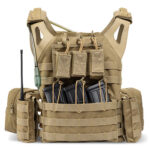
Vests: The Modular Backbone
Vests are where function really starts to show.
A tactical vest does double duty:
- Holds plates for protection
- Provides a mounting surface for pouches, holsters, and accessories
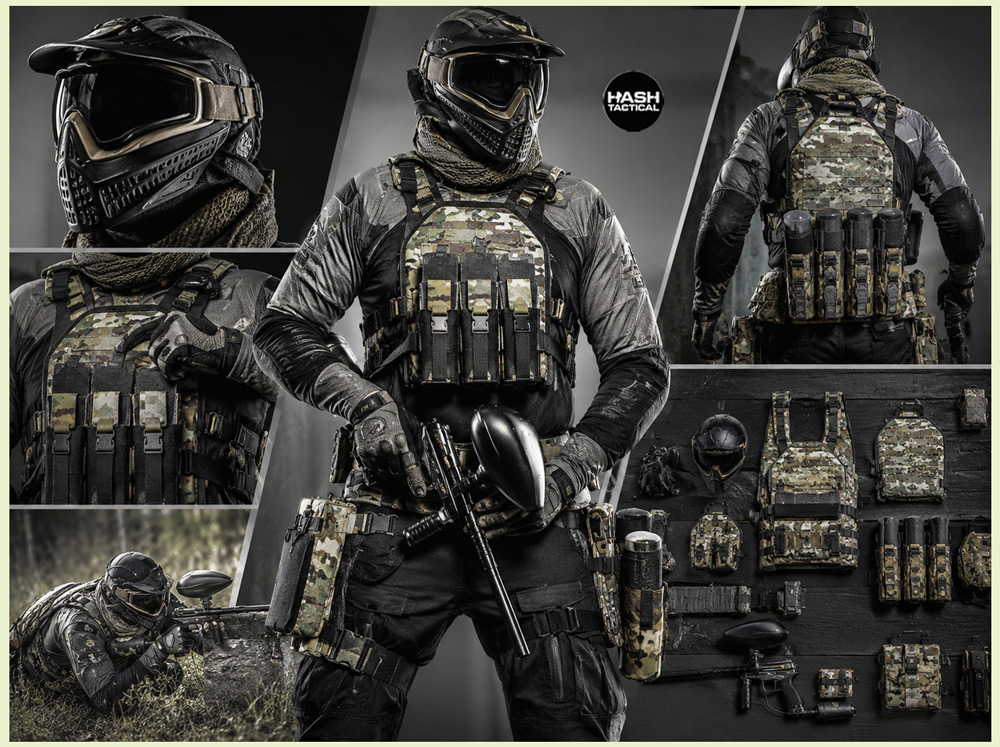
Modern vests use MOLLE webbing, letting you customize loadout positioning based on mission type. Paintball vests skip the plates but keep the modularity — perfect for carrying extra paint, CO2, and quick-access pouches.
Quick Comparison: Jacket vs Vest Function
| Item | Primary Job | Secondary Job |
|---|---|---|
| Jacket | Weather protection | Light concealment |
| Vest | Armor/plate carry | Equipment mounting |
You don’t choose one over the other. You layer them together based on conditions.
Layer Three: Head and Face Protection
The Most Overlooked Region of the Body
People obsess over chest rigs and forget the head entirely. That’s a mistake.
Your head controls vision, hearing, and breathing — three things you cannot afford to compromise in the field.
Caps: Sun and Visibility Control
Caps seem simple, but they solve real problems:
- Cut glare for better target identification
- Reduce sunburn on long daylight ops
- Keep sweat out of your eyes during exertion
A low-profile cap also helps with positioning under headsets or NVG mounts.
Beanies: Cold-Weather Necessity
When temperatures drop, Beanies become non-negotiable. Heat escapes fastest through the head. A tight-knit beanie traps that heat in, keeping core temperature stable during long cold-weather ops.
Face Covers and Shemaghs: Dual-Purpose Protection
Face Covers and Shemaghs pull double duty:
- Block dust, debris, and wind
- Add a layer of camouflage by breaking up facial outline
- Provide warmth in cold conditions
The shemagh in particular has a long field history. Originally a desert garment, it’s now standard across tactical communities for its versatility — face wrap, neck gaiter, dust mask, or improvised bandage in a pinch.
Headgear Quick Reference
| Item | Best Use Case |
|---|---|
| Caps | Sun, glare, daytime visibility |
| Beanies | Cold-weather core heat retention |
| Face Covers | Dust, wind, light camo |
| Shemaghs | Multi-purpose desert/field utility |
Layer Four: Carry Systems — Vests, Harness, and Belts
Your Carry System Decides How Fast You Move
This is the layer most people get wrong. A bad carry system means fumbling for gear when seconds matter.
Vests Revisited: Load Distribution
We already covered vests for armor and mounting. But in the carry-system context, vests also distribute weight across the shoulders and torso instead of dumping it all on the waist.
Harness Rigs: Built for Speed
A Harness setup is built for one thing: fast access.
Chest-mounted harness rigs put magazines, radios, and tools right in your line of sight. No digging. No fumbling behind your back. Just reach and go.
Paintball players use harness rigs constantly — strapped across the chest or waist, holding extra pods within arm’s reach during fast-paced matches.
Belts: The Unsung Workhorse
Belts don’t get the spotlight, but they carry the load when vests and harnesses aren’t enough.
A good tactical belt should:
- Support holster weight without sagging
- Distribute pouch weight evenly around the waist
- Stay rigid under movement (no twisting mid-sprint)
How These Three Work Together
Think of it as a triangle:
- Vest = upper torso distribution
- Harness = chest-level quick access
- Belt = waist-level support and balance
Remove one corner, and the triangle collapses. Overload the belt because the vest is empty, and you’ll feel it in your lower back after an hour.
Layer Five: Storage Solutions — Backpacks, Pouches, and Radio Pouches
Backpacks: For the Long Haul
Backpacks handle what your body can’t carry directly. Extended missions need water, food, ammunition reserves, and medical supplies. That’s backpack territory.
Key features to check:
- Hydration bladder compatibility
- Compression straps to prevent shifting
- External MOLLE for additional attachment points
- Quick-release in case you need to drop weight fast
Pouches: Small but Critical
Pouches are the detail work of a loadout. They hold the things you need fast: multitools, extra ammo, medical kits, snacks for long days.
The trick is placement. Pouches mounted in the wrong spot block movement or holster access. Mount them with intention, not just availability of space.
Radio Pouches: Communication Is Survival
In any team operation — military, security, or paintball — communication wins matches and missions. Radio Pouches keep your comms secure, accessible, and protected from impact or weather.
A radio that’s buried in a backpack is a radio you’ll never use in time. A radio in a dedicated pouch on your chest or shoulder strap is one you can reach in under two seconds.
Storage Placement Cheat Sheet
| Item | Recommended Position |
|---|---|
| Backpack | Back, full torso support |
| General Pouches | Belt, vest front, or thigh |
| Radio Pouch | Shoulder strap or chest, dominant-hand side |
Layer Six: Weapon Carry — Gun Bags and Gun Holsters
Transport vs Access: Two Different Jobs
People often confuse these two categories. They serve completely different purposes.
Gun Bags: Built for Transport
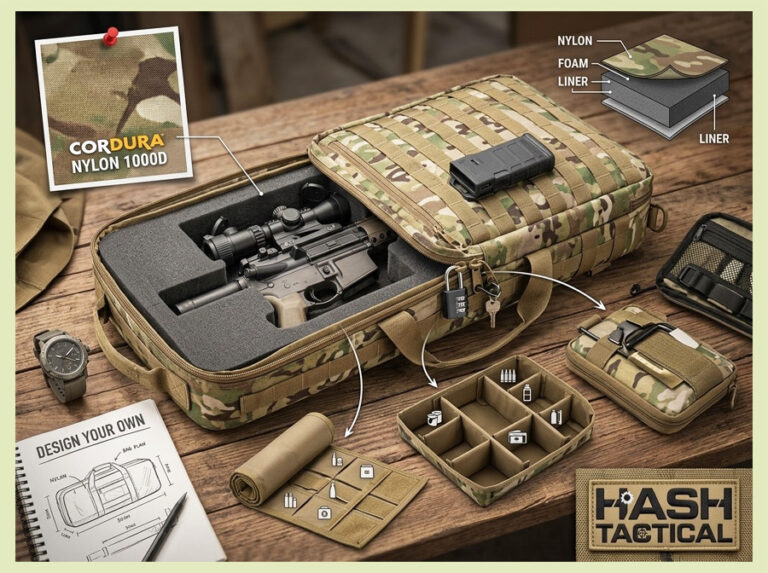
Gun Bags protect your weapon between locations. Padded interiors, lockable zippers, and discreet exteriors keep your gear safe whether you’re driving to a range, a match, or a deployment staging point.
A good gun bag should:
- Fit your specific weapon profile snugly
- Include padded dividers for multiple items
- Resist water and impact during transport
Gun Holsters: Built for Access
Gun Holsters are the opposite of gun bags. Where bags protect during downtime, holsters perform during action.
A holster needs to:
- Retain the weapon securely during movement
- Allow a fast, clean draw under stress
- Mount cleanly to belt, vest, or thigh rig
Side-by-Side Comparison
| Feature | Gun Bag | Gun Holster |
|---|---|---|
| Purpose | Transport/storage | Quick access |
| Padding | Heavy | Minimal |
| Mounting | None (standalone) | Belt/vest/thigh |
| Use Case | Travel, storage | Active operation |
You need both. One protects your investment. The other keeps you combat-ready.
Layer Seven: Safety Essentials — Gloves and Protective Pads
Gloves: Grip Meets Protection
Gloves solve two problems at once: grip and protection.
Bare hands slip on wet weapons, rough rope, and sweaty grips. They also bruise, scrape, and bleed faster than you’d think during a single fall.
A solid tactical glove should:
- Maintain trigger-finger dexterity
- Reinforce palms against abrasion
- Fit snug without restricting blood flow
Protective Pads: Knees and Elbows Take the Hit
Protective Pads absorb impact that your joints can’t handle alone.
Crawling, diving, kneeling for extended shots — all of it stresses knees and elbows. Pads distribute that impact across a wider surface, reducing direct joint stress.
Paintball players especially benefit here. Diving for cover or sliding behind a bunker happens fast and hard. Without pads, that’s a guaranteed bruise — or worse, a sprain that ends your match.
Safety Gear Quick Facts
- Gloves with too much padding kill dexterity
- Pads should flex with joint movement, not restrict it
- Both items should be tested in motion before field use, not just tried on standing still
Layer Eight: Team Identity — Jerseys
Why Identification Matters More Than You Think
In the chaos of a paintball match or tactical training scenario, identifying teammates fast prevents friendly-fire mistakes and confusion.
Jerseys solve this. Bold colors, team logos, and clear numbering let you spot your squad in a split second, even through cover and movement.
Beyond Identification: Team Cohesion
Jerseys do more than mark teams. They build identity. A squad that looks unified plays unified. There’s a psychological edge to stepping onto the field looking like a coordinated unit instead of a random group in mismatched gear.
What Makes a Good Tactical Jersey
- Breathable, quick-dry fabric for sustained activity
- Reinforced stitching at stress points (shoulders, underarms)
- Clear, durable printing that survives washes and hits
Putting It All Together: A Sample Full Loadout
Here’s what a complete head-to-toe system might look like in practice:
| Body Zone | Gear |
|---|---|
| Head | Cap or Beanie (season-dependent) |
| Face | Face Cover or Shemagh |
| Torso (base) | Shirt |
| Torso (mid) | Jacket (weather-dependent) |
| Torso (outer) | Vest or Jersey (mission-dependent) |
| Chest carry | Harness rig |
| Waist | Belt with Holster and Pouches |
| Legs | Pants with Protective Pads |
| Hands | Gloves |
| Back | Backpack |
| Comms | Radio Pouch on shoulder/chest |
| Weapon transport | Gun Bag (pre/post mission) |
| Weapon access | Gun Holster (active mission) |
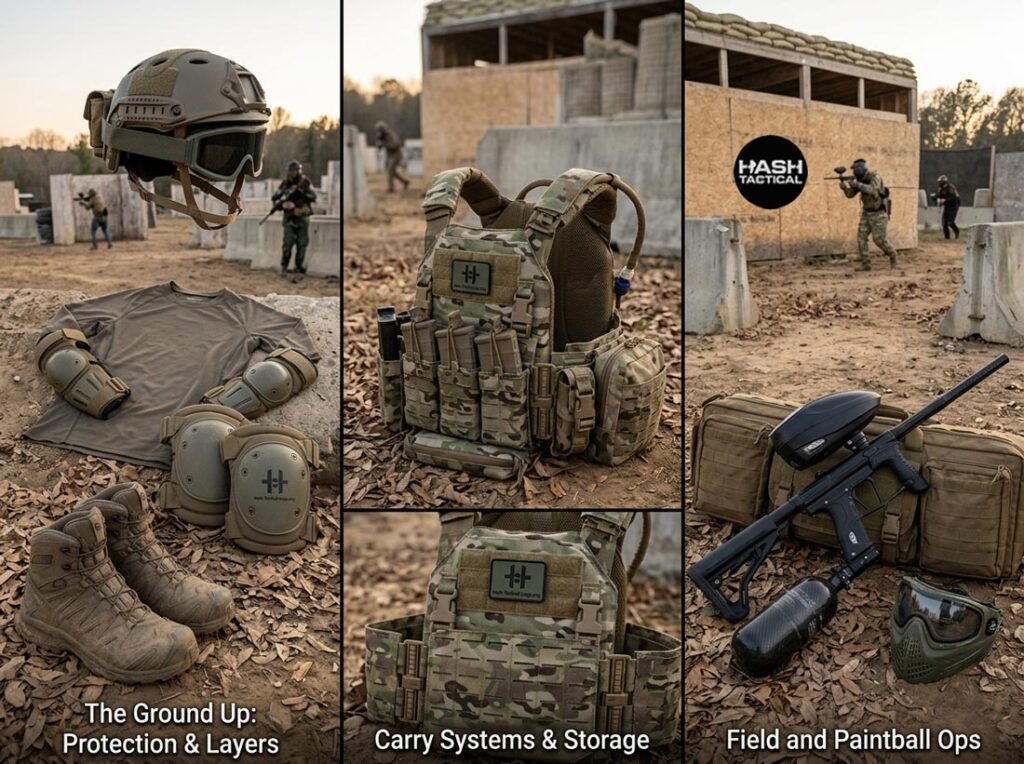
This isn’t theoretical. This is how a working system actually stacks, piece by piece, from the skin out.
Common Mistakes to Avoid
Mistake One: Overloading the Belt
A belt loaded with every pouch you own will sag, twist, and dig into your hips within an hour. Distribute weight across vest, harness, and belt evenly.
Mistake Two: Ignoring Fabric Type
Cotton soaks up sweat and rain, then stays wet. Ripstop and synthetic blends dry fast and resist tears. Skipping this detail turns a comfortable op into a miserable one.
Mistake Three: Mounting Pouches Without Testing Movement
A pouch that looks great standing still might block your draw, your crawl, or your sprint. Always test gear in motion, not just in the mirror.
Mistake Four: Skipping Head and Face Protection
Sunburn, wind chill, and dust exposure add up fast. Caps, beanies, face covers, and shemaghs aren’t optional extras — they’re functional necessities.
Mistake Five: Treating Jerseys as Just Apparel
In team settings, jerseys aren’t fashion. They’re a tactical identification tool that prevents confusion and builds squad cohesion.
FAQ: Building a Tactical Loadout
Start with base layers — shirts and pants. Everything else builds on top of that foundation.
Not always. Many operators run one or the other depending on mission style. Vests suit armor and modular storage. Harnesses suit fast chest-level access. Some setups combine both for maximum flexibility.
No. While they originated in desert regions, shemaghs now serve multi-purpose roles in cold weather, dusty conditions, and even improvised first aid across many climates.
If a pouch blocks movement, restricts your draw, or adds unnecessary weight without clear purpose, it’s too many. Function should always outweigh quantity.
Functionally similar in most contexts — both protect weapons during transport. The key difference usually comes down to padding density, lockability, and weapon-specific fit.
Largely yes, with adjustments. Paintball gear prioritizes mobility and pod storage over plate compatibility, but the same principles — layered protection, accessible carry systems, team identification — apply across both worlds.
If fatigue sets in faster than your mission timeline allows, or if your movement feels noticeably restricted, it’s time to reassess and cut nonessential weight.
Final Thoughts: A System, Not a Shopping List
Building a tactical loadout isn’t about buying the most expensive gear on the shelf. It’s about understanding how each piece supports the next.
Shirts and pants form your foundation. Jackets and vests add protection and structure. Headwear guards your most vulnerable region. Carry systems distribute weight intelligently. Storage solutions keep essentials within reach. Weapon carry balances protection with access. Safety gear keeps your body functional under stress. And team identification keeps chaos from turning into confusion.
At Hash Tactical, this layered philosophy shapes every product we manufacture — whether sublimated or cut-and-sew, built for tactical operators or paintball squads stepping onto the field.
Build your system one layer at a time. Test it in motion, not in a mirror. And remember — the best loadout isn’t the heaviest one. It’s the one that disappears into your movement, letting you focus on the mission instead of fighting your own gear.
That’s the difference between equipment and a system. Choose the system.
👉 For more information before purchasing your desired custom tactical gear, feel free to contact our support team for guidance!