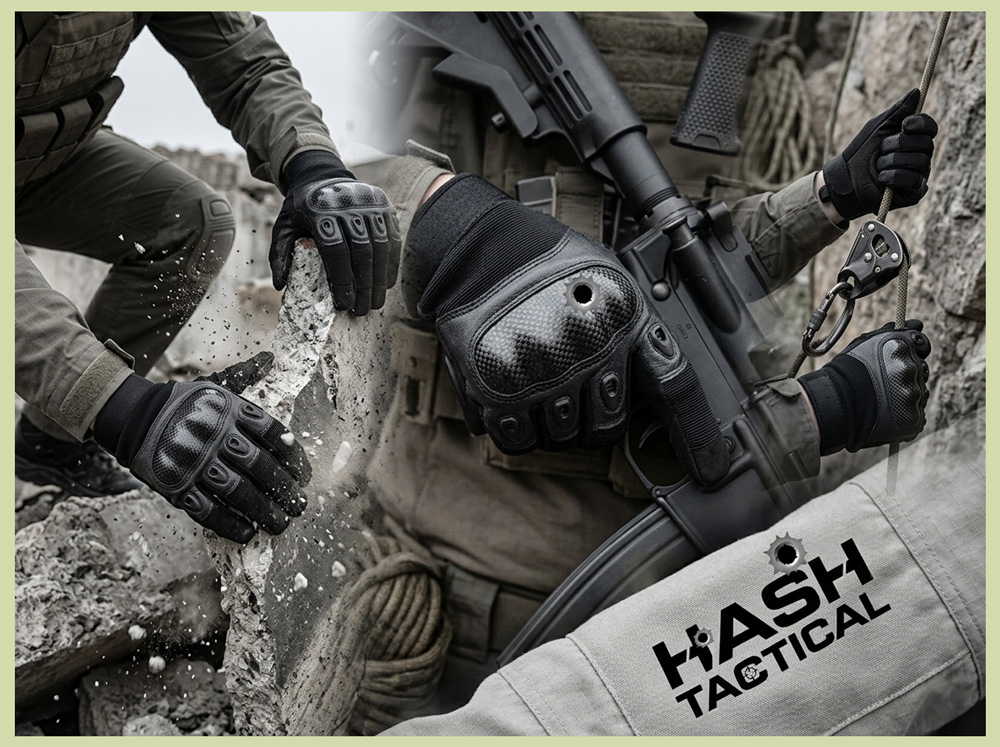
Listen up. If you’ve ever had to punch your way out of a bad situation or caught your hand in a heavy door during a breach, you know your hands are your livelihood. You break a finger, and you’re out of the fight. It’s that simple. Today, we’re talking about hard knuckle gloves. These aren’t just fancy leather mittens. They are specialized armor for the two most important tools you own. Whether you’re fast-roping, handling a hot barrel, or clearing a room, you need protection that doesn’t quit.
Choosing Hard Knuckle Gloves for Max Protection
The Day I Learned My Lesson
I remember an op back in the day. I was wearing thin flight gloves because I wanted “feel.” We went through a window, and my lead hand caught a jagged piece of aluminum frame. If I had been wearing reinforced protection, I would have walked away with a scratch. Instead, I spent the next three weeks trying to grip a rifle with a hand that looked like a raw steak.
That’s why we take this gear seriously. At Hash Tactical, we don’t just sew fabric together. We build shields. When you slide your hand into a pair of our gloves, you’re putting on a layer of insurance designed by people who know what “extreme” actually looks like.
The Philosophy of Hand Protection
Your hands are fragile. They are a collection of small bones, tendons, and nerves covered by a thin layer of skin. In a tactical environment, everything is out to get them. Concrete, steel, heat, and cold.
A proper pair of hard knuckle gloves should provide three things: Impact resistance, abrasion protection, and dexterity. If you have the first two but lose the third, you can’t pull a trigger or key a radio. That’s a fail. We focus on the sweet spot where armor meets agility.
The Anatomy of Hard Knuckle Gloves
The Knuckle Guard: Carbon Fiber vs. Polymer
The “Hard” in these gloves usually comes from a molded insert over the metacarpals. We use two main materials. Carbon fiber is the lightweight king. It’s incredibly stiff and absorbs massive amounts of energy.
Molded polymers are the workhorses. They are slightly more flexible and can take repeated beatings without cracking. Both serve a purpose. If you’re a door-kicker, you want that rigid shell. It turns your hand into a hammer when you need it most.
The Palm: Grip and Ripstop
The palm is where the work gets done. We use reinforced synthetic leather or treated cowhide. It needs to be thin enough to feel your equipment but thick enough to slide across gravel without tearing.
- Double-Layered Palms: For high-wear areas near the thumb.
- Silicone Grips: To ensure your sidearm doesn’t slip in the rain.
- Padded Heel: To absorb the shock when you brace for a fall.
Why Materials Matter in the Field
| Material Layer | Primary Function | Tactical Benefit |
| Carbon Fiber Shell | Impact Shielding | Protects bones from fractures during impact. |
| Kevlar Stitching | Heat Resistance | Won’t melt or snap when touching hot suppressors. |
| Spandex Backing | Flexibility | Allows for full range of motion for trigger fingers. |
| Touchscreen Tips | Connectivity | Operate GPS and tablets without exposing skin. |
The Kevlar Thread Advantage
Standard nylon thread melts. If you’re in a vehicle fire or handling a weapon that’s seen 200 rounds of rapid fire, you need thread that stands up to the heat. We use high-tensile stitching that stays together when the temperature rises.
Breathability: The Combat Sweat Factor
Sweaty hands lead to blisters. They also make your gloves smell like a dead animal after three days. We integrate micro-perforations in the fingers and breathable mesh on the back of the hand. You want protection, not a sauna for your fingers.
Impact Resistance: Beyond the Knuckles
Finger Guards and Joint Protection
The knuckles aren’t the only target. Your finger joints are just as vulnerable. Good hard knuckle gloves feature rubberized TPR (Thermoplastic Rubber) strips along the fingers.
These strips act as tiny “bumpers.” They deflect the energy of a stray rock or a sliding bolt. At Hash Tactical, we map these guards to the natural movement of your hand. They bend when you make a fist, but they harden the exterior against blunt force.
The Wrist Closure: Security is Key
If a glove slides off during a struggle, it’s useless. We use industrial-strength Velcro closures. They wrap tight around the wrist, keeping out sand and debris. A secure fit also means the knuckle guard stays exactly where it’s supposed to be—over your bones.
Tactical Utility: More Than Just Fighting
Fast-Roping and Climbing
If you’ve ever fast-roped, you know the friction heat is enough to cook a steak. You need gloves that won’t burn through. While hard knuckle gloves are built for impact, we reinforce the “rope channel” in the palm to handle the friction of a rapid descent.
Maintenance and Weapon Manipulation
Can you strip a weapon while wearing them? That’s the ultimate test. We taper the trigger finger. This prevents the glove from getting caught in the trigger guard—a dangerous mistake that can lead to an accidental discharge.
Choosing Your Size: The Second Skin Rule
A glove that is too big will bunch up. A glove that is too small will cut off circulation and make your hands cold. You want a “Second Skin” fit.
- Measure the Circumference: Wrap a tape around your palm.
- Check the Finger Length: There should be no “dead space” at the tips.
- Test the Fist: Make a tight fist. The knuckle guard should sit comfortably without pinching your skin.
The Hash Tactical Manufacturing Process
We take the “Cut & Sew” approach to the next level. Because we are a dedicated tactical gear manufacturer, we don’t outsource the quality. Every pair of hard knuckle gloves is inspected for stitch consistency.
We understand that our gear goes into the hands of people who can’t afford a gear failure. That’s why we use sublimated patterns for camo that won’t fade and high-grade materials that won’t fray. We build it once, and we build it right.
Care and Maintenance for Longevity
- Hand Wash Only: Use mild soap. Do not put them in a machine.
- Air Dry: Never put them in a dryer. High heat ruins the leather and the glue.
- Treat the Leather: Use a bit of conditioner if the palms start to get stiff.
- Check the Shell: Inspect the knuckle guard for cracks after any major impact.
Frequently Asked Questions (FAQ)
A: In most places, yes. They are viewed as safety equipment for motorcycling or heavy labor. However, always check your local laws as some jurisdictions have specific rules about “reinforced” clothing.
A: Yes. Use cold water and a soft brush. Let them air dry slowly away from direct sunlight to prevent the materials from becoming brittle.
A: Our modern designs include conductive material on the index finger and thumb, allowing you to use your smartphone or nav unit without taking your gear off.
👉 For more information before purchasing your desired custom tactical gear, feel free to contact our support team for guidance!