Listen up. If you’re in the business of supplying the front lines, or if you’re an operator wondering why your gear says “Made in the USA,” you need to understand the Berry Amendment. It isn’t just some dusty piece of legal parchment. It’s a strategic shield for the industrial base of the greatest military on earth.
I’ve seen what happens when supply chains break. I’ve seen the panic when a unit realizes their critical components are stuck on a boat halfway across the globe. Today, we’re talking about why the source of your fabric, your thread, and your steel matters more than just a label on a collar.
What Is the Berry Amendment & Why It Matters
The Night the Logistics Chain Snapped
I remember a deployment where we were waiting on specialized cold-weather liners. We were freezing our tails off in a high-altitude AO. The word came down: the shipment was delayed because a foreign factory had a labor strike. We were combat-ready, but our gear was held hostage by a border we didn’t control.
That’s a situation the Berry Amendment was designed to prevent. It ensures that when the heat is on, the U.S. military isn’t reliant on a flight from an adversary or a neutral third party for its basic survival gear. At Hash Tactical, while we serve a global market of elite units, we respect the raw power of a secure, dedicated manufacturing line that doesn’t quit when the world gets complicated.
Defining the Law of the Land
The Berry Amendment (10 U.S.C. 2533a) is a statutory requirement that restricts the Department of Defense (DoD) from using funds for certain items—like food, clothing, fabrics, and hand tools—unless they are grown, reprocessed, reused, or produced in the United States.
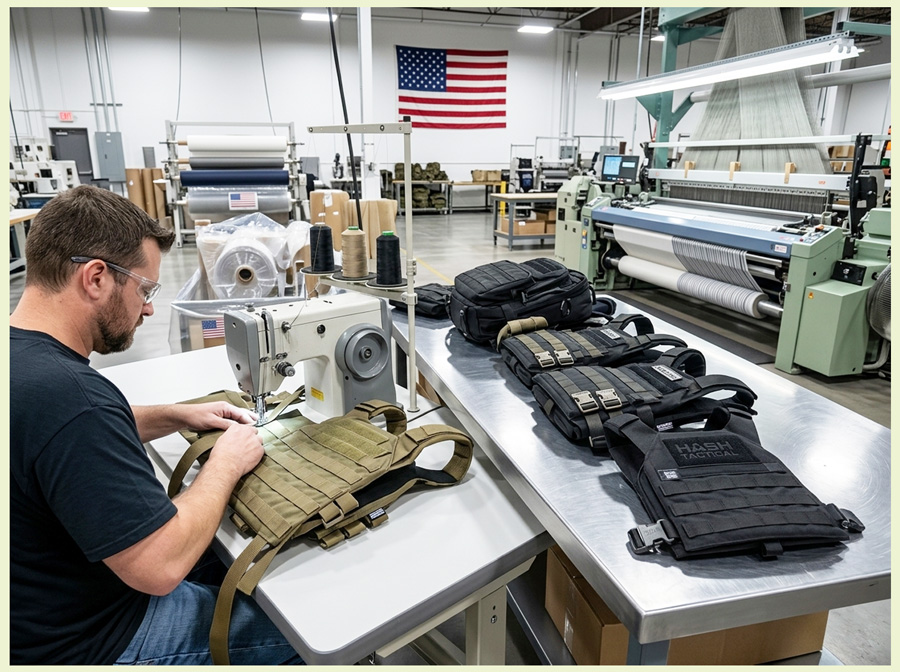
It’s about “Industrial Readiness.” If you lose the ability to sew your own uniforms or forge your own steel, you lose your sovereignty in a time of war. As a tactical gear manufacturer with deep roots in “Cut & Sew” technology, we understand that the integrity of the garment starts at the fiber level.
The Core Requirements: What Is Covered?
The Textile Mandate
The most visible part of the amendment covers clothing and textiles. This includes everything from the tactical jerseys you wear to the webbing on your plate carrier vest.
- Raw Materials: The cotton, wool, or synthetic fibers must be domestic.
- Processing: The yarn spinning and fabric weaving must happen on home soil.
- Assembly: Every stitch of the “Cut & Sew” process must be completed by domestic labor.
The Food and Tool Clause
It’s not just about what you wear. It’s about what you eat and what you use to fix your gear. The amendment ensures that the MREs in your pack and the wrenches in your motor pool aren’t subject to foreign trade embargoes.
Why It Matters: The Strategic Perspective
| Benefit | Impact on the Operator | Strategic Value |
| Supply Chain Security | Gear arrives on time, even during global crises. | Reduces dependency on foreign adversaries. |
| Quality Control | High-grade materials that don’t fail in the field. | Maintains a high standard for life-safety equipment. |
| Economic Strength | Supports the skilled workers who build the gear. | Keeps the “Military-Industrial Base” warm and ready. |
| Innovation | Drives domestic R&D for better camouflage and fabrics. | Keeps the technological edge in-house. |
The Quality Factor
When you’re buying gear that isn’t bound by these strict standards, you’re rolling the dice. You might get high-quality nylon, or you might get a “recycled” blend that melts under friction.
At Hash Tactical, we apply the same “No-Fail” philosophy to all our products. We know that whether you are under the Berry Amendment or operating as a private contractor, you need fabric that won’t shred when you’re dragging a teammate through a breach point.
The Exceptions: When Can the DoD Go Foreign?
No law is absolute. There are “Domestic Non-Availability Determinations” (DNAD). If the U.S. literally doesn’t produce enough of a specific material—like certain types of specialized silk or exotic fibers—the Secretary of Defense can grant a waiver.
There are also thresholds. Generally, the amendment applies to purchases over the “Simplified Acquisition Threshold” (currently around $250,000). For smaller, one-off purchases, the rules can be slightly more relaxed, but the preference for domestic remains the iron rule.
The Role of the Tactical Gear Manufacturer
As a premier tactical gear manufacturer, we see the ripple effects of these policies every day. The push for domestic excellence has led to the creation of fabrics like Cordura and Nomex—materials that have saved countless lives.
Our “Cut & Sew” expertise allows us to take these high-performance materials and turn them into the tactical assault backpacks and hard knuckle gloves you rely on. We don’t just follow a pattern; we respect the engineering that goes into every square inch of the cloth.
Sublimation and the Modern Uniform
Even within the constraints of strict manufacturing, innovation doesn’t stop. Our sublimation techniques allow for permanent camouflage that is integrated into the fabric. This ensures that even under the toughest conditions, your “Visual Breakup” remains intact, keeping you hidden and lethal.
How to Spot Berry-Compliant Gear
If you’re a procurement officer or a unit leader, you need to look for the “CofC” (Certificate of Compliance). A reputable manufacturer will provide a paper trail that tracks the gear from the farm or the chemical plant all the way to the final box.
- Labeling: Look for the “Made in USA” tag—but verify the source.
- Contract Language: Ensure the specific “Berry Amendment” clause is in the RFQ.
- The “Smell” Test: High-quality domestic nylon has a specific weight and texture that cheap imports can’t replicate.
Maintenance and Longevity: Protecting the Investment
Domestic gear is an investment. It usually costs more because the labor and materials are held to a higher standard. You need to treat it with respect.
- Follow the Care Label: If it says “No Bleach,” they mean it. Bleach breaks down the molecular bonds of the nylon.
- Repair, Don’t Replace: High-quality gear is designed to be repaired. A popped seam in a tactical jacket can be fixed by a skilled tailor, extending the life of the garment.
- Store it Right: Keep your gear out of the UV light when not in use. Even the best Berry-compliant fabric will eventually degrade if left in the sun for months.
Frequently Asked Questions (FAQ)
A: No. The Buy American Act applies to most government purchases, but it allows for some foreign content. The Berry Amendment is much stricter and applies specifically to the DoD for textiles, food, and tools.
A: Yes. Boots and footwear for the military must be compliant. This has led to some of the most durable combat boots ever designed.
A: You’re paying for a secure supply chain, fair labor wages, and guaranteed material quality. In the long run, it’s cheaper than replacing gear that fails in six months.
Mission Complete. Know your gear. Know where it comes from. And never trust your life to a supply chain you can’t see.