The Tactical Belt Revolution 2026: Designing Custom Buckleless Inner/Outer Belts
Buckleless tactical belts are taking over in 2026. They use high-tensile elastomers and rigid structural inserts instead of metal buckles. This makes them lighter, faster to adjust, and less likely to fail under load. If you carry a gun, a duty rig, or heavy gear every day, a two-piece inner/outer belt system beats a single stiff belt in almost every way. Law enforcement, competitive shooters, and EDC users are switching fast. Hash Tactical builds these systems to order, so you get a belt shaped around your body and your gear, not a generic size off a rack.
What Is a Buckleless Tactical Belt?
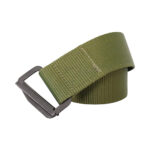
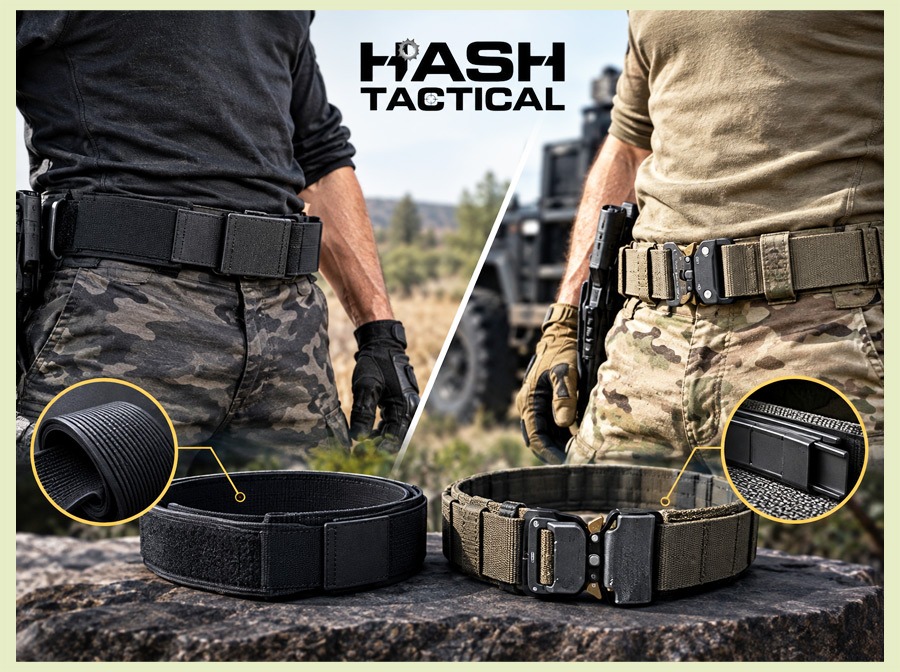
A buckleless belt skips the metal buckle. Instead, it closes with low-profile hook and loop, or a hidden cam-lock system built into the belt itself. No metal parts means no printing under a shirt. No metal parts also means no sharp edges digging into your side when you sit in a car for eight hours.
Most buckleless belts are also two-piece systems. There’s an inner belt and an outer belt.
- Inner belt: Thin, grips your pants, and stays hidden. It anchors everything.
- Outer belt: Thick, rigid, and holds your gear. It attaches to the inner belt with hook and loop.
This split design is the biggest shift in belt tech this decade. It’s why people call 2026 the year of the tactical belt revolution.
Why 2026 Changed the Game
Three things pushed this shift forward this year.
1. High-tensile elastomers. New stretch materials hold their shape under heavy loads but still flex when you move. Older nylon belts either stayed stiff or sagged. These new materials do both jobs at once: they hold a holster steady but bend with your hips when you walk or run.
2. Low-profile hook and loop. Old hook and loop was bulky and wore out fast. The 2026 versions are thinner, grip harder, and last through thousands of open-close cycles without losing hold. This is what makes buckleless closures actually reliable enough for duty use.
3. Rigid structural inserts. Thin plastic or composite strips inside the outer belt keep it from folding over when you clip on a heavy holster or mag pouch. Without this, an outer belt would sag and shift all day. With it, the belt holds its shape like a molded gun belt, but stays adjustable.
Put these three together and you get a belt that’s stiff where you need stiffness and soft where you need comfort. That combo didn’t really exist before this year.
Inner Belt vs Outer Belt: What’s the Difference?
People new to this system often ask why they need two belts instead of one. Here’s the short answer: each belt does a different job.
| Feature | Inner Belt | Outer Belt |
|---|---|---|
| Main job | Anchors to your body | Holds your gear |
| Thickness | Thin (about 1/8 inch) | Thick (1/4 inch or more) |
| Material | Soft elastomer blend | Elastomer plus rigid inserts |
| Visibility | Hidden under clothing | Worn on top, visible |
| Adjustability | Fine-tuned to your waist | Fast on/off over the inner belt |
| Best for | Daily comfort | Duty gear, holsters, mag pouches |
The inner belt keeps your pants up and gives the outer belt something firm to grip. The outer belt carries the weight of your holster, spare mags, cuffs, or a multitool. Because they connect with hook and loop, you can put the whole rig on or take it off in seconds. No threading a belt through fifteen loops.
Traditional Buckle Belt vs Buckleless System
Let’s compare the old way and the new way side by side.
| Category | Traditional Buckle Belt | Buckleless Inner/Outer System |
|---|---|---|
| Setup time | Slow, thread through loops | Fast, wrap and press |
| Metal parts | Yes, buckle and sometimes D-rings | None or minimal |
| Printing under clothing | Common | Rare |
| Adjustment | Fixed holes or slow ratchet | Infinite adjustment via hook and loop |
| Comfort over long shifts | Can dig in at the buckle | Even pressure across the waist |
| Weight capacity | Good | Excellent, thanks to rigid inserts |
| Airport/metal detector friendly | No | Yes |
| Failure point | Buckle can crack or bend | Very few moving parts to break |
The buckleless system wins on speed, comfort, and stealth. The traditional belt still has a place for people who want a classic look or don’t carry heavy gear. But for anyone who wears a belt system for work, the newer design is hard to beat.
Rigid Structural Inserts: Why They Matter
A belt with no stiffness at all will roll over once you clip on a holster. That’s dangerous if you’re carrying a firearm. Rigid structural inserts fix this.
These inserts are thin strips of polymer or composite sewn into the outer belt. They don’t bend sideways, but they still flex forward and back with your body. Think of it like a car’s frame. The frame stays rigid so the car doesn’t twist, but the suspension still absorbs bumps.
Without inserts, a molded holster can tip outward when you sit or bend over. With inserts, the holster stays in the same spot, at the same angle, no matter what you’re doing. This matters most for:
- Duty holsters carrying a full-size pistol
- Mag pouches loaded with steel or polymer mags
- Cuff cases and other rigid attachments
Hash Tactical uses graduated insert thickness, meaning the belt is stiffer near the holster and more flexible near the sides. This keeps the gun steady without making the whole belt feel like a plank of wood.
Who Actually Needs This Kind of Belt?
Not everyone needs a full duty rig. Here’s a quick breakdown by user type.
Law Enforcement
Officers wear a belt for a full shift, sometimes ten or twelve hours. Comfort and gear retention both matter. A buckleless system spreads weight evenly and won’t dig into the hips during long stretches of sitting in a patrol car. It’s also faster to get in and out of during shift changes.
Competitive Shooters
Shooters need a belt that holds a holster in the exact same spot, run after run. Rigid inserts keep the holster from shifting during fast draws or movement between stages. Many competition shooters already use two-piece belts because USPSA and IDPA rules often call for this setup anyway.
Everyday Carry (EDC) Users
EDC users usually want to stay hidden. A thin inner belt and a low-profile outer belt make concealed carry easier under a t-shirt or button-down. No buckle means no printing and no metal detector beeps at the store entrance.
How to Choose Your Belt System
Picking the right setup depends on what you carry and how often you carry it. Use this checklist:
- Decide your main use. Duty work, competition, or daily concealed carry each call for slightly different stiffness levels.
- Measure your waist accurately. Buckleless belts still need a proper base size, even with adjustable hook and loop.
- Pick your gear load. More gear means you want more rigid inserts in the outer belt.
- Check the hook and loop grade. Higher-grade hook and loop holds tighter and lasts longer.
- Think about climate. Elastomer blends behave differently in heat versus cold. Ask about weather-rated materials if you work outdoors year-round.
- Test the width. Wider belts (1.75 to 2 inches) support more weight but can feel bulky under tight clothing.
Custom vs Off-the-Shelf
Off-the-shelf belts come in generic sizes: small, medium, large. That works fine for casual use. But once you add a full duty load, generic sizing starts to fail. The belt might be too loose in the middle or too tight near the holster.
A custom-built system solves this. Hash Tactical measures your waist, your gear list, and your preferred carry position before building your belt. This means the rigid insert zones land exactly where your holster sits, not somewhere close to it. It also means the inner belt fits snug without extra bunching.
Custom belts cost more upfront. But they last longer, fit better, and reduce the wear-and-tear that comes from a belt working overtime to compensate for poor fit.
The 2026 Buckleless Belt Revolution
No metal buckle. Two-piece build. Made to hold a full duty load all day.
What Changed in 2026
Three materials made the buckleless design possible.
High-Tensile Elastomers
Holds a holster steady but still flexes when you move.
Low-Profile Hook & Loop
Thin, strong grip that lasts through thousands of uses.
Rigid Structural Inserts
Stops the belt from folding under a loaded holster.
Inner Belt vs Outer Belt
Two belts. Two jobs. One system.
Inner Belt
- Thin and hidden under clothing
- Anchors to your body
- Fine-tuned, snug fit
Outer Belt
- Thick and rigid
- Carries holster and pouches
- On/off in seconds
Old Belt vs New System
A quick side-by-side.
| Category | Traditional Buckle | Buckleless System |
|---|---|---|
| Setup speed | Slow | Fast |
| Metal parts | Yes | None |
| Prints under shirt | Common | Rare |
| Heavy load support | Good | Excellent |
| Metal detector friendly | No | Yes |
Who Wears This Belt
Three groups leading the switch.
Law Enforcement
Full shift comfort and fast gear access.
Competitive Shooters
Holster stays locked in the same spot, every run.
EDC Carriers
Stays hidden, comfortable, all day long.
Build Your Own Duty Belt
Custom-fit to your waist, your gear, and your carry style.
Design Your 2026 Duty Belt SystemFrequently Asked Questions
Yes. The strength comes from the hook and loop bond and the rigid inserts, not from a metal buckle. High-tensile elastomer belts can hold duty-level loads without stretching out over time.
Low-profile hook and loop rated for tactical use is built for thousands of open-close cycles. It wears much slower than older consumer-grade hook and loop.
You can, but it’s not recommended for heavy loads. The inner belt gives the outer belt something firm to grip. Without it, the outer belt can shift or sag.
Most molded holsters made for 1.5 to 2-inch belts will work fine with a buckleless outer belt of the same width.
If you carry daily and want the belt to disappear under your clothes, yes. A custom fit removes bulk and keeps the setup comfortable for all-day wear.
Final Thoughts
The shift to buckleless inner/outer belts isn’t a passing trend. It solves real problems: printing, discomfort, slow adjustments, and weak points at the buckle. High-tensile elastomers, low-profile hook and loop, and rigid structural inserts work together to build a belt that holds steady under load but still moves with your body.
Whether you’re on duty, on the range, or just carrying daily, the right belt setup makes a real difference in comfort and performance. Hash Tactical builds these systems around your exact measurements and gear list, so the fit is right the first time.
Design Your 2026 Duty Belt System → https://hashtactical.com/custom-integrated-duty-belt-stabilization-pants/
👉 For more guidance before buying tactical gear, contact our expert design team!