Custom Low-Profile Stabilization Belts Built Into Custom Duty Trousers
Standard duty belts crush your hips. They pull on your lower back. After a 12-hour shift, that pain adds up. Integrated stabilization trousers fix this problem. They move the belt’s job into the pants themselves. A wide, internal webbing channel spreads the load across your waist instead of digging into one spot. Officers who switch report less lower back pain and better freedom of movement during foot pursuits or long stakeouts.
This article compares external duty belts to internal stabilization systems. It covers how they work, who benefits most, and what to look for when ordering custom gear. Hash Tactical builds these systems into duty trousers for units that need real relief, not just a marketing claim.
What Is an Internal Stabilization Trouser System?
Think of it like a weight belt built into your pants, not strapped on top of them.
Traditional gear belts sit outside your pants. They rely on belt loops and friction to stay in place. When you add a holster, magazine pouches, and a radio, that weight pulls the belt down and sideways. Your hips absorb the shock.
An internal stabilization system changes the setup. It uses:
- Double thick waistband webbing sewn directly into the trouser
- A internal support channel that runs along the hips and lower back
- Concealed harness routes that let you attach gear without adding bulk on the outside
- Reinforced anchor points at pressure zones like the hip bones and tailbone
The result is a trouser that shares the load with your whole waist and upper hip area, not just a two-inch strip of leather or nylon.
Why External Duty Belts Cause Problems
External belts were designed decades ago. The gear has changed. The belts mostly haven’t.
Here’s what happens with a standard rig:
- Weight from your holster, cuffs, and pouches sits on one narrow band.
- That band presses hard on your hip bones and lower spine.
- Over hours, this pressure restricts blood flow and irritates nerves.
- Officers compensate by shifting their stance, which throws off posture.
- Chronic lower back pain and hip bursitis follow after months or years.
This isn’t rare. Departments across the country report duty belt discomfort as one of the top physical complaints among patrol officers, especially those carrying 15+ pounds of gear daily.
Side-by-Side Comparison
| Feature | Standard External Duty Belt | Internal Stabilization Trouser |
|---|---|---|
| Weight distribution | Narrow band, concentrated pressure | Wide webbing, spread across hips |
| Lower back support | Minimal to none | Built-in reinforced channel |
| Bulk and profile | Adds outer bulk, visible under uniform shirt | Low-profile, sits flush under duty shirt |
| Mobility | Can shift or ride up during movement | Anchored in place, less shifting |
| Setup time | Requires separate belt fitting | Integrated at time of trouser fitting |
| Gear attachment | External loops and clips | Concealed harness routes inside waistband |
| Long-shift comfort | Drops significantly after 6+ hours | Holds steady through full shift |
| Custom fit | Belt size only | Full trouser and belt system fitted together |
Who Benefits Most From Integrated Belt Systems
Not every unit needs this upgrade. But some absolutely do.
Patrol Officers on Long Shifts
Anyone standing, walking, or sitting in a cruiser for 10+ hours will feel belt fatigue. Internal stabilization spreads that load out, which matters most on double shifts.
Tactical and SWAT Teams
Fast movement, stairs, and tight spaces mean gear needs to stay put. A belt that shifts during a dynamic entry is a liability. Concealed harness routes keep gear anchored without external snag points.
K9 Handlers
Handlers move constantly, often bending, kneeling, and running with their dog. A low-profile system reduces drag and snagging on leashes or gear.
Officers With Existing Back or Hip Issues
For officers already dealing with lower back strain, a wide internal support channel can reduce daily aggravation. This isn’t a medical fix, but it removes one major source of pressure.
Units Requiring Plainclothes or Low-Visibility Gear
Because the harness sits inside the trouser, there’s no bulky belt printing through a jacket or plainclothes shirt. This matters for detectives and undercover assignments.
How Concealed Harness Routes Work
This is the part most people ask about first.
Concealed harness routes are internal channels sewn into the trouser’s waistband and hip area. They let officers route attachment points for holsters, mag pouches, or radio clips without exposing straps or webbing on the outside of the pants.
Here’s the basic build:
Step 1: Reinforced waistband core. A double thick webbing layer runs the full circumference of the waist, giving the trouser its main structural support.
Step 2: Hidden channel stitching. Internal seams create tunnels where straps or D-rings pass through, invisible from the outside.
Step 3: Anchor tabs at load points. Small reinforced tabs sit at the hips and lower back where gear typically pulls hardest.
Step 4: Adjustable tension points. Officers can tighten or loosen sections without needing a separate belt buckle system.
This setup means the trouser itself becomes the support structure. The visible belt, if worn at all, becomes more of a formality than a functional load-bearer.
Operational Fit: Why Custom Sizing Matters
A stock trouser with a built-in harness won’t perform the same as a custom-fitted one. Body shape changes how weight sits on the hips.
Operational fit means the trouser is built around:
- Waist and hip measurements specific to the officer
- Duty gear weight and placement (holster side, mag pouch count)
- Range of motion needs (running, kneeling, climbing)
- Layering requirements (base layer, seasonal gear)
A trouser that’s too loose in the waist lets the internal webbing shift, which defeats the purpose. Too tight, and it restricts movement or circulation.
Hash Tactical fits each pair to the individual officer or the unit’s standard gear loadout, not a generic size chart. This step is what separates a true stabilization system from a belt sewn into a normal trouser.
Common Materials Used in Integrated Systems
Quality matters here. Cheap webbing stretches and loses support fast.
| Material | Use in Trouser | Benefit |
|---|---|---|
| Nylon webbing (1.5″–2″ wide) | Waistband core | High tensile strength, low stretch |
| Ripstop reinforced fabric | Outer trouser shell | Resists tearing during tactical movement |
| Foam or gel padding strips | Hip contact zones | Reduces direct pressure points |
| Hook-and-loop tension tabs | Internal adjustment points | Quick fit changes without tools |
| Metal or polymer D-rings | Concealed harness anchors | Secure gear attachment without bulk |
Maintenance and Durability
An internal system needs different care than a standard belt.
- Wash inside out to protect internal webbing stitching.
- Air dry when possible. High heat can weaken webbing fibers over time.
- Check anchor tabs monthly for fraying, especially for units in high-activity roles like SWAT or K9.
- Avoid overloading one side. Even distribution keeps the internal channel working as designed.
With proper care, a well-built stabilization trouser system can outlast several standard duty belts, since the load-bearing structure isn’t a separate wear item.
Cost Considerations
Integrated systems cost more upfront than a standard trouser and belt combo. That’s expected since more material and construction go into each pair.
However, departments often see savings over time:
- Fewer belt replacements (no separate belt to wear out)
- Reduced injury claims related to chronic back or hip strain
- Longer trouser lifespan due to reinforced construction
For units budgeting per officer per year, this is worth calculating against current gear replacement costs.
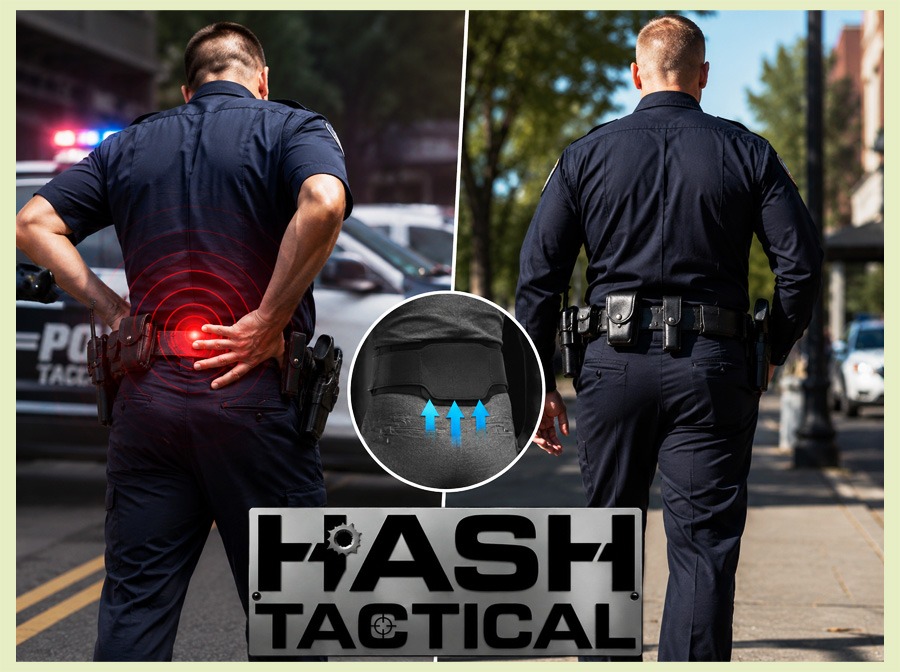
Stop Letting Your Belt Wreck Your Hips
A visual breakdown of external duty belts vs. Hash Tactical’s built-in stabilization trousers.
Bottom Line
External belts push all your gear weight onto one narrow band. Internal stabilization trousers spread that same weight across your whole waist and hip line — built right into the pants.
Where The Pressure Goes
Standard Duty Belt
Narrow load zone. Pressure concentrates on hip bones and lower spine.
Integrated Trouser System
Wide load zone. Weight spreads across the entire waistband.
Belt vs. Built-In System
| Feature | External Belt | Integrated Trouser |
|---|---|---|
| Weight spread | Narrow band | Full hip line |
| Back support | None | Reinforced channel |
| Outer profile | Bulky, visible | Low-profile, flush |
| Shifts during movement | Yes | Anchored in place |
| Long-shift comfort | Drops after 6+ hrs | Holds steady |
Built For These Units
Patrol Officers
Long shifts, less fatigue by hour 10.
SWAT / Tactical
Gear stays anchored during entries.
K9 Handlers
Less drag while bending and running.
Plainclothes
No belt printing under a jacket.
How The Harness Is Built In
Reinforced waistband core
Double thick webbing runs the full waist for structure.
Hidden channel stitching
Concealed harness routes run inside the seams, invisible outside.
Anchor tabs at load points
Reinforced tabs sit at hips and lower back, where gear pulls hardest.
Adjustable tension points
Officers tighten or loosen sections without a separate buckle.
What It’s Made Of
Nylon Webbing
1.5″–2″ wide core. High strength, low stretch.
Ripstop Shell
Resists tearing during fast, hard movement.
Foam Hip Padding
Cuts direct pressure at contact points.
Ready To Fit Your Unit?
Hash Tactical builds every stabilization trouser to the officer, not a size chart.
View Integrated Pants ConfigurationsFAQ
No. A padded belt still sits externally and relies on the same narrow contact area. Internal stabilization spreads the load through the trousers’ waistband and hip structure.
Yes. Many officers keep a slim outer belt for uniform appearance while the trouser does the actual weight-bearing work.
Yes, as long as sizing accounts for the added bulk of your armor setup during the fitting process.
Timelines vary by order volume, but custom trousers typically take longer than off-the-shelf gear since each pair is built to individual measurements.
It reduces pressure from gear weight specifically. It’s not a substitute for addressing other causes of back pain, like posture or existing injuries.
Final Take
Standard duty belts put all the pressure on one narrow strip of your body. Over a career, that adds up to real physical wear. Internal stabilization trousers spread that weight out, using double thick waistband webbing and concealed harness routes to keep gear secure without crushing your hips.
For units logging long hours in the field, this isn’t a luxury upgrade. It’s a practical fix for a problem officers have dealt with for decades.
View Integrated Pants Configurations → /custom-pants/integrated-belts
👉 For more information before making decision regarding belts or pants, contact our expert now!