Listen up. In the chaos of a firefight or a deep-woods navigation mission, seconds are the only currency that matters. If you’re digging through a cavernous backpack looking for a tourniquet or a spare battery, you’re already losing. I’ve seen “geardos” show up with every square inch of their vest covered in random bags. By the second mile, they’re jingling like a keychain. By the fifth mile, they can’t find their own canteen. Today, we’re talking about tactical pouches—the art of compartmentalization that keeps you organized, lethal, and efficient.
Guide to Tactical Pouches for Organization
The Night the Lights Went Out
I remember a dynamic entry back in ’08. Power was cut, and we were running on NVGs. My teammate took a fall, and his primary light went down. He reached for his admin pouch to grab a backup. Because he had a system, his hand went straight to the light. No fumbling. No looking.
That’s muscle memory aided by smart gear. If your pouches are just “stuff sacks,” you’re a liability. At Hash Tactical, we don’t just sew nylon squares. We engineer accessibility. We build the gear that ensures your hand finds what it needs, even when the world is upside down and sideways.
The Philosophy of “First Line” vs. “Second Line”
Organization starts with tiering your gear. Your belt (First Line) holds what you need to survive right now, and your vest (Second Line) holds what you need to fight. Your pack (Third Line) holds what you need to sustain.
Each of these lines requires specific tactical pouches. You don’t put a bulky medic kit on your belt if you can’t sit in a vehicle comfortably. You don’t put your primary magazines on your back where you can’t reach them. It’s about ergonomics and the economy of motion.
The Anatomy of a High-Performance Pouch
Mounting Systems: MOLLE vs. Belt Loops
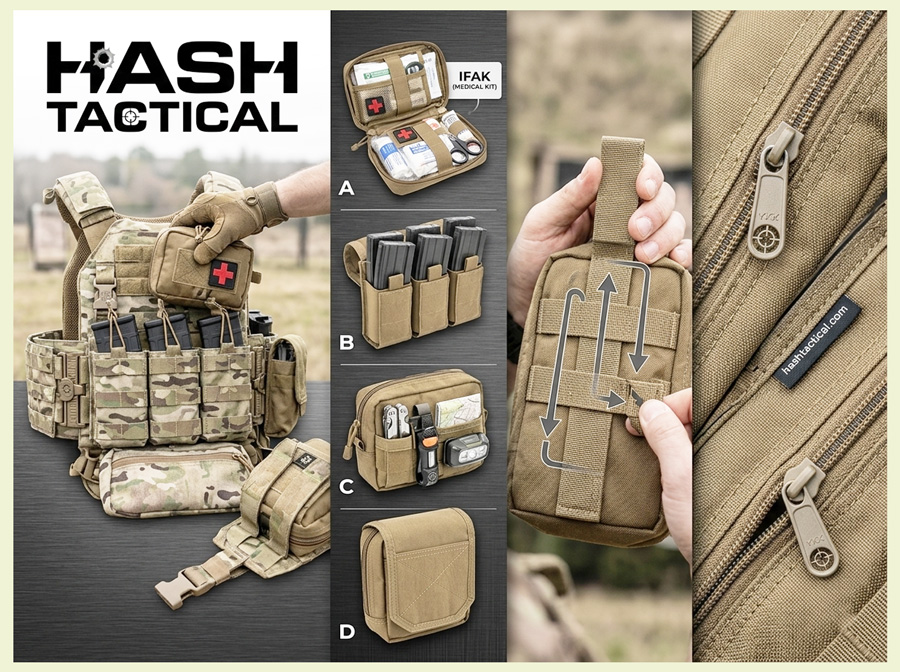
The way a pouch attaches to your gear is the foundation of its stability. Most modern gear uses the PALS (Pouch Attachment Ladder System) or MOLLE grid. It needs to be tight. If your pouch flops when you run, the stitching will eventually fail.
We use reinforced laminate straps and heavy-duty snaps. This ensures the pouch becomes part of the vest, not just an accessory. A rock-solid mount means the pouch stays put when you’re dragging it through a window frame or over a wall.
Drainage and Environmentals
If you operate in the rain or cross a river, your pouches will turn into buckets. Every professional pouch needs a drainage grommet at the bottom. We heat-seal our grommets to ensure they don’t rip out of the fabric under the weight of trapped water.
Types of Tactical Pouches and Their Missions
| Pouch Type | Primary Function | Must-Have Feature |
| Mag Pouches | Ammo Retention | Quick-draw bungee or kydex inserts. |
| IFAK (Individual First Aid Kit) | Life Saving | Rip-away velcro panel for instant access. |
| Admin Pouch | Tools & Nav | Internal elastic loops for pens and GPS. |
| Utility Pouch | General Storage | Self-repairing oversized zippers. |
| Dump Pouch | Speed Reloads | Foldable design when not in use. |
The IFAK: The One Pouch You Can’t Get Wrong
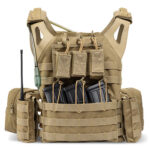
The Individual First Aid Kit is the most important pouch on your body. It should be accessible by both hands. We design our IFAKs with a “tear-away” feature. You pull a handle, and the whole kit comes off the MOLLE base so you can work on yourself or a teammate in front of you.
Mag Pouches: Tension is Everything
You need a balance. Too loose, and your mags fall out during a sprint. Too tight, and you’re fighting your gear during a reload. We offer “shingle” style pouches with adjustable tension. This allows you to dial in exactly how much “bite” the pouch has on your magazines.
Materials: The Armor of Your Gear
500D vs. 1000D Nylon Construction
For pouches, 500D Cordura is usually the winner. It’s light and flexible. However, for bottom-mounted pouches that might drag on the ground, we use 1000D Nylon. It’s about placing the durability where the friction happens.
Laser-Cut vs. Traditional Webbing
Laser-cutting reduces weight and creates a lower profile. Traditional webbing is easier to repair in the field with a needle and thread. At Hash Tactical, we utilize both “Cut & Sew” traditionalism and modern laser precision to give you the best of both worlds.
The Organization Masterclass: Internal Loading
Elastic Loops: The Key to Silence
Items rattling inside a pouch is a tactical sin. It’s noisy and it damages gear. We integrate internal elastic webbing. This secures your multitool, your chem-lights, and your spare batteries.
Color Coding and Visibility
Inside a dark pouch, everything looks black. We can use high-visibility sublimated liners (like bright orange or lime green). This small “Cut & Sew” detail makes finding a small black screw or a needle much easier under low-light conditions.
- Tier 1 Items: Tourniquets, primary mags (Front and center).
- Tier 2 Items: Radios, maps, multitools (Sides or admin areas).
- Tier 3 Items: Extra batteries, snacks, cleaning kits (Back or pack).
Manufacturing Excellence at Hash Tactical
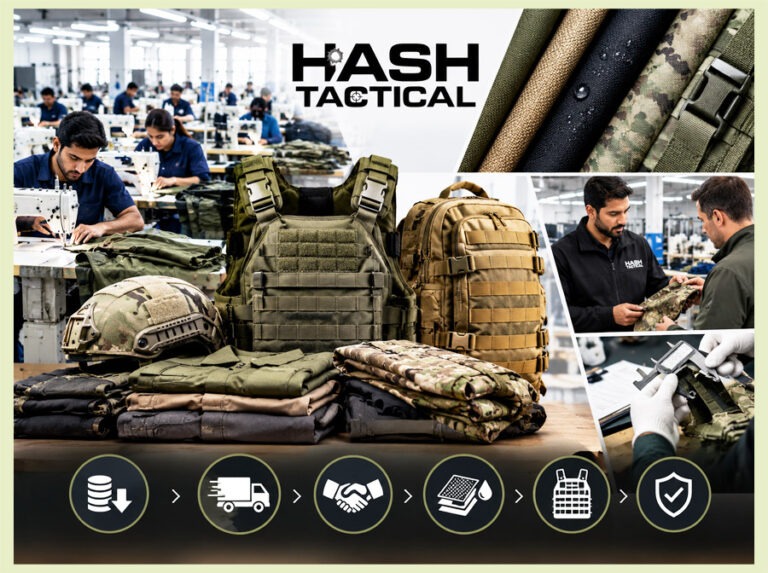
We are a dedicated tactical gear manufacturer that understands the “why” behind the stitch. We don’t just replicate designs; we test them. Because we control the manufacturing process from the first cut to the final snap, we can ensure every tactical pouch meets a professional standard.
Our sublimation technology allows us to create camouflage patterns that are dyed deep into the fabric. They won’t peel off after a week in the sun. When you buy from a direct manufacturer, you aren’t paying for a logo—you’re paying for the integrity of the build.
Maintenance: Keeping Your Kit Mission-Ready
- Vacuum the Grit: Sand in a zipper is like sandpaper. It will eat the teeth. Use a vacuum or compressed air to keep them clean.
- Check the Snaps: Salt and moisture can corrode metal snaps. A drop of oil goes a long way.
- Inspect the MOLLE: Look for “fuzzing” on the straps. If the nylon starts to fray, hit it lightly with a lighter to sear the ends.
- Wash by Hand: Never use a dryer. The heat will shrink the nylon and make your mags impossible to insert.
Frequently Asked Questions (FAQ)
A: Yes, many of our designs feature “multi-mount” backs that work with both MOLLE vests and standard 1.75-inch or 2-inch duty belts.
A: It’s a utility pouch that hangs below your front plate carrier. It’s great for extra storage that stays out of the way of your arms but remains easily accessible.
A: Bungees allow for a “shingle” design, which is faster for reloads. Flaps offer better protection against mud and dirt. Choose based on your environment.
👉 Mission Complete. Get organized or get left behind. A clean kit is a lethal kit.