Custom Tactical Joggers: The Convergence of Athleisure and Range Utility
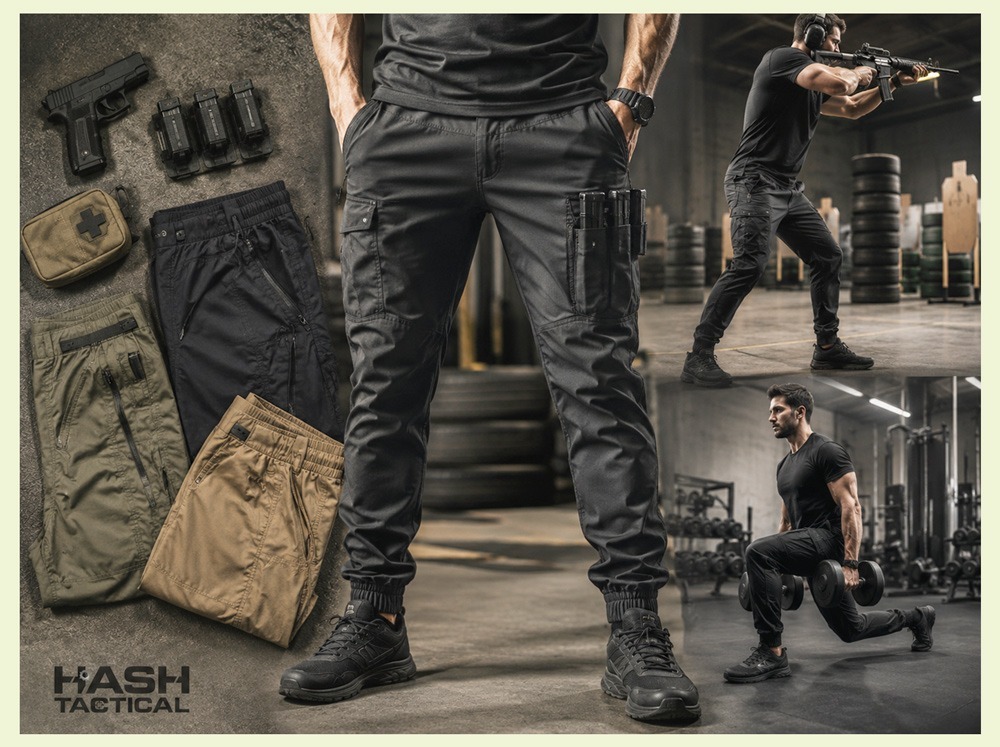
Custom tactical joggers give you the stretch of gym pants and the gear-carry of range pants in one piece of clothing. They beat regular tactical pants for mobility and beat plain joggers for storage. If you train, shoot, or move gear all day, joggers with elastic cuffed hems and deep magazine retention pockets are the smarter buy. Hash Tactical builds these to order, so you get the fit, pockets, and fabric that match how you actually train.
What Are Custom Tactical Joggers?
Tactical joggers are pants built like workout joggers but loaded with gear features. Think cuffed ankles, a drawstring waist, and stretch fabric. Then add cargo pockets, magazine pouches, and reinforced knees.
They sit in a new category. Not quite gym pants. Not quite old-school tactical cargo pants. They split the difference.
The idea grew out of a real problem. Range fitness pants that were tight enough to run in usually had nowhere to stash a spare mag or a phone. Baggy tactical pants had plenty of pockets but fought you on every squat or sprint.
Joggers fixed that. The tapered leg and cuffed hem keep fabric out of your boots. The stretch panels let your knees bend without ripping a seam. The pockets stay put because the cuff and waistband hold the whole pant close to your body.
Custom Tactical Joggers vs Range Fitness Pants vs Urban Tactical Athleisure
These three terms get used like they mean the same thing. They don’t. Here’s how they actually compare.
| Feature | Custom Tactical Joggers | Range Fitness Pants | Urban Tactical Athleisure |
|---|---|---|---|
| Best for | Mixed training and gear carry | Pure range/fitness work | Everyday wear with tactical looks |
| Fabric | Stretch ripstop or nylon blend | Lightweight stretch woven | Soft cotton/poly blend |
| Pocket depth | Deep magazine retention pockets | Shallow, minimal storage | Style-first, light storage |
| Cuff style | Elastic cuffed hems | Usually open hem | Often slim-fit, no cuff |
| Mobility | High | Very high | Moderate |
| Gear capacity | High | Low | Low to moderate |
| Typical user | Tactical fitness athletes | Cross-trainers, runners | Casual daily wear |
The short version: range fitness pants win on pure mobility. Urban tactical athleisure wins on street style. Custom tactical joggers win when you need both movement and gear in the same pair.
Why Elastic Cuffed Hems Matter More Than You’d Think
Cuffed hems aren’t just a look. They do a job.
- Keep pant legs out of your boots. No loose fabric bunching around your ankle when you’re moving fast.
- Stop snags on gear. A loose hem can catch on a rifle sling, a fence, or a truck bed rail. A cuff won’t.
- Hold your base layer in place. Cold-weather training means layering. Cuffs seal the bottom so heat doesn’t escape.
- Improve your stride. Less flapping fabric means less drag when you sprint or climb.
This is one reason range fitness pants borrowed the jogger cuff instead of sticking with a straight-leg cut. It’s a small detail with a big payoff.
Deep Magazine Retention Pockets: The Real Difference-Maker
This is the feature that separates tactical joggers from regular athletic wear.
A deep magazine retention pocket is built to hold a rifle or pistol mag securely, even while you’re running, jumping, or dropping into a kneeling position. It’s not just a deep pocket. It usually has:
- A retention flap or elastic band at the top
- Reinforced stitching so the pocket doesn’t tear under weight
- A drop depth long enough that the mag doesn’t bounce out
- Placement on the thigh or hip where your hand naturally goes
Compare that to a standard cargo pocket. Most cargo pockets are wide and shallow. Great for a wallet. Bad for a loaded mag that needs to stay put during a sprint or a barrier climb.
Hash Tactical builds custom joggers with pocket depth and placement based on what you’re actually carrying: mags, a multitool, a phone, or a med kit. That’s the point of going custom instead of buying off the rack.
Comfortable Mobility Apparel: Why Fit Beats Toughness
Old tactical pants were built like armor. Thick canvas. Stiff seams. Great for durability, bad for a burpee.
Tactical fitness training changed the demand. Athletes needed pants that could handle a WOD, a stair climb, and a range day, all in the same session. That pushed brands toward what’s now called comfortable mobility apparel.
What Makes Apparel “Mobility-First”
- Four-way stretch fabric that moves with your hips and knees
- Gusseted crotch panels so high kicks and lunges don’t blow out a seam
- Articulated knees pre-curved so the pant doesn’t fight your leg
- Lightweight ripstop that resists tears without adding bulk
- Breathable weave to cut down on sweat buildup during long sessions
None of this means the pants get weaker. Good mobility fabric is often just as tough as old-school canvas. It’s woven differently, not thinner.
Who Actually Wears These: The Core Audience
Custom tactical joggers aren’t for everyone, and that’s fine. They’re built for a specific type of athlete.
Tactical Fitness Athletes
People who train for strength, speed, and gear-carry all at once. Think obstacle course racers, hybrid athletes, and functional fitness competitors who also do range work.
Cross-Training Enthusiasts
Athletes who bounce between squats, sprints, rope climbs, and rucking in one week. They need pants that survive all of it without changing outfits.
Range-to-Gym Professionals
Law enforcement trainers, security contractors, and firearms instructors who go from the range to a workout in the same day. Urban tactical athleisure covers the street look, but joggers cover the actual movement.
If your day looks like “gym, then range, then errands,” a jogger built for all three saves you from packing three different outfits.
Fabric and Build: What to Look For
Not all tactical joggers are equal. Some are just gym joggers with an extra pocket sewn on. Here’s what separates a serious pair from a gimmick.
| Build Feature | Why It Matters |
|---|---|
| Ripstop weave | Stops small tears from spreading into big rips |
| Reinforced seat and knees | Handles kneeling, crawling, and repeated squats |
| YKK or similar zippers | Won’t jam or break under dirt and sweat |
| Bartack stitching at stress points | Pockets and belt loops stay attached under load |
| Moisture-wicking finish | Keeps you dry during long training blocks |
| Articulated knee pattern | Pre-shaped so the fabric doesn’t bunch when you bend |
A good pair should survive a full training cycle, squats, sprints, rucking, and range time, without the seams giving out.
Custom vs Off-the-Rack: Why It Matters for This Category
Stock tactical joggers are built for an average body and an average loadout. Most people aren’t average.
Going custom with Hash Tactical means you control:
- Waist and inseam so the fit is dialed in, not just close enough
- Pocket count and placement based on your actual gear list
- Fabric weight, lighter for hot climates, heavier for cold-weather training
- Color and pattern to match your unit, gym, or personal preference
- Cuff tightness depending on whether you tuck into boots or wear low shoes
Off-the-rack pants force you to adjust your gear to fit the pants. Custom pants adjust to fit your gear. For serious tactical fitness athletes, that difference shows up every single training session.
How to Choose the Right Pair: A Quick Checklist
Use this list before you order:
- Know your primary use. Mostly gym? Mostly range? Both equally? This changes fabric weight and pocket count.
- Count your gear. List what you actually carry, mags, multitool, phone, med kit, so pocket placement makes sense.
- Pick your climate. Lighter ripstop for heat, heavier blends for cold and wind.
- Check the cuff style. Tighter cuffs for boot tuck-in, looser for low-profile shoes.
- Confirm the stretch zones. Make sure the knees and hips have four-way stretch panels, not just the waistband.
- Decide on a color/pattern. Match your training environment: urban, woodland, or solid tones for gym use.
Care Tips to Make Them Last
Custom gear is an investment. Keep it in shape with a few basic habits:
- Turn pockets inside out before washing to clear out sand, dirt, and brass
- Wash in cold water to protect stretch fibers
- Skip fabric softener, it breaks down moisture-wicking finishes
- Air dry when possible, especially with ripstop blends
- Check bartack stitching every few months and re-stitch early if it’s fraying
Custom Tactical Joggers
Athleisure comfort meets range-ready utility.
Three Features That Do The Work
Elastic Cuffed Hems
Snug ankle fit. Zero snag risk on gear.
Deep Mag Pockets
Low-leg storage that holds gear firm.
Full Mobility Fit
Stretch fabric moves through every rep.
Built For The Grind
Who’s Wearing Them
Cross-Trainers
Range Regulars
Outdoor Athletes
EDC Users
Ready To Gear Up?
Built to your fit. Built for the mission.
Hash Tactical — Gear Built To Move With You
FAQ
Yes, when built with ripstop fabric and reinforced stitching. The stretch weave isn’t weaker, it’s just built differently to move with your body.
Deep magazine retention pockets are sized for standard rifle and pistol mags. Custom builds let you size pockets to your specific mag type.
Yes. Many people wear them as urban tactical athleisure for daily use because they’re comfortable and low-key enough for regular errands.
Timelines vary by order volume and customization level. Hash Tactical will confirm your estimated turnaround when you place your order.
Yes, most cuffs are designed to tuck cleanly into boots while staying snug enough to prevent bunching.
Final Word
Custom tactical joggers close the gap between gym gear and range gear. You get the stretch and comfort of athletic wear, plus the pocket depth and durability tactical training actually demands. If you’re tired of choosing between comfort and gear capacity, it’s time to stop compromising.
👉 For more information before purchasing your desired custom tactical jersey, feel free to contact our support team for guidance!